Hair Loss at 20
Seeing your hairline shift at 20 feels like a malfunction — this was supposed to be decades away. Two facts take most of the heat out of it. First, the late teens through the twenties is precisely when most hairlines mature: an even, modest settling back from the juvenile line that then holds for good. At 20, a moving hairline is more often growing up than going anywhere. Second, genuinely early pattern change does exist, and catching it early is an advantage, not a sentence — it means more options and calmer decisions. The problem is that maturing and early recession look identical in a single mirror glance, and at 20 you have decades of comparisons ahead of you. That makes the next move obvious and cheap: put today's head on record properly, compare again in a couple of months, and answer the question with direction instead of dread.
Photos and a blurred preview are free. The full reading is $2.99 — your stage, whether it looks early, and what to do next.
How it works
Same four angles, every time — so each new scan compares fairly to your very first.
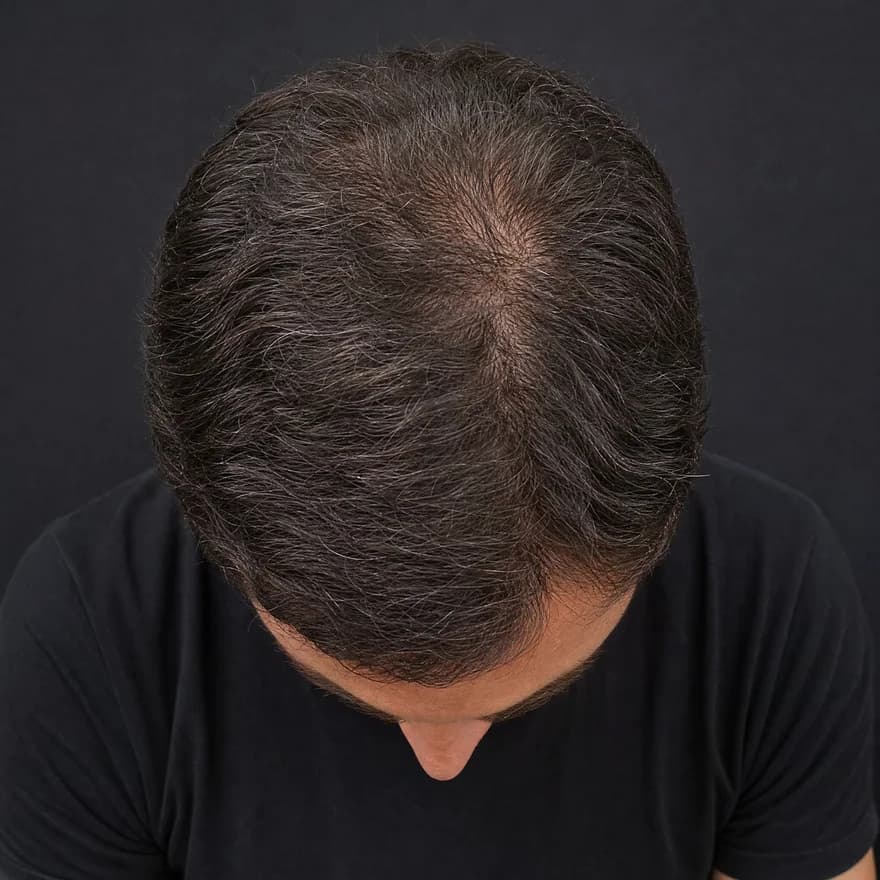
Top · Crown
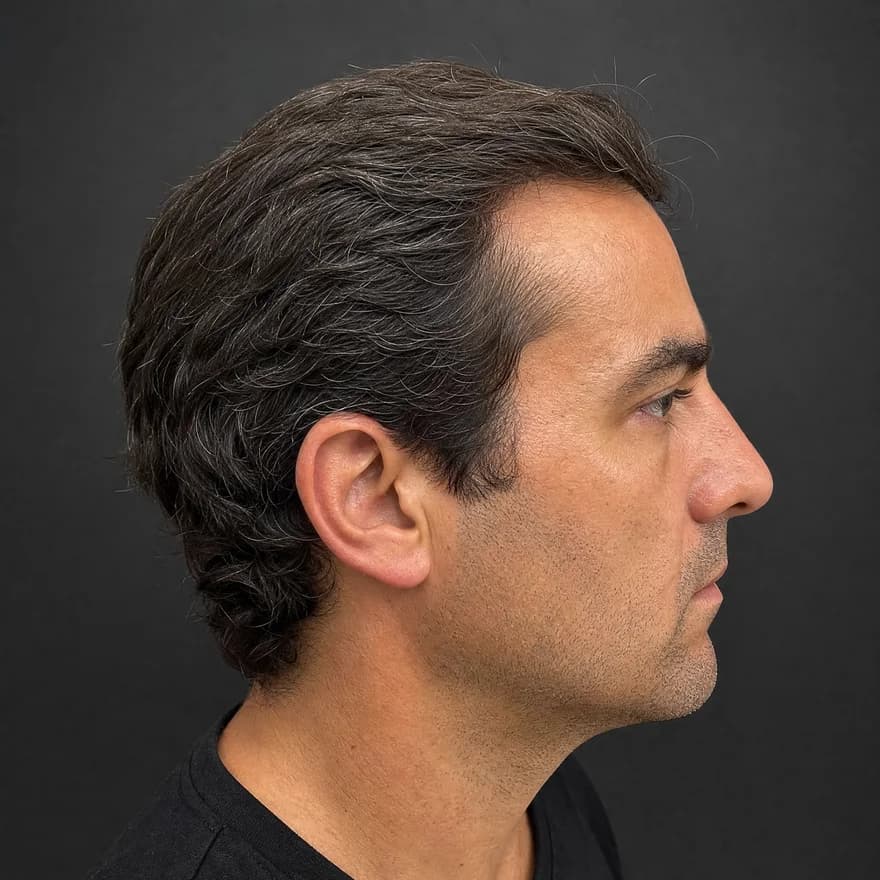
Side · Temple
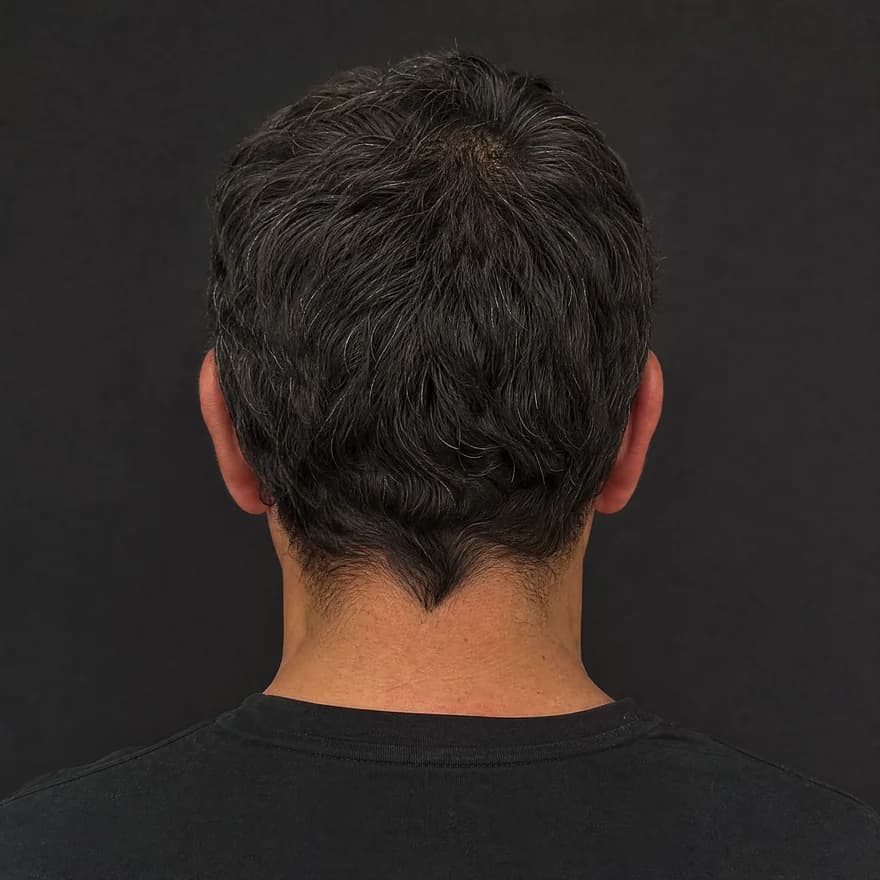
Back
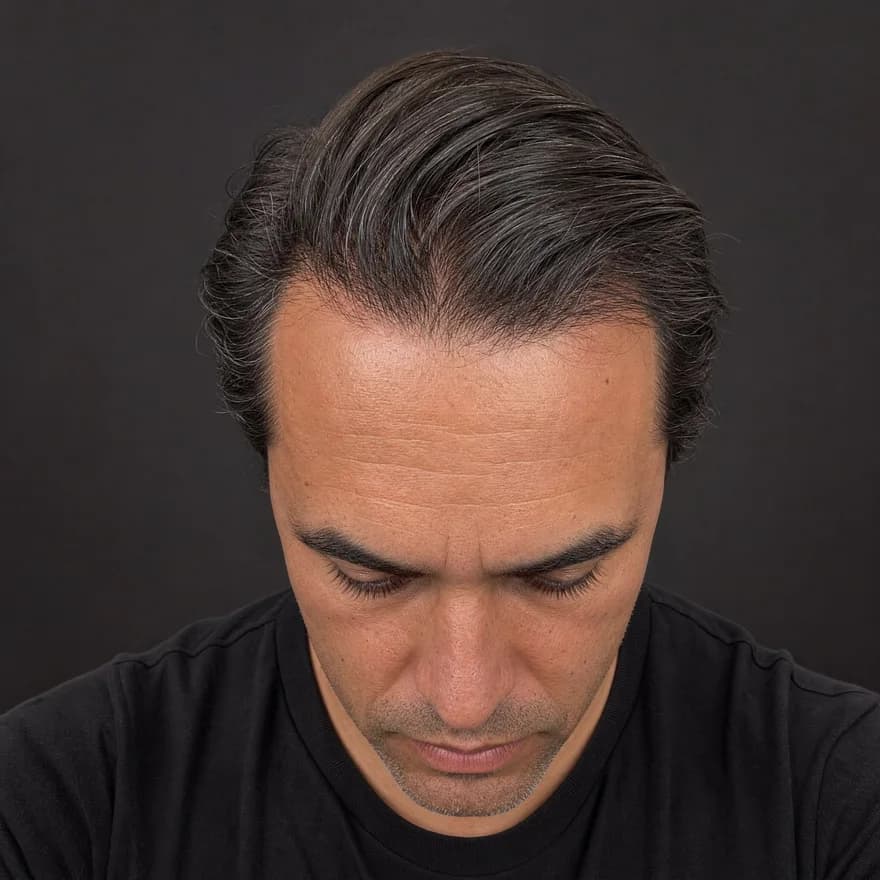
Front · Hairline
Same four angles, every time — illustrative example
Front · crown · temple · back
Four guided angles in about 30 seconds — the same views every time.
Hairline · density · scalp
AI reads each angle for hairline shape, crown density, and scalp surface.
Usable · limited · low-light
Every reading shows its confidence — limited views are flagged, not guessed.
Your baseline, revisited
Save it, rescan later, and see exactly what moved.
The question at 20
Both start with 'my hairline moved.' Neither column is a verdict — they're the visible behaviours to check your own dated photos against.
Appearance-based patterns for comparison — not a diagnosis either way.
Why 20 is different
Starting to pay attention at 20 isn't paranoia — it's the best tracking position you'll ever be in.
Every comparison you make for the next 30 years reads against your earliest baseline. Taking it at 20 makes every future answer clearer.
Visible pattern change is slow. Catching a trend early at 20 means decisions get made calmly, with a professional, on your schedule.
Maturing lines, swirls, harsh light, and wet hair generate most of the panic at this age. A tiered, repeated read retires false alarms instead of feeding them.
Worrying about your hairline at 20 is nobody's business. Photos are processed for your report only — never used to train AI, never shared.
The plan
Twenty minutes of setup now replaces a decade of mirror anxiety. The plan is deliberately boring.
Four guided angles — front, both sides, top — framed identically and dated. This is the reference every future scan compares against.
ScalpAnalysis AI's own analysis engine reads hairline shape, edge density, and crown coverage as stable tiers with confidence shown — no invented percentages to obsess over.
8–12 weeks between scans is the honest cadence. Anything faster measures lighting, styling, and mood — not your hair.
Flat trend? Get on with being 20. Moving trend? You've caught it early — take the dated photos to a qualified professional and discuss options there.
Questions
Some visible change at 20 is far more common than it feels. This is the prime window for a maturing hairline — a normal, even settling that then holds — and day-to-day shedding of dozens of hairs is part of the ordinary growth cycle, not a countdown. What deserves attention isn't change itself but direction: a line or crown that keeps moving across months of dated photos.
Early pattern change can start in the twenties for a minority of men — pretending otherwise wouldn't be honest. But 'can happen' isn't 'is happening to you.' A maturing hairline mimics its first act almost perfectly, and a single worried inspection can't tell the two apart. Tracking can: even settling that stabilises reads as maturing; corners or crown that keep moving between scans are worth attention.
The most common answer is that it isn't receding — it's maturing, which is what most hairlines do at exactly your age. The less common answer is early pattern change, which tends to lead with deepening temple corners or crown show-through rather than an even shift. Which story your head is telling only shows over months of same-angle photos — that's the honest test, and it's cheap to run.
Three things, in order. Take a proper baseline now — guided angles, even light, dated. Rescan in 8–12 weeks and read the direction instead of the mirror. And if the trend is genuinely moving, or the worry won't settle either way, take the photos to a qualified professional — any conversation about treatments or medication belongs there, not with an app. What you shouldn't do is spend the next decade guessing nightly.
Behaviour over months, not appearance tonight. A maturing line settles back evenly, keeps a dense edge, and then stops; an early pattern keeps deepening at the corners, thins along the edge, or spreads at the crown. At 20 you rarely have old comparable photos, which is exactly why starting a baseline now pays off for years.
Daily shedding in that range is part of the normal hair growth cycle at any adult age — hairs cycle out and are replaced. Counts are also nearly impossible to do honestly. Visible coverage over time is the measure that actually means something: if density and hairline tiers hold scan after scan, ordinary shedding is just the cycle doing its job.
Taking the four guided photos and previewing your report is free, no sign-up needed. Unlocking the full analysis — hairline read, density tiers, scalp signals, and style suggestions — is $2.99 for the scan.
A note on transparency
ScalpAnalysis AI reads appearance-based signals and tracks visible change over time. It does not diagnose, treat, cure, or prevent any condition.
If you have pain, sudden shedding, or signs of infection, a qualified professional is the right next step.
The report it produces
This is the exact report format a scan unlocks — qualitative tiers, your visible features, and a confidence level on every reading. Saved as a baseline you compare against on every rescan.
Your Hair Profile
Temples just starting to open — crown still covered
Density
Medium
Type
Wavy
Texture
Medium
Shine
Medium
Risk of Recession
Low
Hair Loss
Mild
Illustrative example · sample data
Related guides
From the blog
Photos and a blurred preview are free. The full analysis is $2.99, or invite 3 friends for one free analysis.
