Norwood Scale
The Norwood scale describes how a hairline and crown change in appearance. From four guided photos, AI suggests where your visible pattern sits today — an appearance-based reference for tracking, not a medical diagnosis.
Photos and a blurred preview are free. The full reading is $2.99 — your stage, whether it looks early, and what to do next.
How it works
Same four angles, every time — so each new scan compares fairly to your very first.
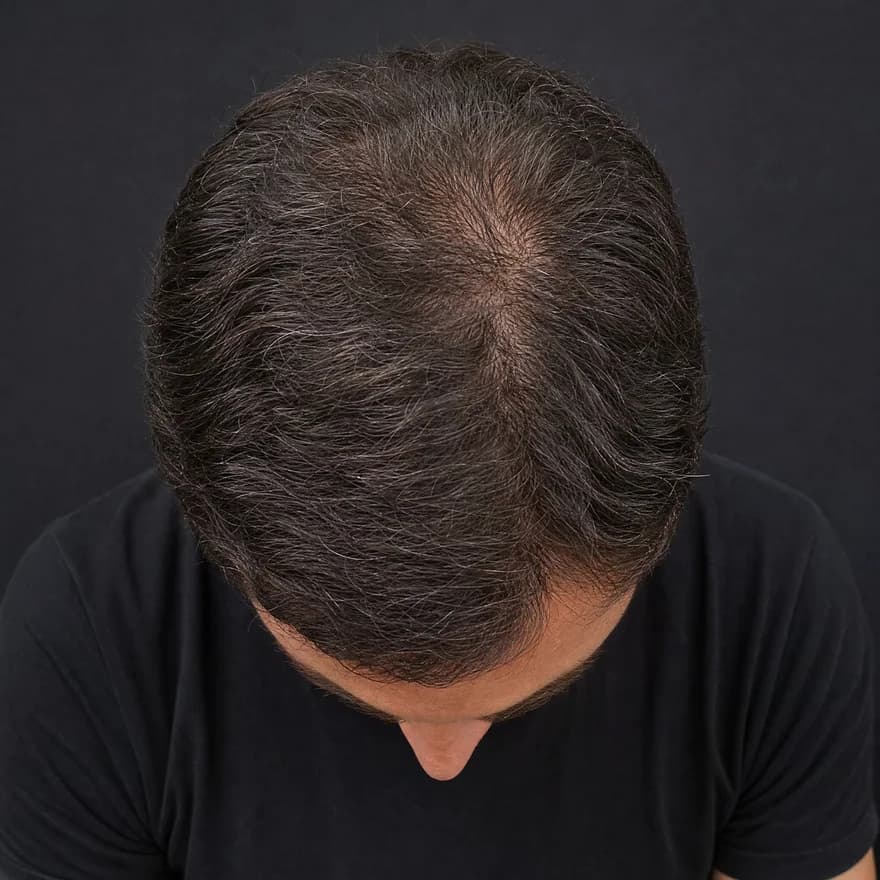
Top · Crown
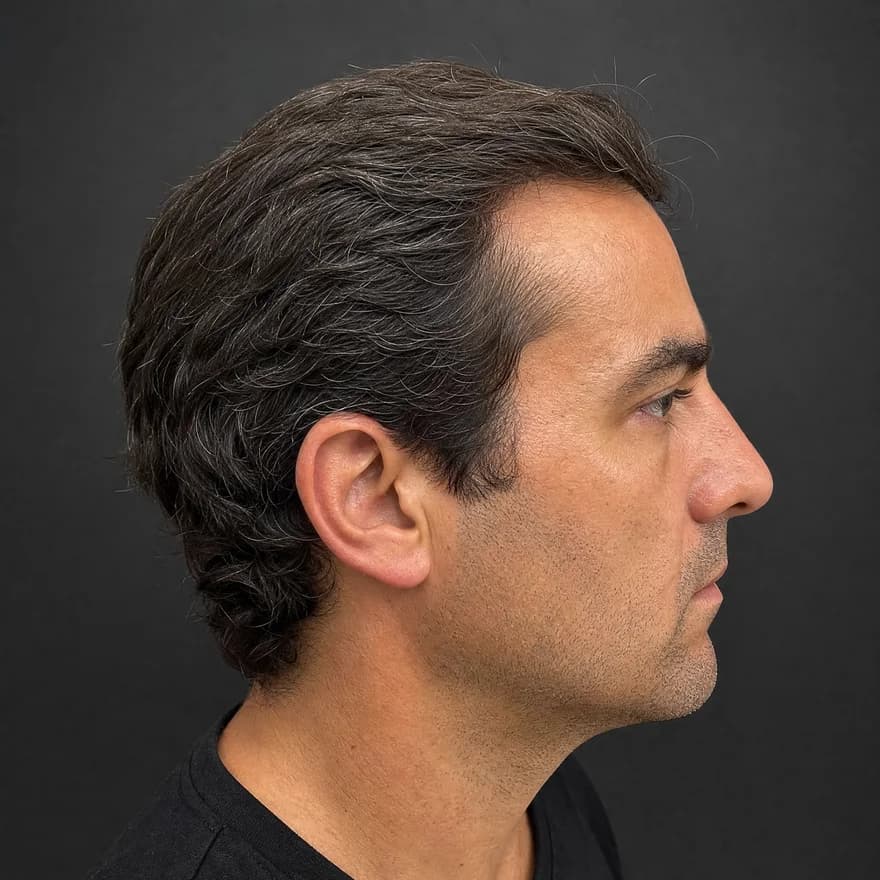
Side · Temple
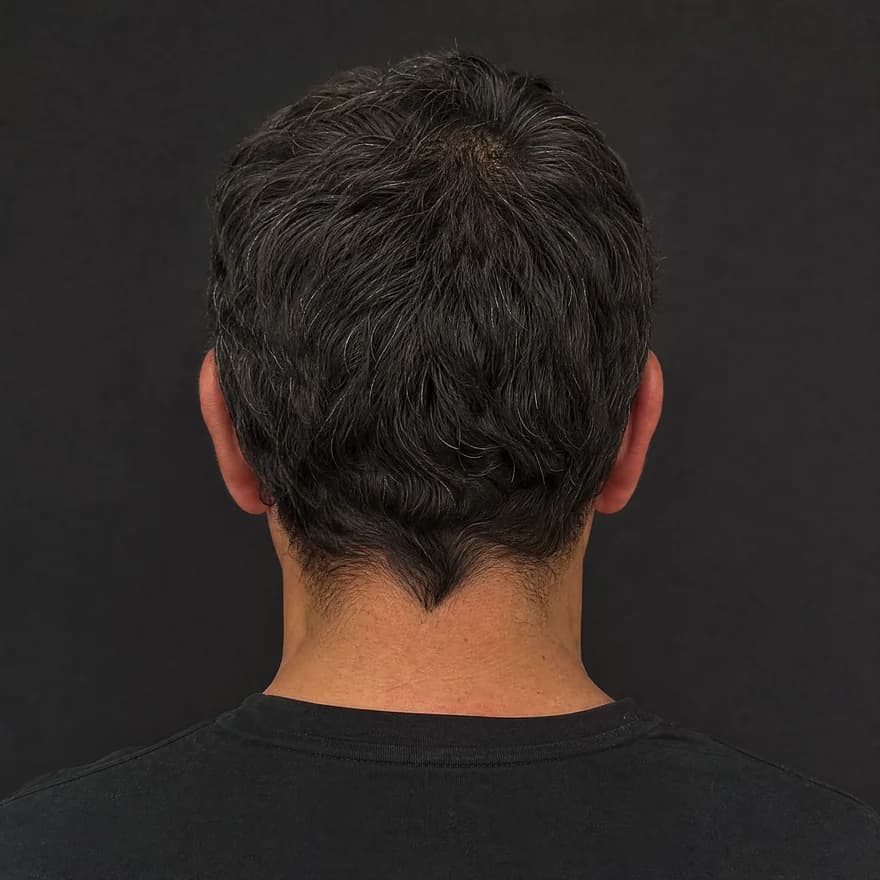
Back
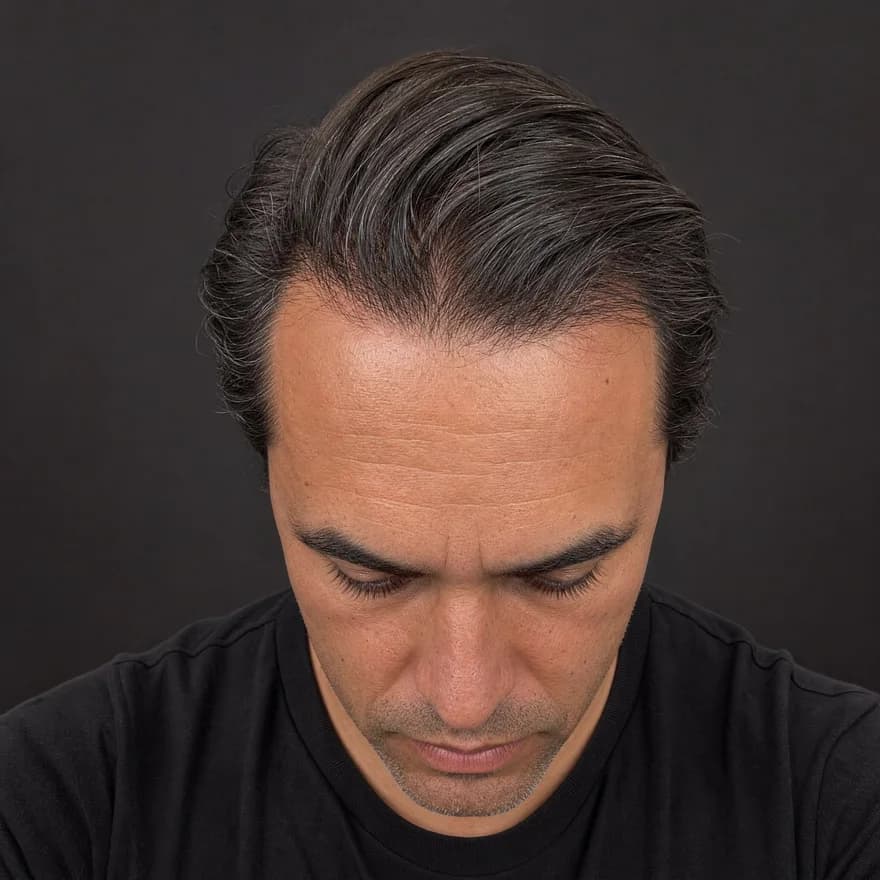
Front · Hairline
Same four angles, every time — illustrative example
Front · crown · temple · back
Four guided angles in about 30 seconds — the same views every time.
Hairline · density · scalp
AI reads each angle for hairline shape, crown density, and scalp surface.
Usable · limited · low-light
Every reading shows its confidence — limited views are flagged, not guessed.
Your baseline, revisited
Save it, rescan later, and see exactly what moved.
The Norwood stages
The Norwood scale describes how a hairline and crown change in appearance, from an even hairline to a horseshoe pattern. Use these views as a reference for where your visible pattern sits today — a tracking aid, not a medical grade.
Stage 1
A full, even hairline with no visible recession at the temples.
Stage 2
The hairline sets back a little at the temples — common and often stable.
Stage 3
More visible recession at both temples, forming an early M-shape.
Stage 4
Temple recession with a separate thinning area starting at the crown.
Stage 5
The band of hair between front and crown looks narrower and less dense.
Stage 6
Front and crown areas connect as the separating band thins out.
Stage 7
Hair remains mainly around the sides and back in a horseshoe pattern.
How to read your stage
Free self-check
No photos to upload, no account. Answer three quick questions about how your hairline and crown look right now, and see the Norwood stage that looks closest — for reference, not a diagnosis.
Answer 3 quick questions
0/3
How your stage gets read
The stage isn't guessed from one selfie — it's read from the same visible cues the scale itself is defined by.
The front view is read for the overall hairline silhouette — even, maturing, or a deeper M-shape at the temples.
From stage 4 the scale is about the crown joining in — that's exactly what the top view is there to show.
You get an appearance-based stage with its confidence shown. It's a tracking reference — the medical call always belongs to a professional.
Saved as a baseline and compared on every rescan — the honest answer to that question is a trend, not a single photo.
Questions
It is a common way to describe how a hairline and crown change in appearance, from an even hairline through more advanced patterns. We use it as a visual reference for tracking, not a medical grade.
From four guided photos, AI reads your visible hairline and crown pattern and suggests where it sits on an appearance-based scale — with the confidence of each reading shown.
No. It is an appearance-based reference for tracking change over time, not a medical diagnosis. A qualified professional is the right call for medical questions.
No. Take the photos and preview a blurred report first. Unlock the full stage analysis for $2.99 (or invite 3 friends for a free scan), then sign in to save a baseline and track over time.
The three-question self-check on this page is free. The photo-based analysis — reading your hairline and crown with confidence — has a free blurred preview; unlocking the full result is $2.99 per scan, or free when 3 friends sign up through your invite link. Works in any browser; photos are uploaded securely.
It's a visual reference, not a precise grade. Photo conditions, lighting, and styling all shift how a pattern reads, so each suggestion carries a confidence level instead of false certainty. The dependable part is comparison over time — the same angles months apart show whether your stage is holding or moving, which one snapshot never can.
Yes. They are processed for your report only — never used for AI training or advertising.
A note on transparency
ScalpAnalysis AI reads appearance-based signals and tracks visible change over time. It does not diagnose, treat, cure, or prevent any condition.
If you have pain, sudden shedding, or signs of infection, a qualified professional is the right next step.
The report it produces
This is the exact report format a scan unlocks — qualitative tiers, your visible features, and a confidence level on every reading. Saved as a baseline you compare against on every rescan.
Your Hair Profile
Temples just starting to open — crown still covered
Density
Medium
Type
Wavy
Texture
Medium
Shine
Medium
Risk of Recession
Low
Hair Loss
Mild
Illustrative example · sample data
Related guides
From the blog
Photos and a blurred preview are free. The full analysis is $2.99, or invite 3 friends for one free analysis.
