Am I Balding?
There's no verdict machine for this question — but there are visible signals, and they photograph well. Four guided angles show how your hairline and crown actually look today, so the question gets a baseline and a trend instead of a late-night guess.
Photos and a blurred preview are free. The full reading is $2.99 — your stage, whether it looks early, and what to do next.
How it works
Same four angles, every time — so each new scan compares fairly to your very first.
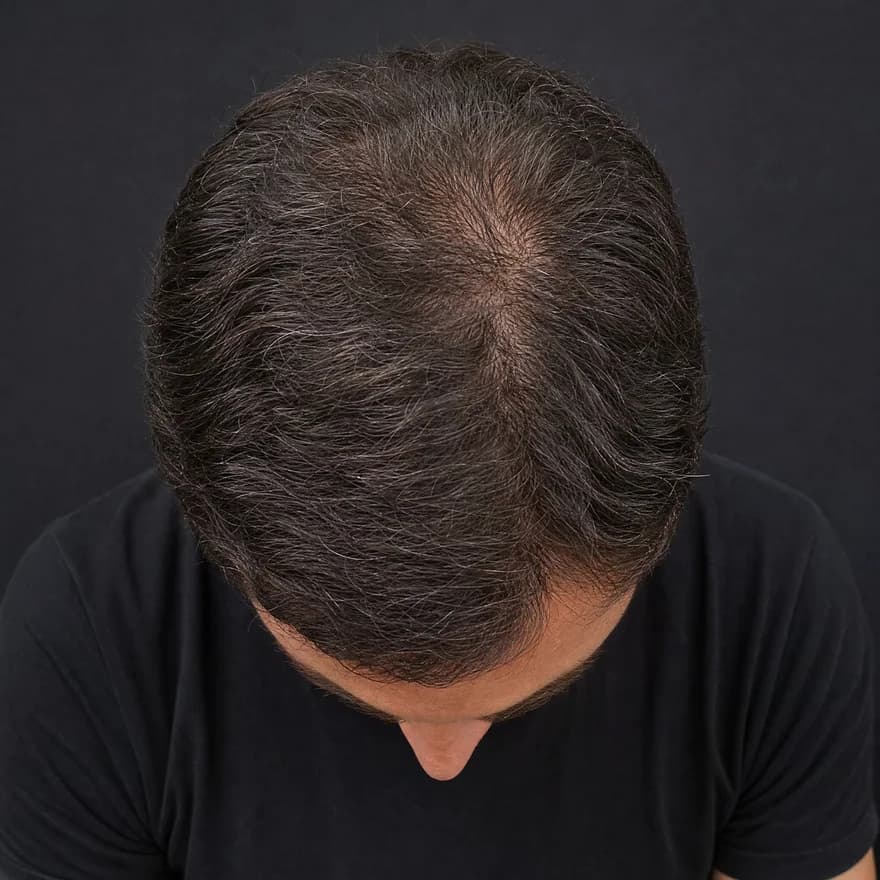
Top · Crown
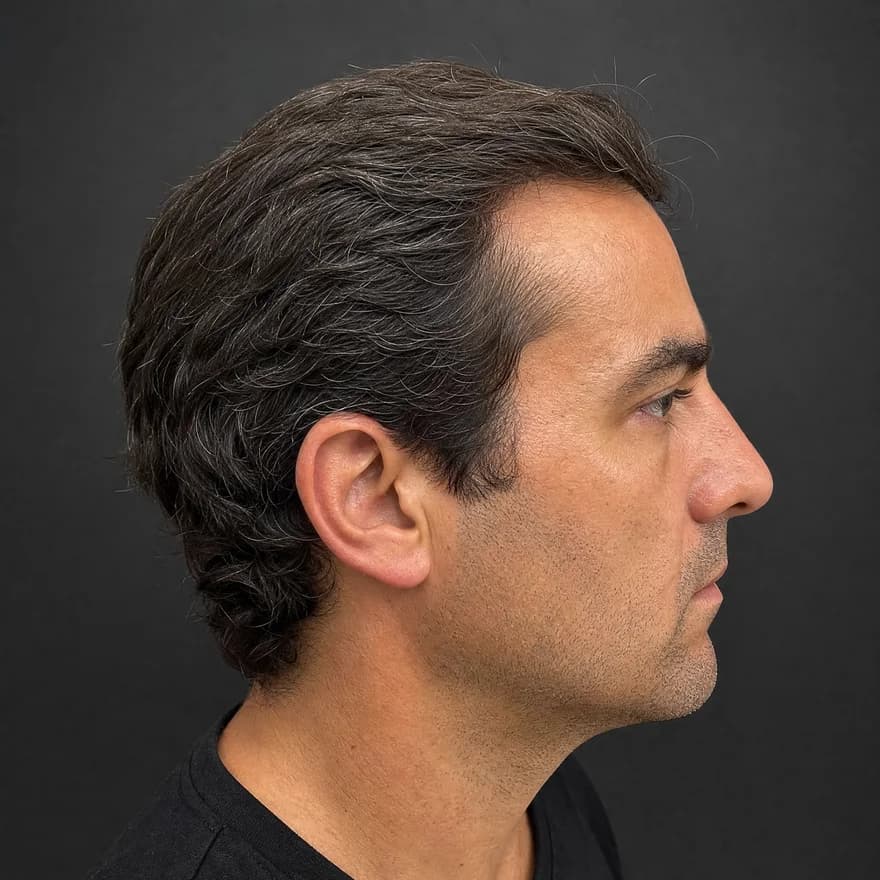
Side · Temple
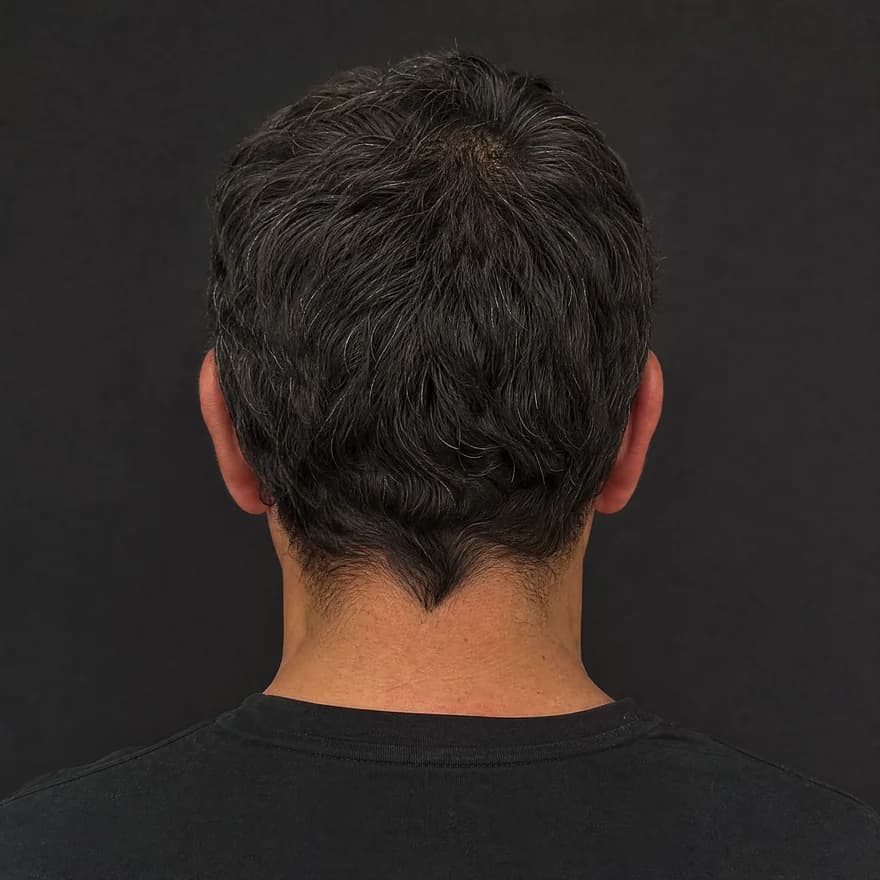
Back
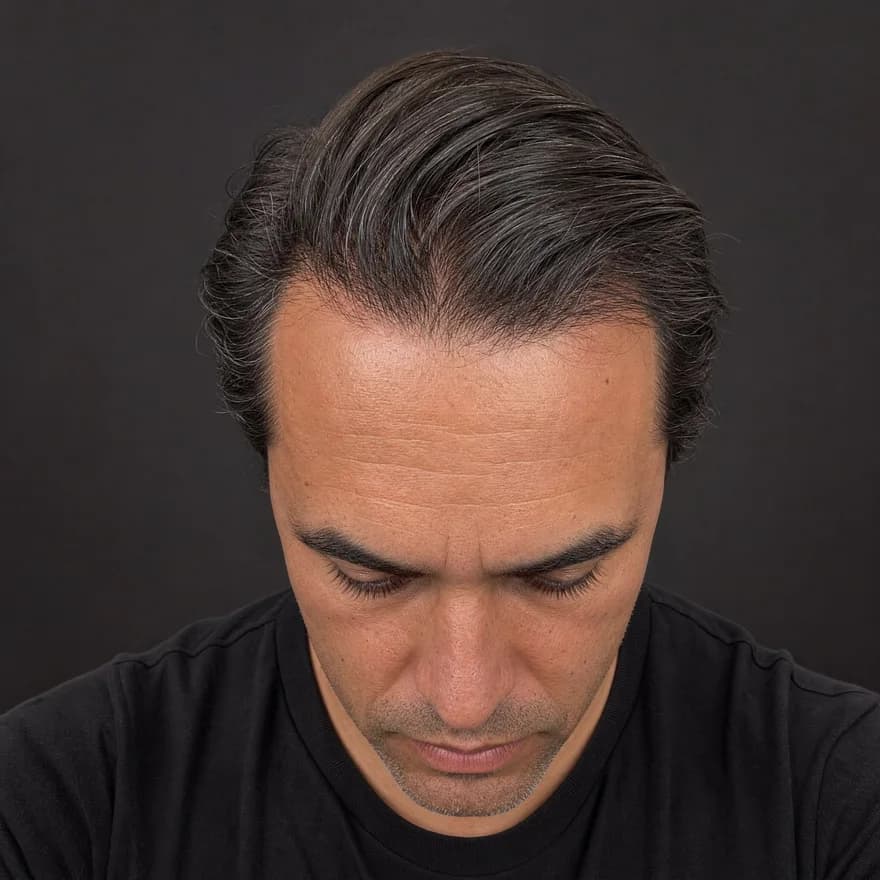
Front · Hairline
Same four angles, every time — illustrative example
Front · crown · temple · back
Four guided angles in about 30 seconds — the same views every time.
Hairline · density · scalp
AI reads each angle for hairline shape, crown density, and scalp surface.
Usable · limited · low-light
Every reading shows its confidence — limited views are flagged, not guessed.
Your baseline, revisited
Save it, rescan later, and see exactly what moved.
What actually shows
Forget the shower-drain census — these are the visible signals worth checking, and where each one appears.
Corners pulling back into an M-shape are one of the earliest visible patterns — the front view shows it plainly.
More scalp visible at the swirl under even light. Nearly impossible to see in a mirror; obvious from the top angle.
A part that reads wider than it does in old photos is a coverage signal — and easy to compare once it's on record.
One photo is a mood; two identical photos months apart are a trend. Change is the signal that matters most.
Getting a real answer
Four guided angles with fixed framing — your starting point, on record, instead of a memory of how it used to look.
Hairline shape, crown coverage, and density come back as stable qualitative tiers with confidence levels — no invented decimals.
Visible change is slow. Comparing the same angles a few months apart beats squinting at the mirror every morning.
If something is moving you'll see it early — and if you take it to a professional, you'll arrive with evidence instead of anxiety.
Questions
It shows whether visible signals — temple recession, crown show-through, coverage change — appear in your photos, each with a confidence level. It reads appearance and tracks change; it doesn't make a medical call about you, and no photo tool honestly can.
Most often: the temple corners setting back into an M-shape, more scalp showing at the crown swirl, and a part line that looks wider than in older photos. Those are exactly the areas the four guided angles are framed to capture.
Often, yes — many hairlines settle back slightly in adulthood and then hold for decades. That's why a single photo never settles the question: a baseline plus a rescan shows whether yours is stable or still moving.
Photos and a blurred preview are free — no sign-up needed. Unlocking the full analysis is $2.99 per scan, or invite 3 friends to sign up through your link and earn one free scan.
Every 8–12 weeks is plenty. Visible change is slow, and comparing identical angles months apart tells you far more than daily mirror checks ever will.
No. It's an appearance-based read for tracking. If you're seeing sudden or patchy shedding, or the worry won't settle, a qualified professional is the right next step — and arriving with dated photos makes that conversation better.
A note on transparency
ScalpAnalysis AI reads appearance-based signals and tracks visible change over time. It does not diagnose, treat, cure, or prevent any condition.
If you have pain, sudden shedding, or signs of infection, a qualified professional is the right next step.
The report it produces
This is the exact report format a scan unlocks — qualitative tiers, your visible features, and a confidence level on every reading. Saved as a baseline you compare against on every rescan.
Your Hair Profile
Temples just starting to open — crown still covered
Density
Medium
Type
Wavy
Texture
Medium
Shine
Medium
Risk of Recession
Low
Hair Loss
Mild
Illustrative example · sample data
Related guides
From the blog
Photos and a blurred preview are free. The full analysis is $2.99, or invite 3 friends for one free analysis.
