How to Track Hair Loss
Tracking hair change is mostly a measurement problem: angle, light, and a fresh haircut move the apparent picture day to day, and memory drifts. The fix is boring and effective — the same fixed angles every time, a dated baseline, and a rescan every few months, so any difference you see is a difference on your head rather than in the camera.
Photos and a blurred preview are free. The full reading is $2.99 — your stage, whether it looks early, and what to do next.
How it works
Same four angles, every time — so each new scan compares fairly to your very first.
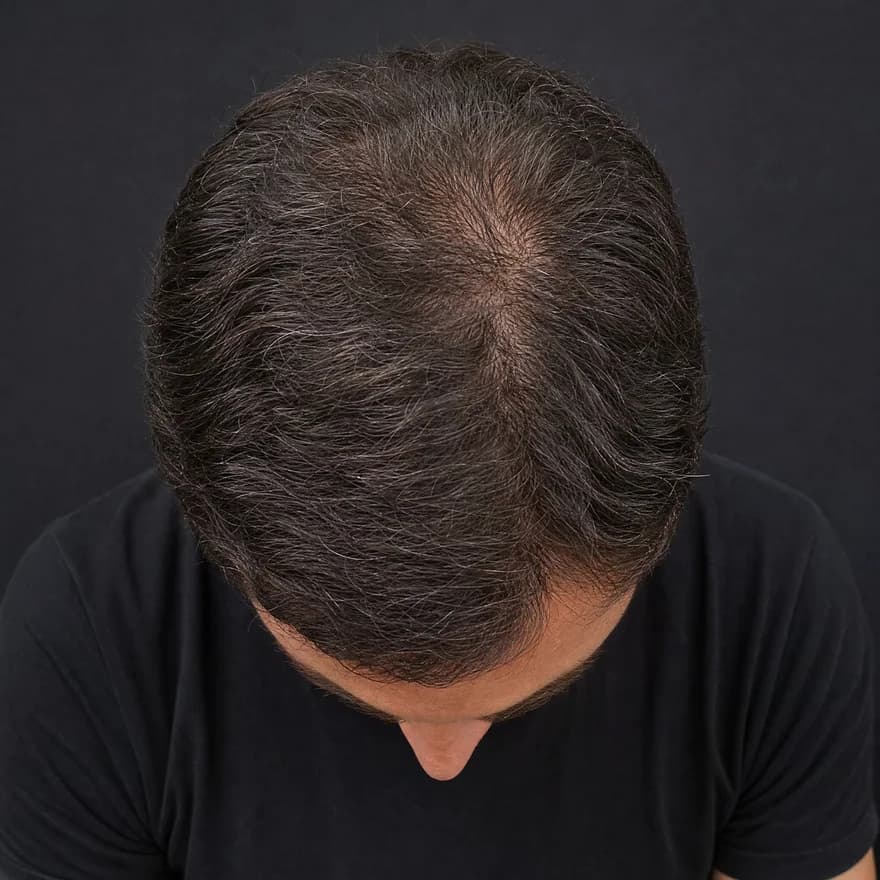
Top · Crown
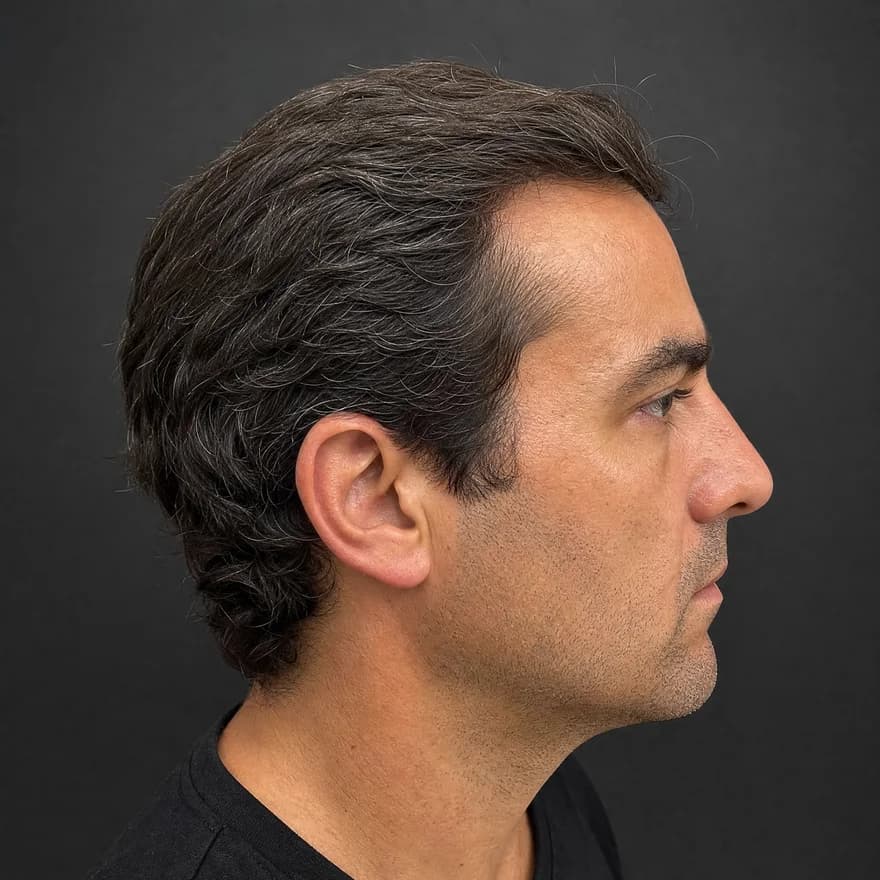
Side · Temple
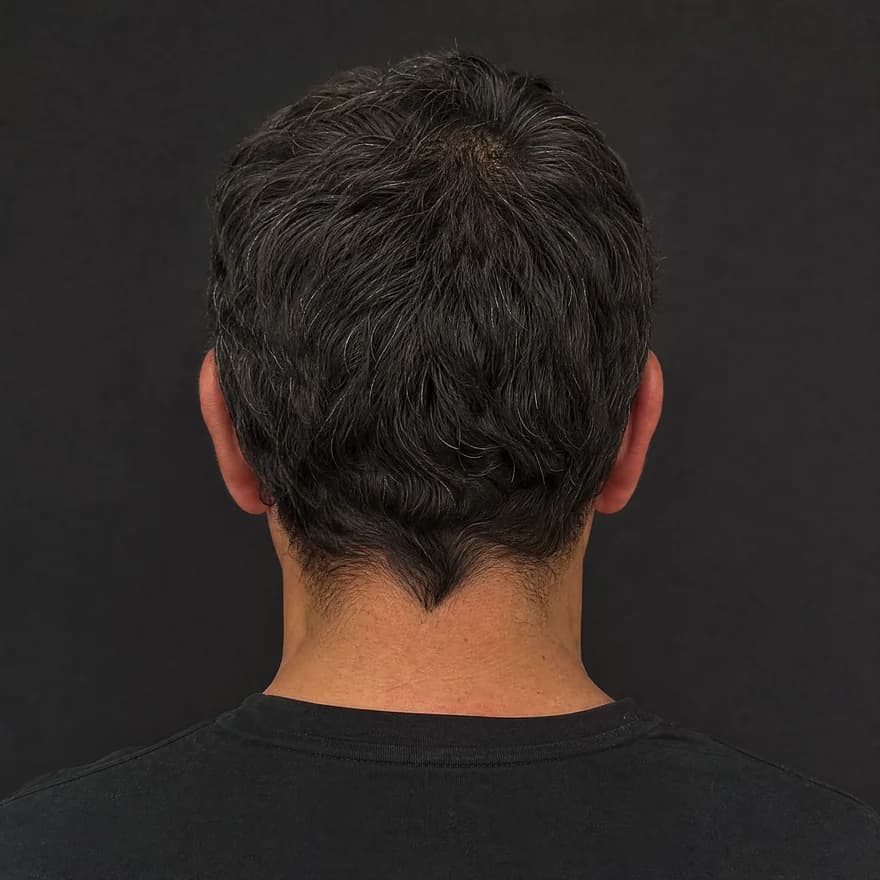
Back
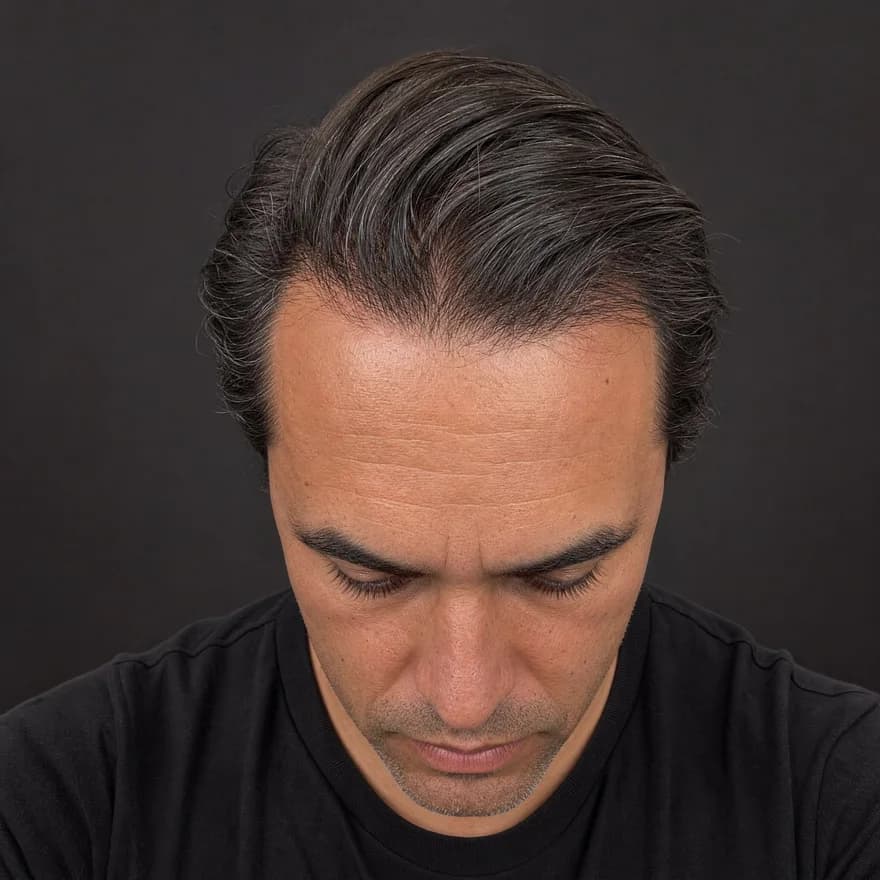
Front · Hairline
Same four angles, every time — illustrative example
Front · crown · temple · back
Four guided angles in about 30 seconds — the same views every time.
Hairline · density · scalp
AI reads each angle for hairline shape, crown density, and scalp surface.
Usable · limited · low-light
Every reading shows its confidence — limited views are flagged, not guessed.
Your baseline, revisited
Save it, rescan later, and see exactly what moved.
The method
None of this needs special gear — just consistency. The tool below automates the fiddly parts.
Top, side, back, and front, framed the same way every time. Fixed angles are what make any two scans actually comparable.
Today's photos, on record with a date. Every future comparison is 'has it moved since this?' — a question photos can answer.
Every 8–12 weeks, not every morning. Visible change is gradual; frequent checks mostly capture light and styling, not real change.
One photo is a mood; a line of identical photos is a trend. 'Stable' is a real answer — often the most reassuring one to get.
Why this works
Same head, two very different ways of looking at it.
Tracking is informational and appearance-based — it isn't a diagnosis.
Questions
Use the same fixed angles and similar light every time, save a dated baseline, and rescan every 8–12 weeks. Comparing like with like is the whole game — it separates a real, slow change from a bad-lighting day, which day-to-day mirror checks can never do.
Every 8–12 weeks is the sweet spot. Visible hair change is slow, so checking too often mostly measures lighting and styling. A few months between scans gives a fair, readable comparison.
You can, but casual selfies vary in angle, crop, and light, which muddies the comparison. Guided framing fixes those variables so the only thing that changes between two scans is your head — which is exactly what you want to measure.
Read trends, not single photos: hairline shape and temple depth from the front, crown coverage from the top, and overall show-through under even light. A tool that reports these as stable tiers makes the month-to-month comparison fair and easy to read.
Keep three things constant so only your head changes between shots: the angles (front, top/crown, both sides, back), the light (soft and even, ideally daylight), and the styling (clean, dry, product-free hair). Guided capture frames the same angles each time, and the crown especially needs a fixed angle since you can't aim at it yourself — that consistency is what makes progress photos comparable instead of just a collection of selfies.
Every 8–12 weeks is the sweet spot. Visible hair change is slow, so shooting progress photos more often mostly captures lighting and styling rather than real change. A few months between scans gives a fair, readable comparison — and 'stable' across them is a genuinely reassuring answer to get.
No. Tracking shows whether your visible appearance is stable or changing over time — it doesn't diagnose anything. If a trend looks like it's moving, or you notice sudden or patchy shedding, take your dated photos to a qualified professional.
A note on transparency
ScalpAnalysis AI reads appearance-based signals and tracks visible change over time. It does not diagnose, treat, cure, or prevent any condition.
If you have pain, sudden shedding, or signs of infection, a qualified professional is the right next step.
The report it produces
This is the exact report format a scan unlocks — qualitative tiers, your visible features, and a confidence level on every reading. Saved as a baseline you compare against on every rescan.
Your Hair Profile
Temples just starting to open — crown still covered
Density
Medium
Type
Wavy
Texture
Medium
Shine
Medium
Risk of Recession
Low
Hair Loss
Mild
Illustrative example · sample data
Related guides
From the blog
Photos and a blurred preview are free. The full analysis is $2.99, or invite 3 friends for one free analysis.
