Balding in Your 20s
Noticing early change in your twenties is more common than it feels — a meaningful share of men see some shift before thirty. That's not a verdict; it's a reason to swap mirror-spiralling for something steadier. The visible signs photograph well, and at this age the most useful thing you can do is set a baseline now, so any change is a measured trend instead of a 2 a.m. guess.
How it works
Same four angles, every time — so each new scan compares fairly to your very first.
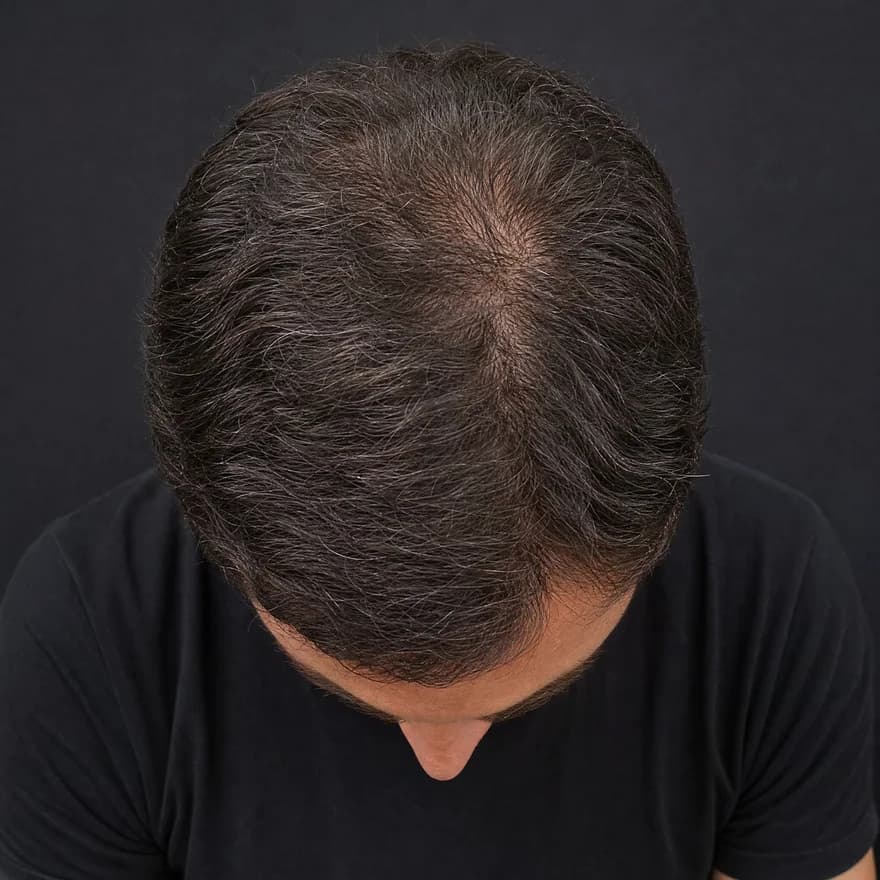
Top · Crown
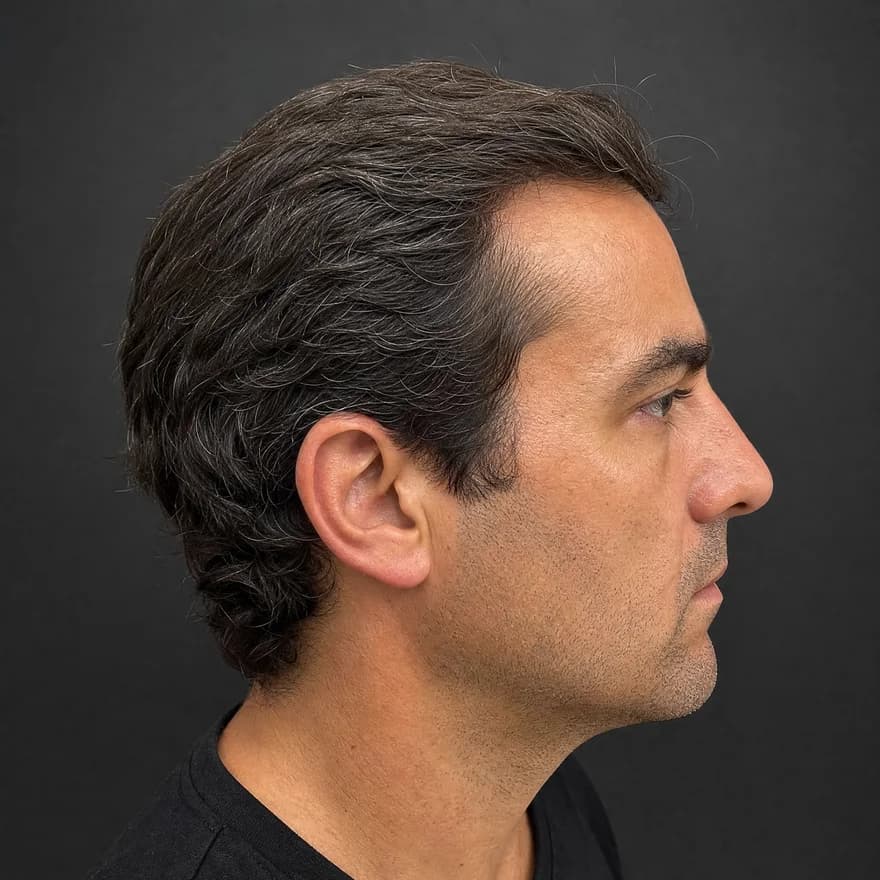
Side · Temple
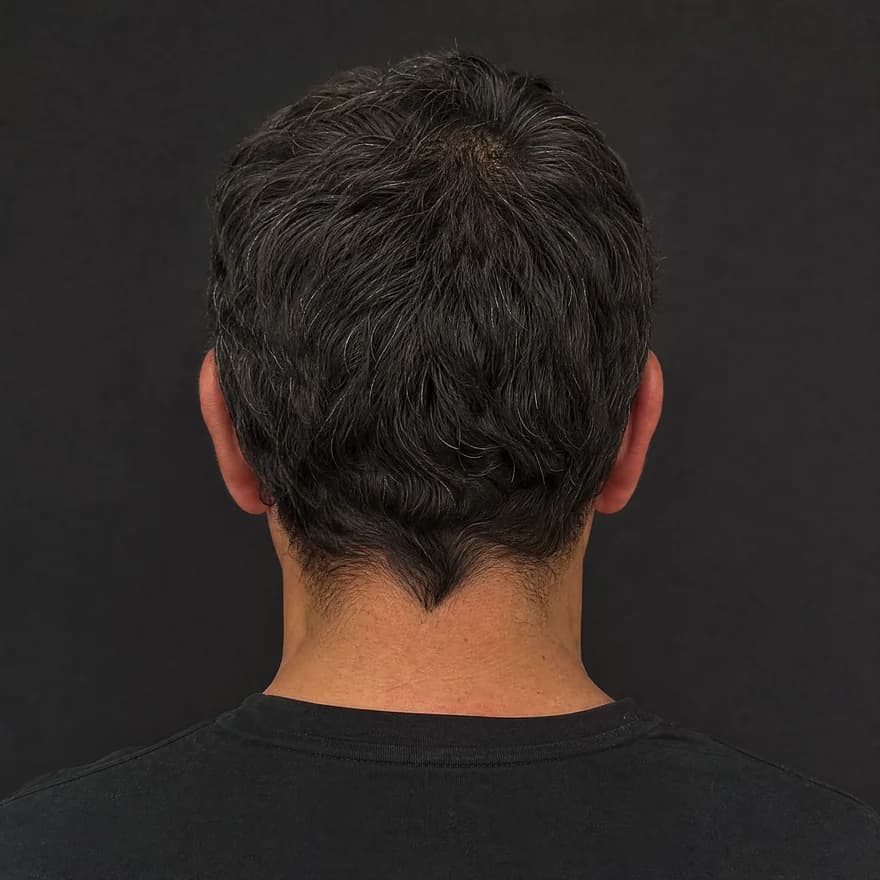
Back
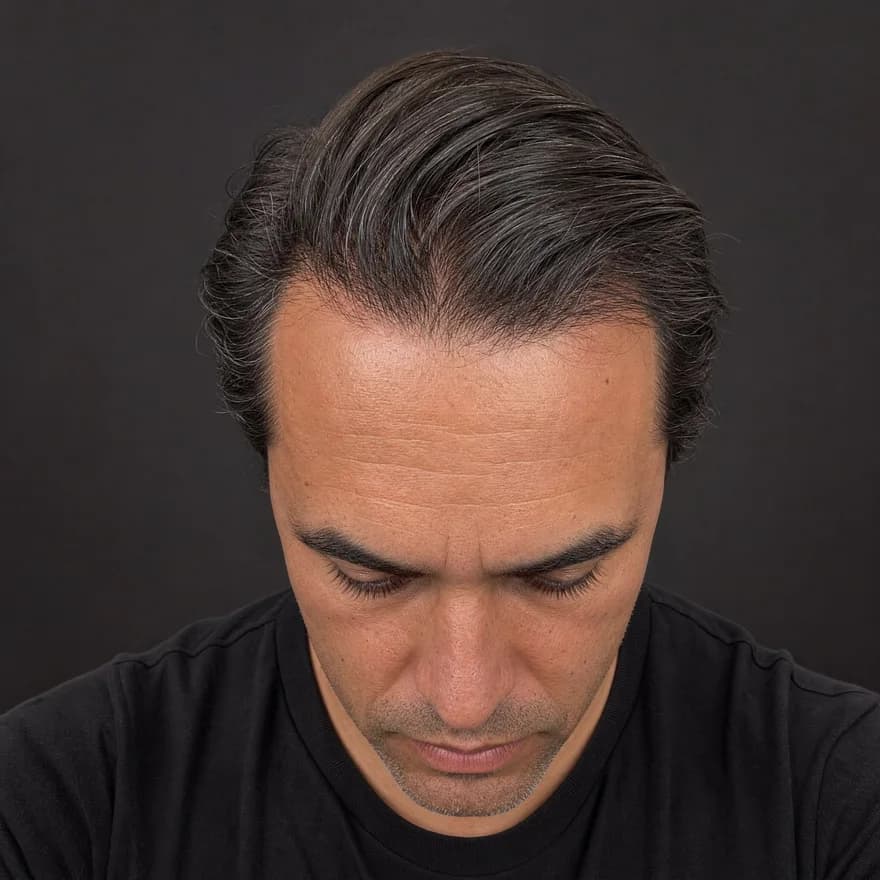
Front · Hairline
Same four angles, every time — illustrative example
Front · crown · temple · back
Four guided angles in about 30 seconds — the same views every time.
Hairline · density · scalp
AI reads each angle for hairline shape, crown density, and scalp surface.
Usable · limited · low-light
Every reading shows its confidence — limited views are flagged, not guessed.
Your baseline, revisited
Save it, rescan later, and see exactly what moved.
What to watch
Not the shower-drain census — the visible signals that actually photograph, and where each one shows.
Corners setting back into an M-shape are one of the earliest visible patterns — and the front view shows it plainly.
More scalp visible at the swirl under even light. You can't watch your own crown; the top angle puts it on record.
A part that reads wider than in photos from a couple of years ago is a coverage signal — easy to compare once it's saved.
The best before-photo is the one you take young. Start now and any future change reads as a clear trend, not a guess.
Calmer than the mirror
At this age the smartest move isn't worrying harder — it's measuring once and checking the trend.
Four guided angles with fixed framing catch temples, crown, and part in one go — your starting point, dated and on record.
Hairline shape, crown coverage, and part width come back as stable qualitative tiers with confidence levels — no invented decimals to obsess over.
Every 8–12 weeks, not every morning. Visible change is gradual; frequent checks mostly measure lighting and your mood that day.
If something's moving you'll catch it early; if it's holding, that's a real, reassuring answer. Either way you arrive at a professional with evidence, not anxiety.
Questions
Noticing some change in your twenties is more common than people expect, and a maturing hairline — a modest, even settling-back that then holds — is itself a normal appearance change. The point isn't to panic over a single mirror glance; it's to check the visible signs and see whether anything is actually moving over time.
The visible ones that photograph well: temple corners setting back into an M-shape, more scalp showing through at the crown, and a part line reading wider than in older photos. Those are exactly the areas a four-angle scan is framed to capture — including the crown, which you can't watch yourself.
Behaviour, not age, is the tell. A maturing hairline settles back evenly and then holds; a moving pattern keeps deepening at the temples or spreading at the crown across months. One photo can't separate them — a baseline plus a rescan can.
Because the earlier your baseline, the clearer any future trend reads against it. Starting in your twenties gives you the most useful before-photo you'll ever have — and visible change is slow, so checking every 8–12 weeks is plenty.
No. It reads visible signals and tracks whether they change — it doesn't make a verdict about you, and no photo tool honestly can. If you're seeing sudden or patchy shedding, or the worry won't settle, a qualified professional is the right next step, and dated photos help that conversation.
A note on transparency
ScalpAnalysis AI reads appearance-based signals and tracks visible change over time. It does not diagnose, treat, cure, or prevent any condition.
If you have pain, sudden shedding, or signs of infection, a qualified professional is the right next step.
The report it produces
This is the exact report format a scan unlocks — qualitative tiers, your visible features, and a confidence level on every reading. Saved as a baseline you compare against on every rescan.
Your Hair Profile
Even crown coverage with a soft cowlick
Density
High
Type
Wavy
Texture
Medium
Shine
Medium
Risk of Recession
Low
Hair Loss
Minimal
Illustrative example · sample data
Related guides
Photos and a blurred preview are free. The full analysis is $2.99, or invite 3 friends for one free analysis.
