Mature Hairline
A mature hairline is the settled adult position most men's hairlines move to after their teens — typically a modest, fairly even setback from the juvenile line, often with slightly softened corners. It isn't a stage of hair loss; it's a normal appearance change, the hairline equivalent of your face losing its teenage roundness. The reason the term causes confusion is that the first act looks identical to early recession: both start with the line moving. The difference is the second act. A maturing line settles into its new position and holds there, often for decades; a receding pattern keeps going, usually led by deepening temple corners. So the practical question isn't 'has my hairline moved?' — for most adult men the answer is yes — it's 'has it stopped?' That's a question about direction, and direction shows in dated photos, not in tonight's mirror.
Photos and a blurred preview are free. The full reading is $2.99 — your stage, whether it looks early, and what to do next.
How it works
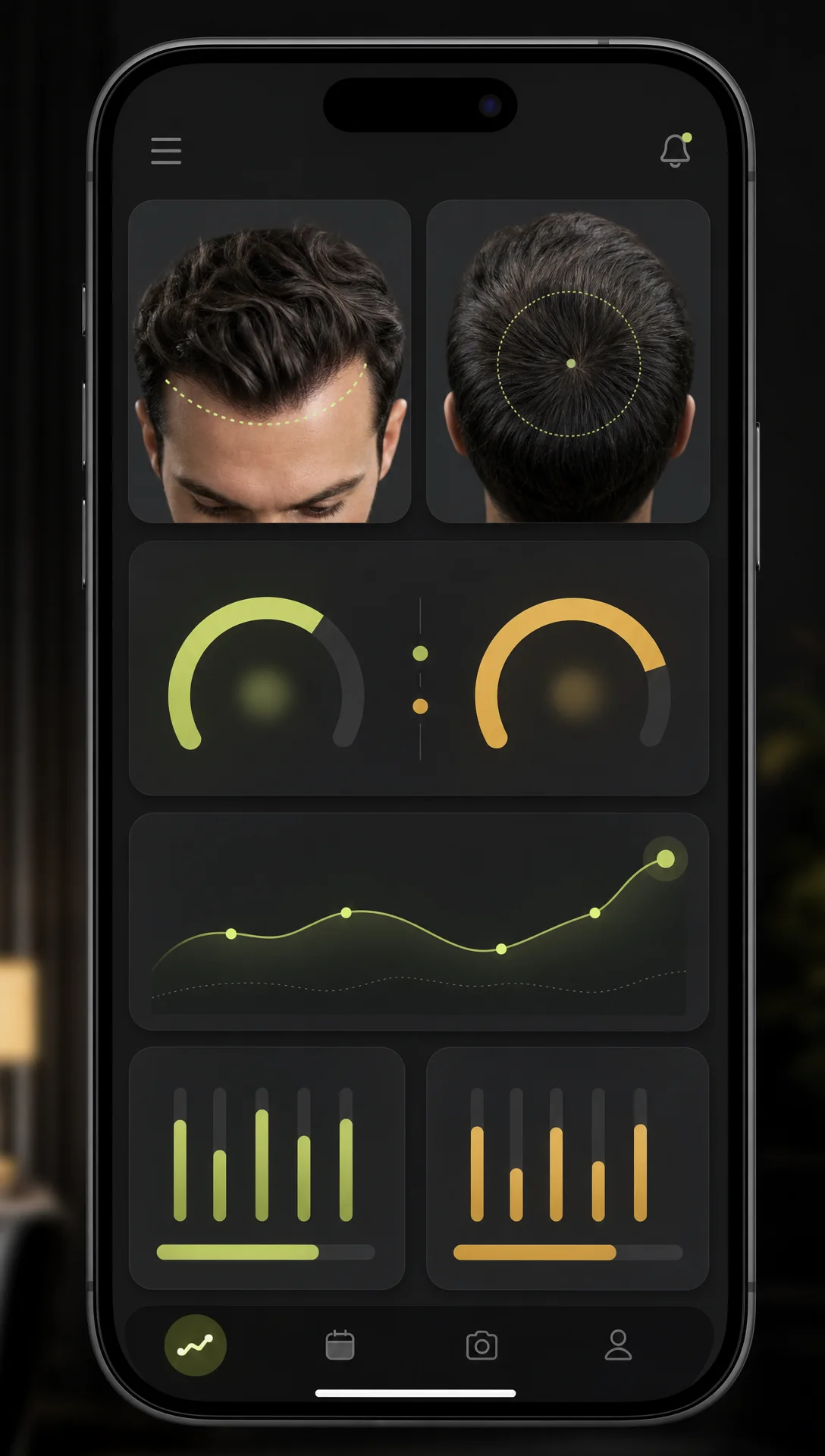
Same four angles, every time — so each new scan compares fairly to your very first.
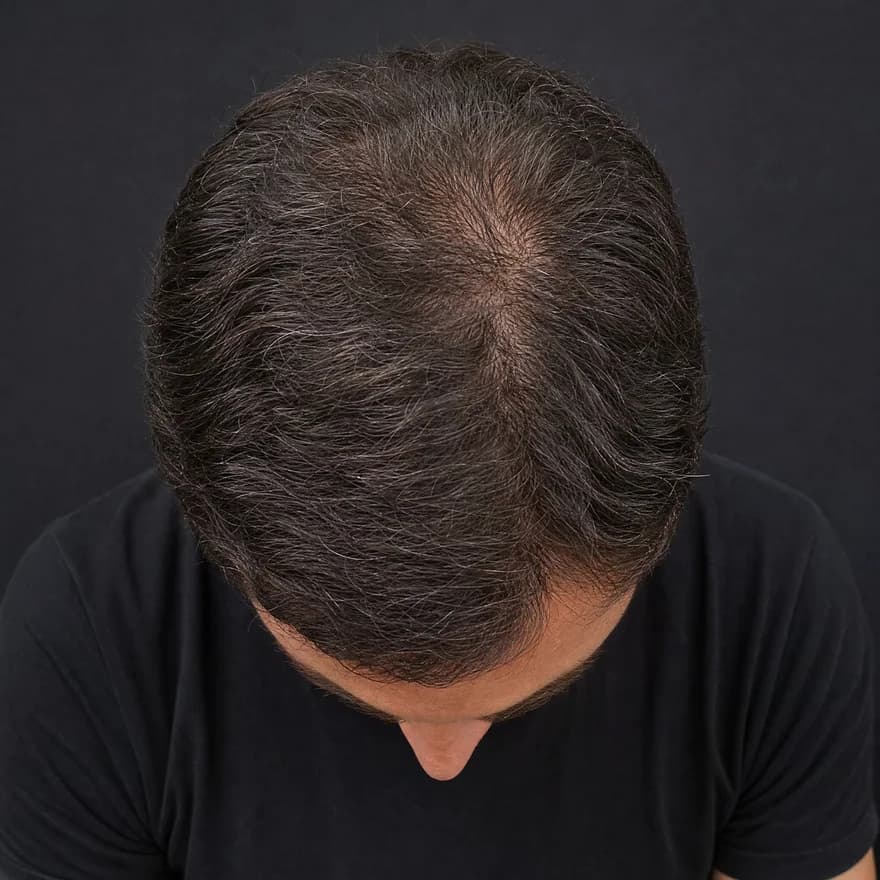
Top · Crown
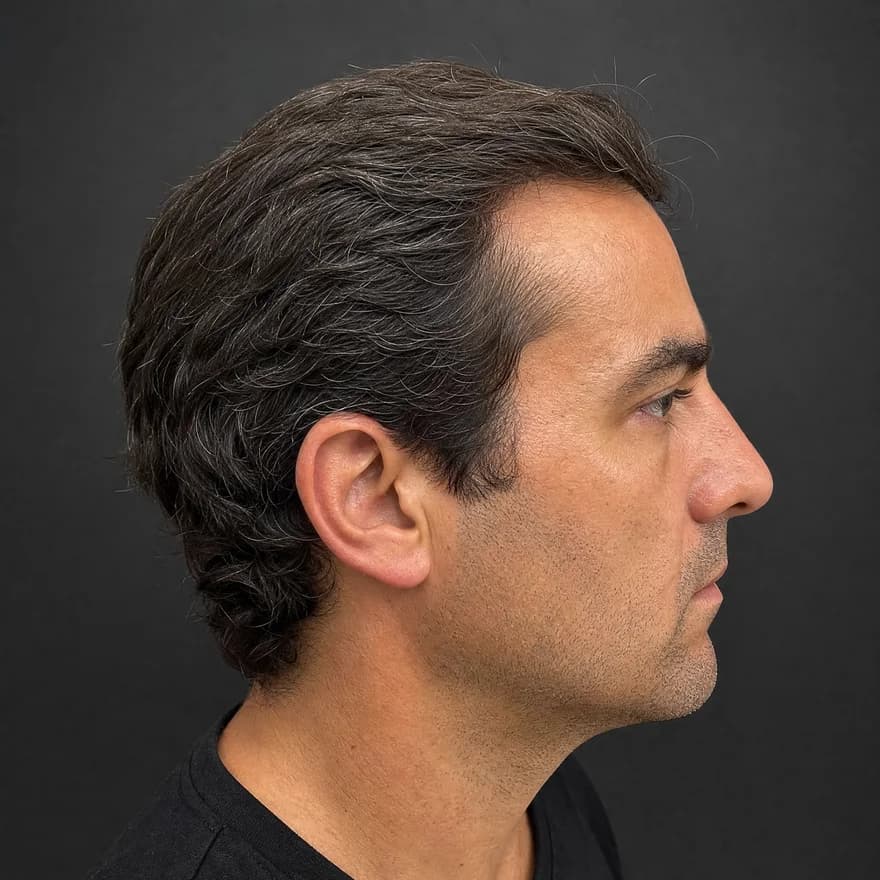
Side · Temple
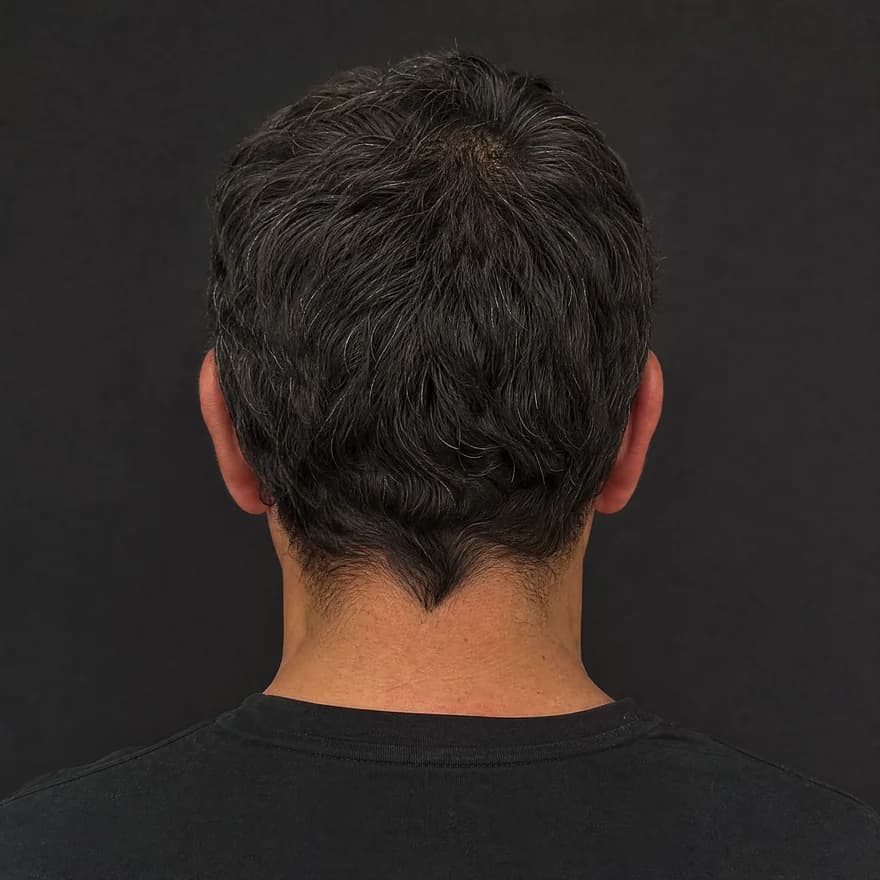
Back
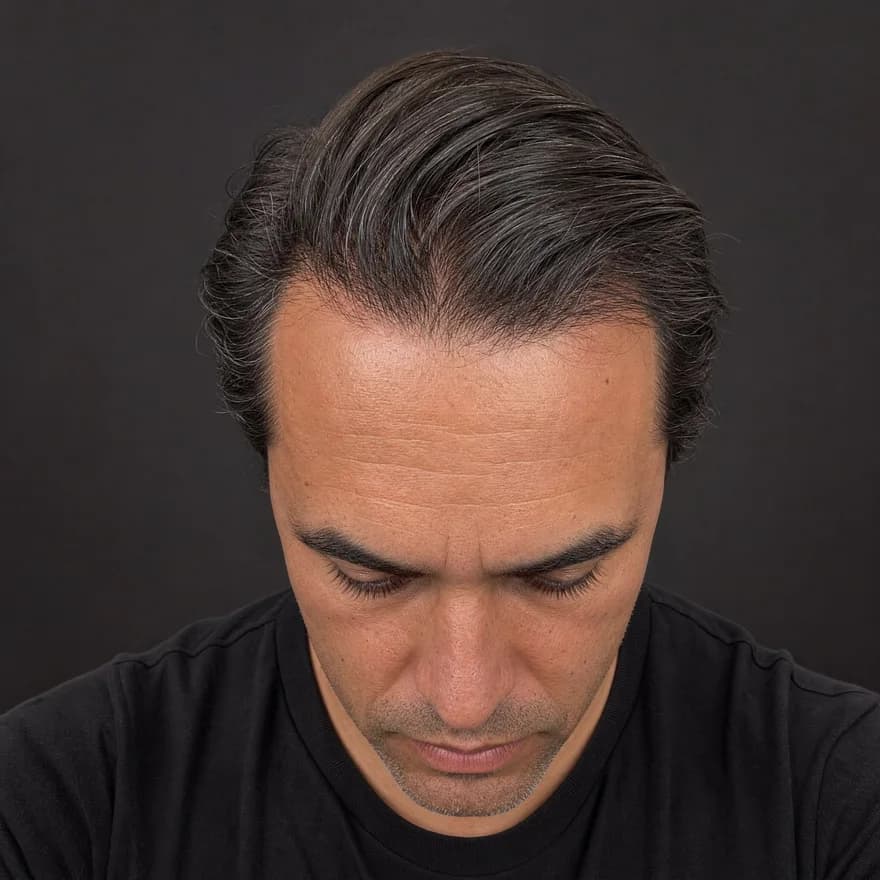
Front · Hairline
Same four angles, every time — illustrative example
Front · crown · temple · back
Four guided angles in about 30 seconds — the same views every time.
Hairline · density · scalp
AI reads each angle for hairline shape, crown density, and scalp surface.
Usable · limited · low-light
Every reading shows its confidence — limited views are flagged, not guessed.
Your baseline, revisited
Save it, rescan later, and see exactly what moved.
The definition, visibly
No single trait proves anything — but together they're what 'mature' actually looks like on a real head.
The whole line sits modestly higher than its teenage position, moved back roughly in parallel — not carved out at the corners.
The hair along the new line is still full. A mature line relocates; it doesn't thin out on the way. Sparse, wispy edges tell a different story.
Corners can round off slightly as a line matures. What they don't do is keep deepening into a sharper M year after year.
The defining trait, and the one no mirror glance can show: a mature line settles into position and holds. Stability is the whole definition.
The self-check
The definition hinges on stability — which makes this a measurement task, not a judgement call.
A clear, front-on shot from two or three years ago is your informal baseline. Even setback since then, with a dense edge, already leans 'mature.'
Four guided angles frame the hairline and corners identically every time — the fair comparison a bathroom mirror can't give you.
ScalpAnalysis AI's own analysis engine classifies the visible line — even, maturing, or M-shaped — with the confidence of the read shown. No invented millimetres.
Same angles, 8–12 weeks on. A line that hasn't moved between dated scans is doing exactly what a mature hairline does: nothing.
What you get
An illustrative example of the hairline read — yours is built from your own front and side photos.
Questions
The settled position an adult hairline commonly takes after the teenage years — set back modestly from the juvenile line, usually evenly, sometimes with gently softened corners. It's a normal appearance change seen across most adult men, not a category of hair loss.
Typically: the whole line sits a little higher than it did in your teens, the setback is roughly even across the front, the corners are softened rather than deeply cut, and the hair along the edge is still dense. The shape reads as a slightly higher hairline — not as an M dominated by the temples.
Most commonly somewhere between the late teens and late twenties, but the timing varies widely and some lines shift a little later. Age is honestly the least useful part of the definition — behaviour is the tell. A mature line settles and holds; a progressing one keeps moving whatever your age.
One photo can't tell you, because a maturing line and early recession can look the same on a given day. What separates them is direction over months: even setback that stabilises reads as maturing, corners that keep deepening faster than the middle read as a pattern worth tracking. A saved baseline plus a rescan is the honest way to see which is happening on your head.
They overlap heavily — a settled mature hairline typically photographs in the stage-1-to-2 zone of the appearance-based Norwood scale. The chart describes shape, though, not behaviour: what makes a line 'mature' rather than 'receding' is that it stops. That's why a stage label alone can't settle the question, but a tracked trend can.
A settled line that holds scan after scan is about the least worrying thing a hairline can do — no action needed beyond maybe updating your barber. If your photos show the line still moving, that's not a verdict either; it's early information worth confirming over another interval, and worth showing to a qualified professional if it continues.
Taking the four guided photos and previewing your report is free, no sign-up needed. Unlocking the full analysis — hairline shape read, edge density tier, scalp signals, and style suggestions — is $2.99 for the scan.
A note on transparency
ScalpAnalysis AI reads appearance-based signals and tracks visible change over time. It does not diagnose, treat, cure, or prevent any condition.
If you have pain, sudden shedding, or signs of infection, a qualified professional is the right next step.
The report it produces
This is the exact report format a scan unlocks — qualitative tiers, your visible features, and a confidence level on every reading. Saved as a baseline you compare against on every rescan.
Your Hair Profile
Temples just starting to open — crown still covered
Density
Medium
Type
Wavy
Texture
Medium
Shine
Medium
Risk of Recession
Low
Hair Loss
Mild
Illustrative example · sample data
Related guides
From the blog
Photos and a blurred preview are free. The full analysis is $2.99, or invite 3 friends for one free analysis.
