Uneven Hairline
Almost no hairline is perfectly symmetric. Most men who look closely will find one temple sitting slightly higher or cut slightly deeper than the other — and for most of them, that's how the line has always been. Faces are asymmetric; hairlines follow. An uneven hairline becomes worth attention for a different reason: when one side keeps moving and the other doesn't. Early temple recession often leads on one side, so a line that used to look level and now reads lopsided is a fair thing to check — not panic over. The mirror is a poor referee here, because a small tilt of the head or a different part line can fake a centimetre of difference. Two front photos taken the same way, months apart, settle it: stable asymmetry is a trait, growing asymmetry is a trend.
Photos and a blurred preview are free. The full reading is $2.99 — your stage, whether it looks early, and what to do next.
How it works
Same four angles, every time — so each new scan compares fairly to your very first.
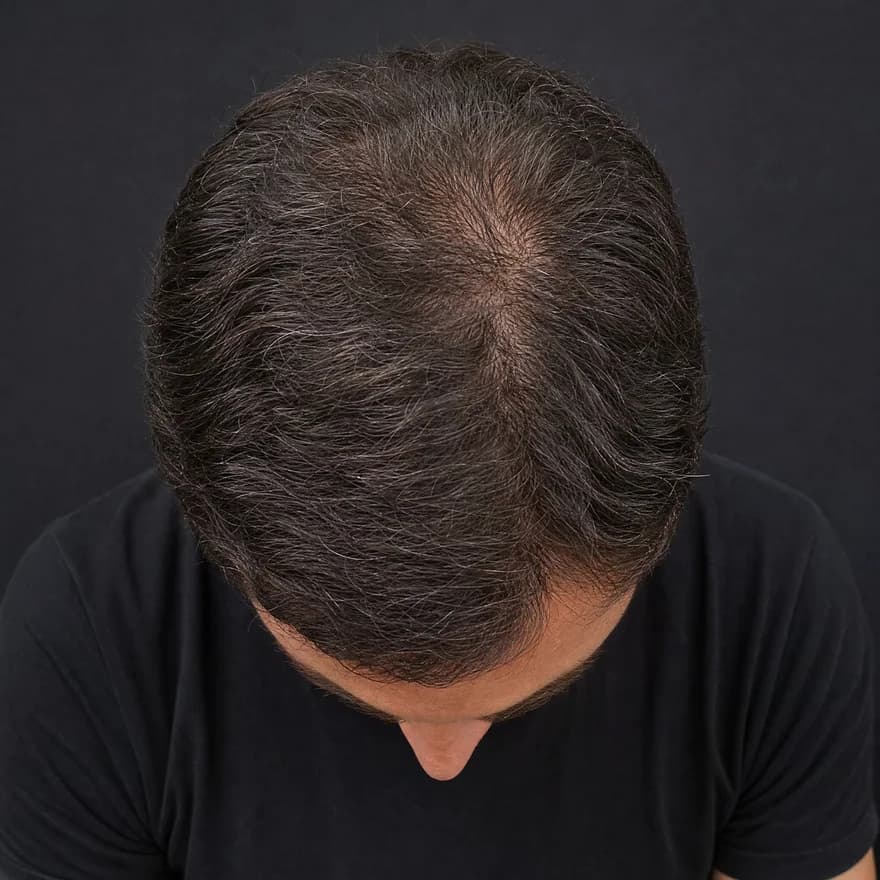
Top · Crown
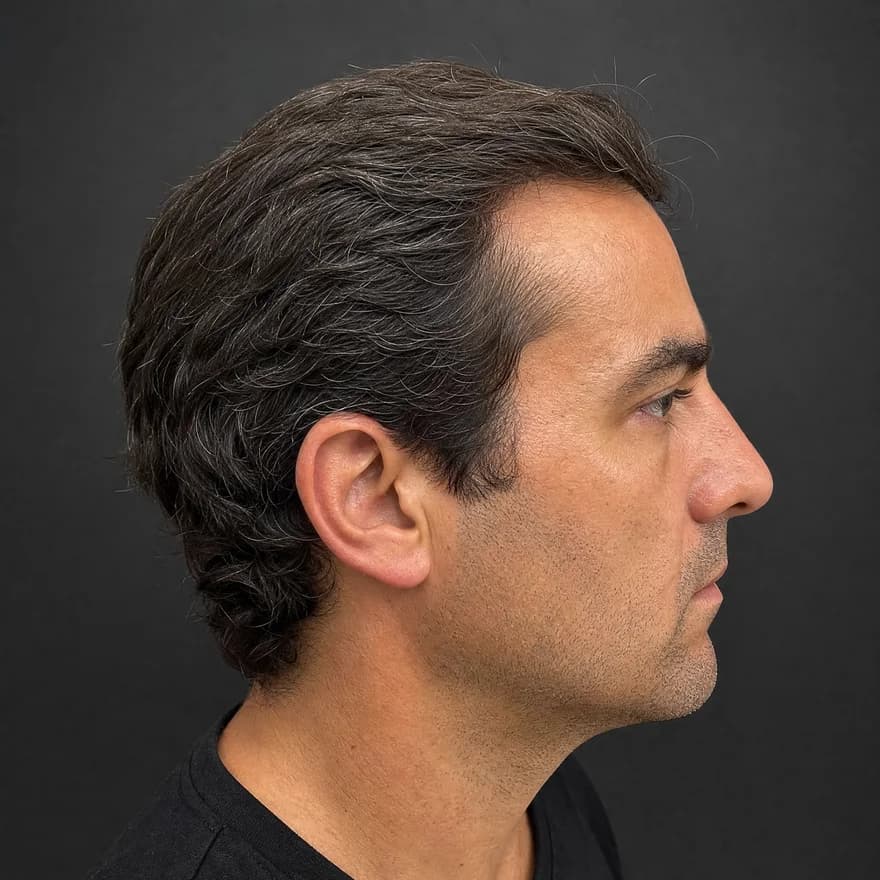
Side · Temple
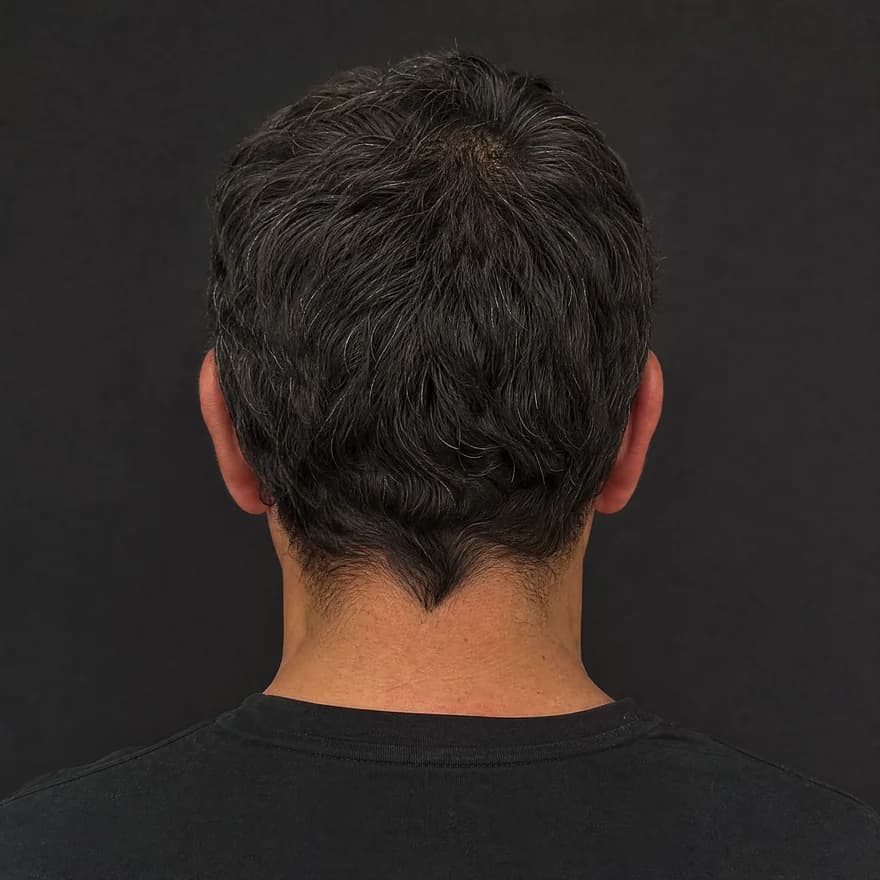
Back
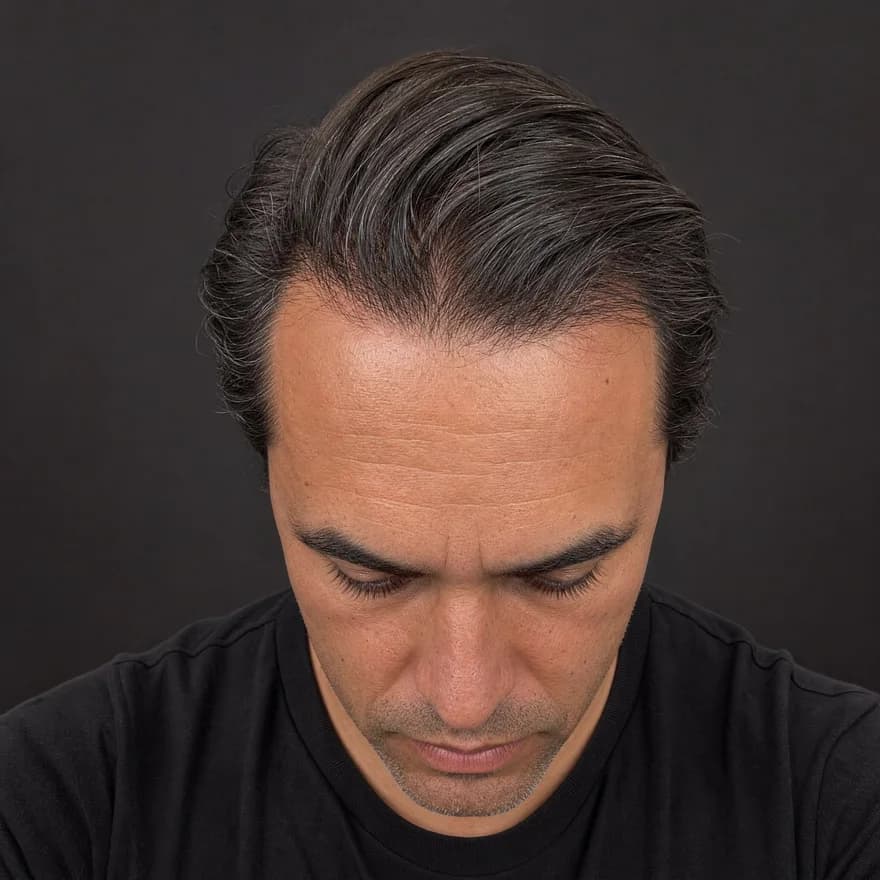
Front · Hairline
Same four angles, every time — illustrative example
Front · crown · temple · back
Four guided angles in about 30 seconds — the same views every time.
Hairline · density · scalp
AI reads each angle for hairline shape, crown density, and scalp surface.
Usable · limited · low-light
Every reading shows its confidence — limited views are flagged, not guessed.
Your baseline, revisited
Save it, rescan later, and see exactly what moved.
Why lines sit uneven
Three are anatomy you were probably born with. One is the reason this page exists.
Skulls and faces are asymmetric in almost everyone, and the hairline traces them. A line that's a little higher on one side is usually just following the architecture underneath.
Hair at each temple grows at its own angle. One corner can lie flatter and read higher, especially when short — that's texture, not retreat.
Years of parting the same way expose one temple more, and light hits the exposed side harder. Swap your part in the mirror and watch the 'uneven' side change.
Recession can lead with a single corner. That's why the useful question isn't 'is it uneven?' but 'is the gap growing?' — which only dated photos can answer.
Trait vs. trend
Neither column is a verdict — they're visible patterns to check your own photos against over months.
Appearance-based patterns for comparison — not a diagnosis either way.
Settle it with photos
Asymmetry is exactly the kind of question one glance gets wrong. Guided capture makes the comparison fair.
Guided front and side angles place each temple in the same position every scan — so a difference between sides is real, not a camera tilt.
The visible line and edge density come back as stable tiers with confidence shown, corner by corner. No eyeballing millimetres in a foggy mirror.
A trait holds; a trend moves. Two dated scans a season apart answer 'is the gap growing?' better than daily inspection ever will.
A stable gap is a real answer — keep living with your perfectly normal asymmetric line. A widening one is worth showing to a qualified professional, photos in hand.
Questions
Usually because faces are uneven. Hairlines follow the skull and the skin, growth direction differs corner to corner, and a lifetime of parting hair on one side changes how each temple reads. For most men an uneven line is simply the shape they've always had — old photos are the quickest way to confirm that.
Not by itself. Asymmetry is one of the most common traits a hairline can have. The pattern worth tracking is asymmetry that grows — one corner deepening scan after scan while the other holds. That's a direction question, and direction only shows across months of same-angle photos, never in one mirror glance.
Very. Growth direction, swirl position, and plain facial asymmetry all pull one corner higher. A modest, stable difference between temples is a trait, not a signal. What changes the picture is behaviour over time — a gap that widens between dated photos is worth watching more closely.
Recession often leads with one corner before the other catches up, so a newly lopsided line is a reasonable thing to check. The honest way to check it is a baseline: photograph both corners the same way today, compare in a couple of months, and see whether the gap is holding or growing.
First find out whether it's stable — a permanent trait needs no fixing, and a barber can balance most asymmetric lines with the cut alone; that's a style question, not a health one. If your photos show one side genuinely moving, that's the point to bring dated evidence to a qualified professional and talk through options.
Fix everything except the hairline. Same camera height, same expression, same light, hair pushed back the same way — then repeat in 8–12 weeks. The scan guides that framing for you and reads each corner as a tier with its confidence shown, so 'worse' becomes a comparison instead of a feeling.
Taking the four guided photos and previewing your report is free, with no sign-up. Unlocking the full analysis — the hairline read across both corners, density tiers, scalp signals, and style suggestions — is $2.99 for the scan.
A note on transparency
ScalpAnalysis AI reads appearance-based signals and tracks visible change over time. It does not diagnose, treat, cure, or prevent any condition.
If you have pain, sudden shedding, or signs of infection, a qualified professional is the right next step.
The report it produces
This is the exact report format a scan unlocks — qualitative tiers, your visible features, and a confidence level on every reading. Saved as a baseline you compare against on every rescan.
Your Hair Profile
Temples just starting to open — crown still covered
Density
Medium
Type
Wavy
Texture
Medium
Shine
Medium
Risk of Recession
Low
Hair Loss
Mild
Illustrative example · sample data
Related guides
From the blog
Photos and a blurred preview are free. The full analysis is $2.99, or invite 3 friends for one free analysis.
