Temple Hair Loss
The temples are where most men notice change first — and where the mirror is least reliable. The corners of a hairline are naturally the softest part of the line: finer hairs, more variation between heads, and the zone that harsh light exaggerates most. Some corner settling is part of a normal adult hairline; corners that keep deepening are a different story. One glance can't tell those apart. Two photos taken the same way, months apart, can — which is what a baseline is for.
Photos and a blurred preview are free. The full reading is $2.99 — your stage, whether it looks early, and what to do next.
How it works
Same four angles, every time — so each new scan compares fairly to your very first.
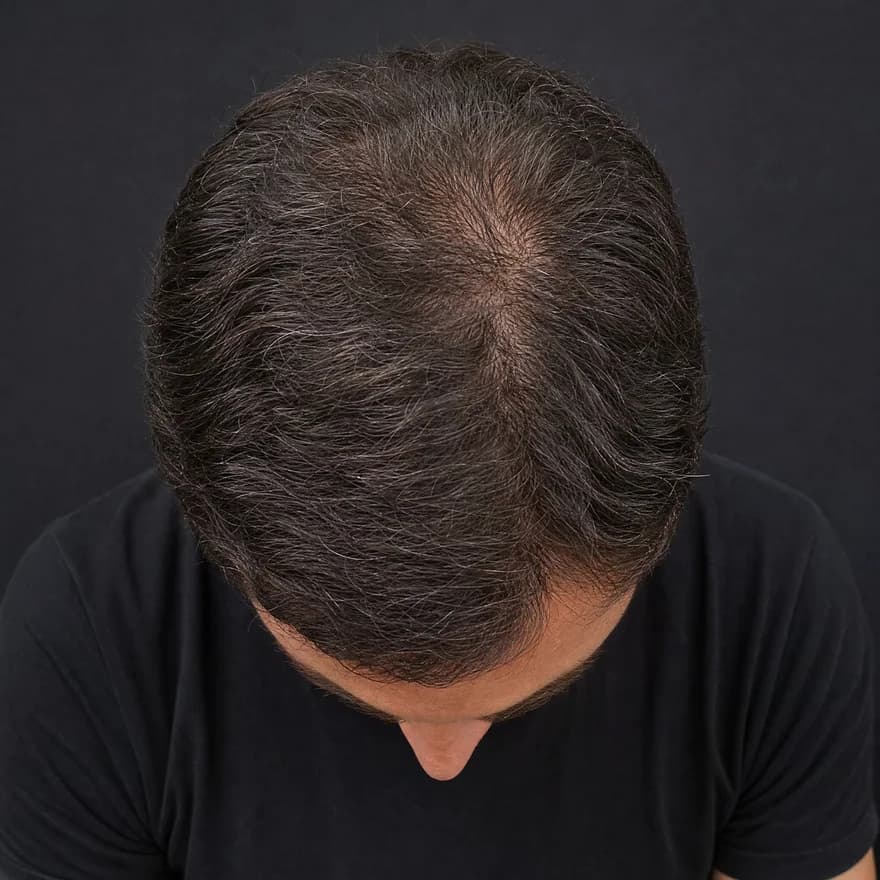
Top · Crown
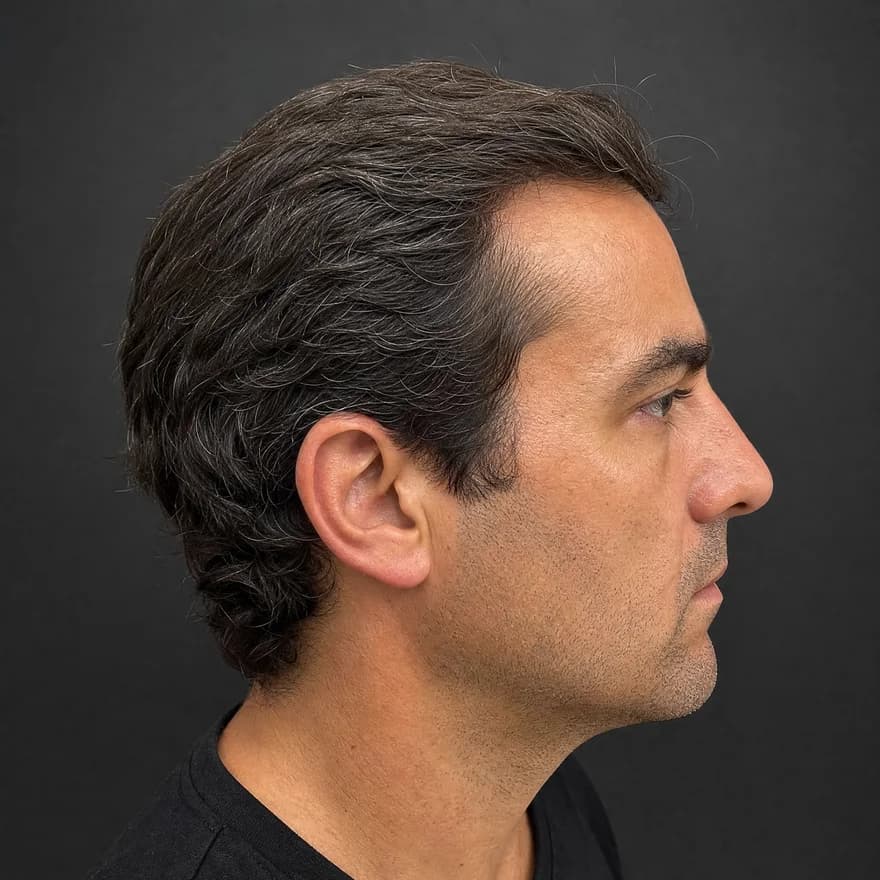
Side · Temple
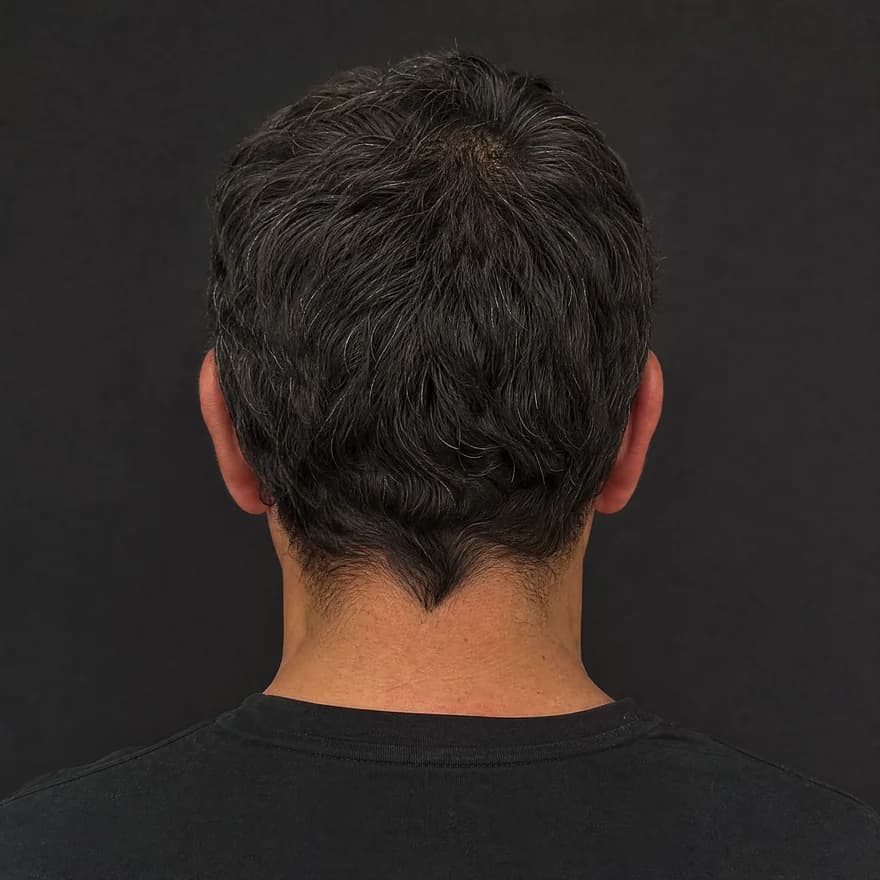
Back
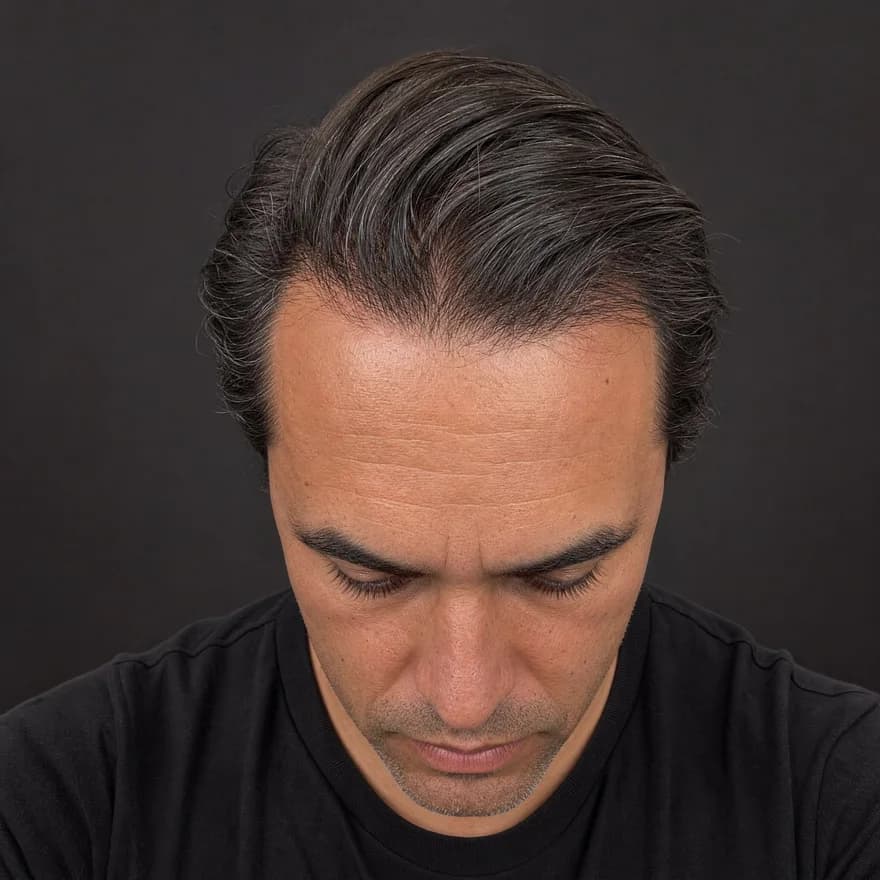
Front · Hairline
Same four angles, every time — illustrative example
Front · crown · temple · back
Four guided angles in about 30 seconds — the same views every time.
Hairline · density · scalp
AI reads each angle for hairline shape, crown density, and scalp surface.
Usable · limited · low-light
Every reading shows its confidence — limited views are flagged, not guessed.
Your baseline, revisited
Save it, rescan later, and see exactly what moved.
Reading the corners
Four things to know about the corners before you judge them — two are anatomy, two are lighting tricks.
Corners deepening faster than the middle of the line is the classic recession shape. An even, modest setback across the whole line reads as maturing instead.
The border of any hairline carries finer, shorter hairs. Sparse-looking corner wisps aren't automatically a change — they're often just the edge being the edge.
Overhead light and flash shadow the corners and exaggerate depth. The same temples can look fine at noon and alarming in a bathroom at midnight.
Your memory of where the corners 'used to be' drifts. A dated photo from the same angle is the only fair witness.
Settling vs. moving
Neither column is a verdict — they're visible patterns to check your own photos against over months.
Appearance-based patterns for comparison — not a diagnosis either way.
Put the corners on record
The corners are a small zone with big day-to-day noise. The fix is boring consistency — which guided capture handles for you.
Guided front and side angles put both corners in the same position every scan, so the comparison is between your temples — not between two camera positions.
The visible hairline shape — even, maturing, or M-shaped — comes back as a stable tier with its confidence shown. No invented millimetres.
Corner change is slow. A comparison months apart shows direction; a nightly mirror check mostly shows lighting.
Corners holding steady is a real answer worth having. If they keep deepening, you'll know early — with dated photos a professional can actually use.
What you get
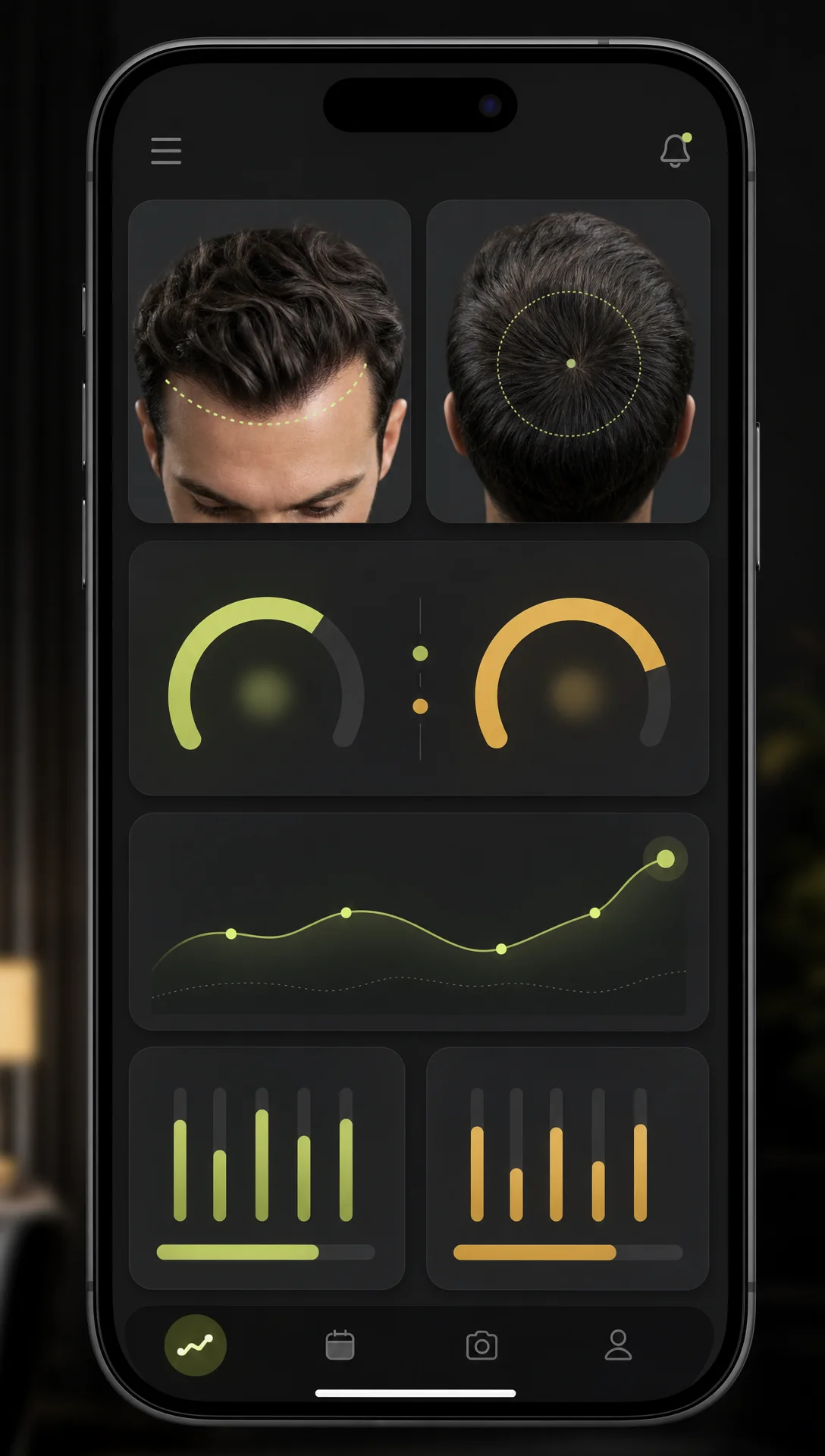
An illustrative example of the hairline read — yours is built from your own front and side photos.
Questions
The temple corners are usually the first place a changing pattern shows, and also the first place a perfectly normal maturing hairline settles. The corners naturally carry finer, sparser hair than the middle of the line, so they read as 'thinning' in harsh light even when nothing is moving. That's why the useful check is direction over months, not how the corners look tonight.
No. A maturing hairline — a modest, even settling that includes the corners and then holds — is a normal appearance change for most adult men. What distinguishes a pattern worth tracking is behaviour: corners that keep deepening faster than the middle of the line across months. A photo baseline is how you see which one yours is doing.
That depends on why the corners changed, which is a question for a qualified professional — not something a photo tool can or should answer. What photos can honestly do is establish whether your corners are stable or still moving, and give you a dated record to bring to that conversation.
Fix the conditions and compare. Angle, light, wet hair, and a fresh cut all move how deep the corners look day to day — that's why the mirror keeps changing its answer. A guided front and side photo, repeated the same way 8–12 weeks later, turns the question into a comparison your eyes can actually settle.
Slight, even corner settling reads like the stage 1–2 range on an appearance-based scale, while a deeper M-shape at the temples reads closer to stage 3. The scan suggests where your visible pattern sits, with its confidence shown — as a tracking reference, not a diagnosis.
Taking the four guided photos and previewing your report is free, no sign-up needed. Unlocking the full analysis — hairline read, density tier, scalp signals, and style suggestions — is $2.99 for the scan.
A note on transparency
ScalpAnalysis AI reads appearance-based signals and tracks visible change over time. It does not diagnose, treat, cure, or prevent any condition.
If you have pain, sudden shedding, or signs of infection, a qualified professional is the right next step.
The report it produces
This is the exact report format a scan unlocks — qualitative tiers, your visible features, and a confidence level on every reading. Saved as a baseline you compare against on every rescan.
Your Hair Profile
Temples just starting to open — crown still covered
Density
Medium
Type
Wavy
Texture
Medium
Shine
Medium
Risk of Recession
Low
Hair Loss
Mild
Illustrative example · sample data
Related guides
From the blog
Photos and a blurred preview are free. The full analysis is $2.99, or invite 3 friends for one free analysis.
