M-Shaped Hairline
An M-shaped hairline — corners sitting higher than the centre, drawing a wide, shallow M across the forehead — is one of the most common hairline silhouettes there is. Plenty of men are simply born with it: a natural widow's-peak-adjacent shape that never moves a millimetre. It's also, inconveniently, the silhouette that temple recession produces as corners deepen. Same letter, two completely different stories. That's why 'is an M-shaped hairline bad?' has no honest one-word answer. The shape alone tells you almost nothing; what matters is whether the M is static or getting sharper. A natural M photographs the same year after year. A deepening one cuts further into the corners with each comparison — which is exactly the kind of slow, low-contrast change a mirror hides and a dated photo pair exposes. Put the shape on record once, and the question answers itself over time.
Photos and a blurred preview are free. The full reading is $2.99 — your stage, whether it looks early, and what to do next.
How it works
Same four angles, every time — so each new scan compares fairly to your very first.
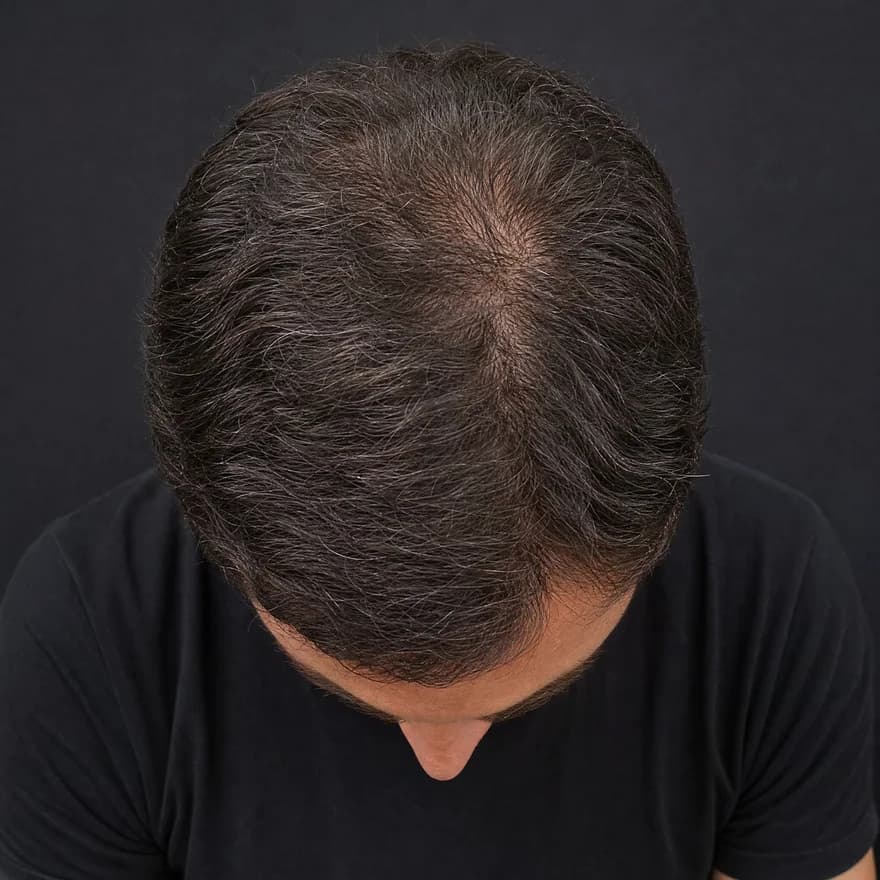
Top · Crown
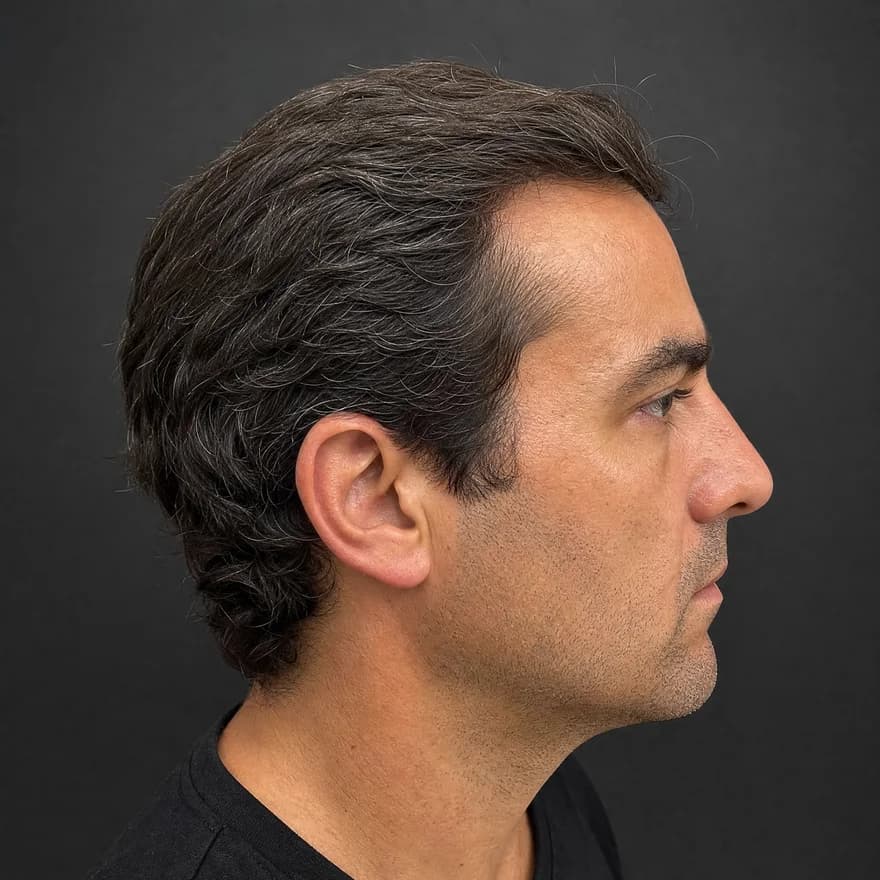
Side · Temple
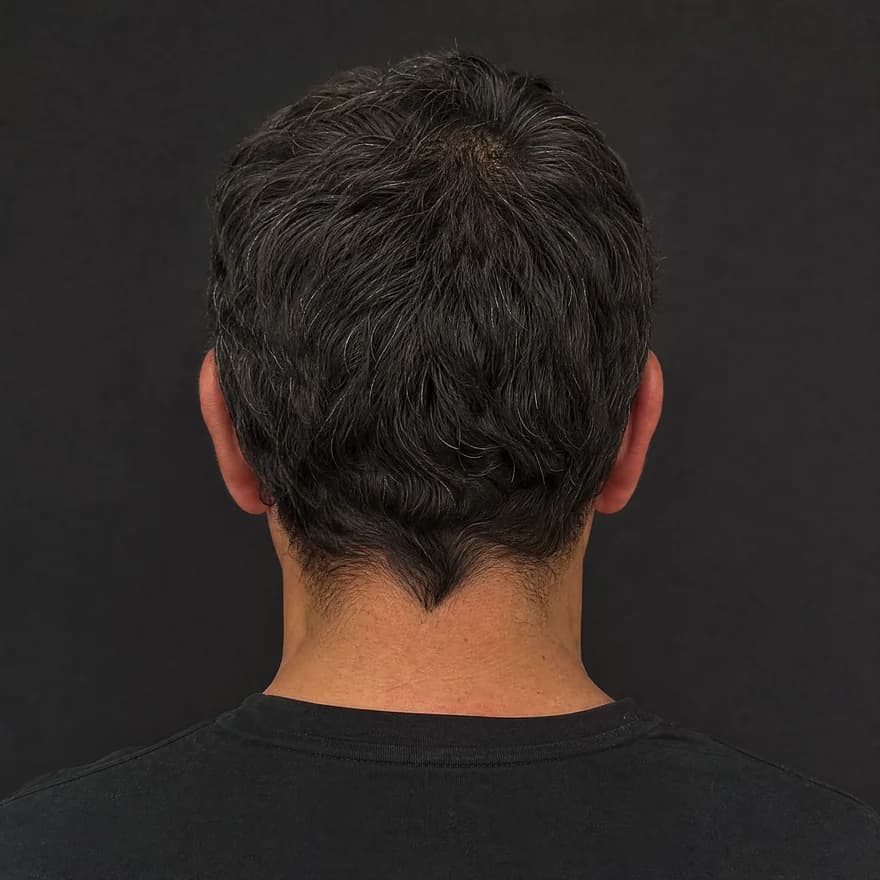
Back
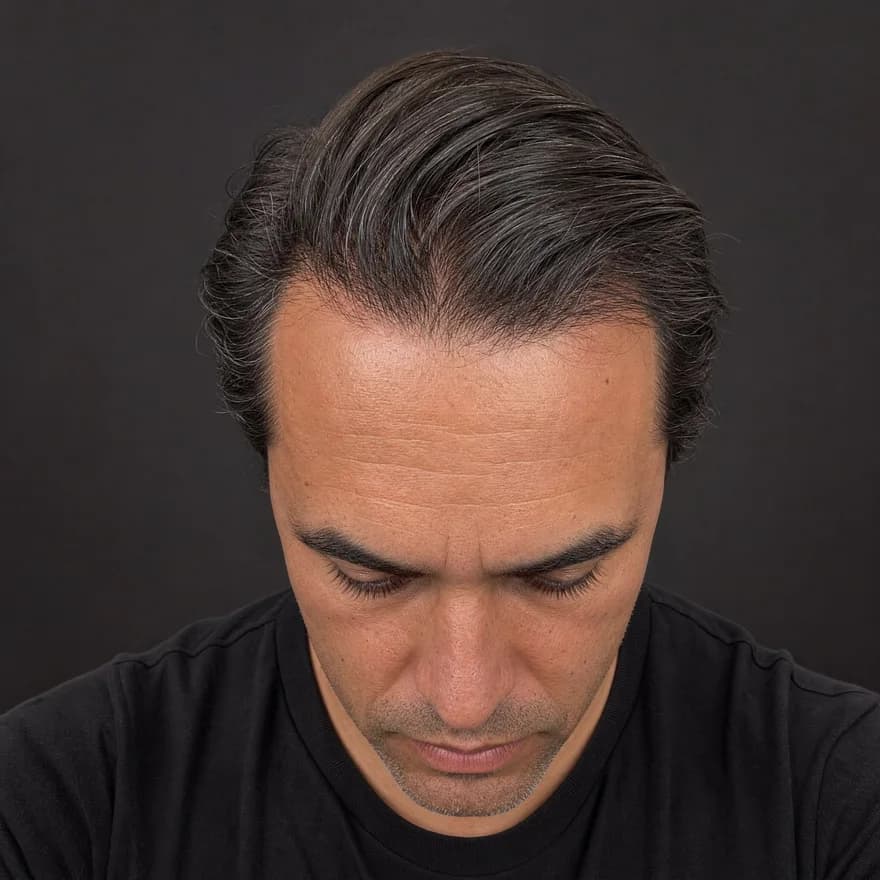
Front · Hairline
Same four angles, every time — illustrative example
Front · crown · temple · back
Four guided angles in about 30 seconds — the same views every time.
Hairline · density · scalp
AI reads each angle for hairline shape, crown density, and scalp surface.
Usable · limited · low-light
Every reading shows its confidence — limited views are flagged, not guessed.
Your baseline, revisited
Save it, rescan later, and see exactly what moved.
Reading the M
Four cues separate a lifelong M from a deepening one — none of them visible in a single bad-mirror moment.
A natural M is usually wide and shallow. Corners cut sharply deeper than the mid-line — and getting sharper — are the recession-shaped version.
A born-this-way M keeps dense hair right up to its edge. Corners that thin out into fine, sparse wisps before moving tell a progression story.
Any clear front-on photo from years ago beats memory. Same M then and now: shape. Noticeably shallower M back then: change.
Overhead light and flash shadow the temples and can deepen any M by a visual centimetre. Judge only from evenly lit, same-angle photos.
The M on the scale
The Norwood scale is largely a story of the M getting deeper — from soft corners to a pattern that dominates the line. Seeing the full progression helps you place a static shape honestly, without rounding yourself up.
Stage 1
A full, even hairline with no visible recession at the temples.
Stage 2
The hairline sets back a little at the temples — common and often stable.
Stage 3
More visible recession at both temples, forming an early M-shape.
Stage 4
Temple recession with a separate thinning area starting at the crown.
Stage 5
The band of hair between front and crown looks narrower and less dense.
Stage 6
Front and crown areas connect as the separating band thins out.
Stage 7
Hair remains mainly around the sides and back in a horseshoe pattern.
How to read your stage
Put the shape on record
The whole question is 'static or deepening?' — which makes this a two-photo problem, not a nightly inspection.
Guided front and side angles hold your head, distance, and tilt constant — so the M you compare is your hairline's, not the camera's.
ScalpAnalysis AI's own analysis engine classifies the visible silhouette and corner depth as stable tiers with confidence shown, rather than guessing millimetres from pixels.
Corner change is slow. Two dated scans a season apart show direction; anything more frequent mostly measures lighting.
A flat trend means you have a shape — wear it. A deepening one means you caught a pattern early, with dated photos a qualified professional can actually use.
What you get
An illustrative example of the hairline read — yours is built from your own front and side views.
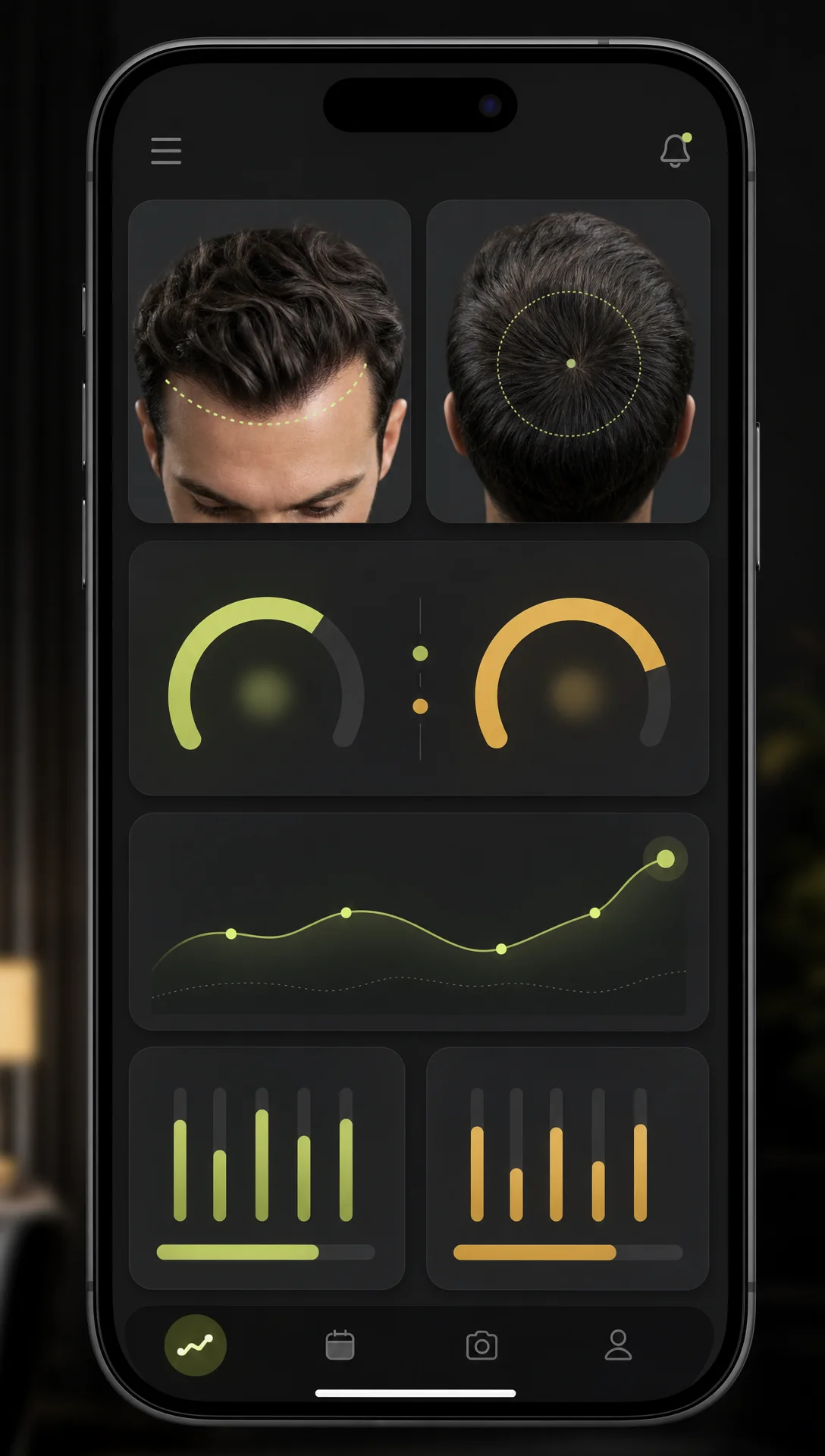
Questions
A hairline where the temple corners sit noticeably higher than the centre, so the front edge draws a wide M across the forehead. It's a description of a silhouette — common as a natural, lifelong shape, and also the shape that develops when temple corners recede. The letter alone doesn't tell you which one you're looking at.
As a natural shape, yes — many men carry a modest M from their teens onwards, and a maturing hairline often softens into a shallow M and then holds. It's one of the standard silhouettes a hairline can have, not a defect and not automatically a signal of anything.
Not necessarily. A static M — one that photographs the same year after year, with dense hair along the edge — is just a shape. A deepening M, where the corners cut visibly further back between dated photos, is behaving like temple recession and is worth tracking. The difference is direction, and only same-angle comparisons over months can show it.
They're near-opposites geometrically. A widow's peak is a downward point of hair at the centre of the line; an M is defined by the corners sitting higher than the centre. A strong widow's peak can make a perfectly even line read as M-ish, which is one reason eyeballing your own silhouette in a mirror misleads. A framed, front-on photo reads the actual geometry.
It depends entirely on depth. A shallow, natural M photographs in the stage-1-to-2 zone of the appearance-based Norwood scale, while distinctly deeper corners that dominate the line read closer to stage 3. The scan suggests where your visible pattern sits, with its confidence shown — as a tracking reference, not a grade.
Stop judging it nightly and measure it twice. A guided front-and-side scan today fixes the framing and reads corner depth and edge density as tiers; the same scan 8–12 weeks later shows whether anything actually moved. A static M is a real, reassuring answer. A deepening one is early information — worth confirming over another interval and worth showing to a qualified professional if it keeps going.
Taking the four guided photos and previewing your report is free, no sign-up needed. Unlocking the full analysis — the hairline read with corner depth, density tiers, scalp signals, and style suggestions — is $2.99 for the scan.
A note on transparency
ScalpAnalysis AI reads appearance-based signals and tracks visible change over time. It does not diagnose, treat, cure, or prevent any condition.
If you have pain, sudden shedding, or signs of infection, a qualified professional is the right next step.
The report it produces
This is the exact report format a scan unlocks — qualitative tiers, your visible features, and a confidence level on every reading. Saved as a baseline you compare against on every rescan.
Your Hair Profile
Temples just starting to open — crown still covered
Density
Medium
Type
Wavy
Texture
Medium
Shine
Medium
Risk of Recession
Low
Hair Loss
Mild
Illustrative example · sample data
Related guides
From the blog
Photos and a blurred preview are free. The full analysis is $2.99, or invite 3 friends for one free analysis.
