Is My Hairline Receding?
Hairlines move for two very different reasons: most mature slightly and stop; some keep going. The difference rarely shows in one mirror glance — it shows between two photos taken the same way, months apart. That's exactly what a baseline is for.
Photos and a blurred preview are free. The full reading is $2.99 — your stage, whether it looks early, and what to do next.
How it works
Same four angles, every time — so each new scan compares fairly to your very first.
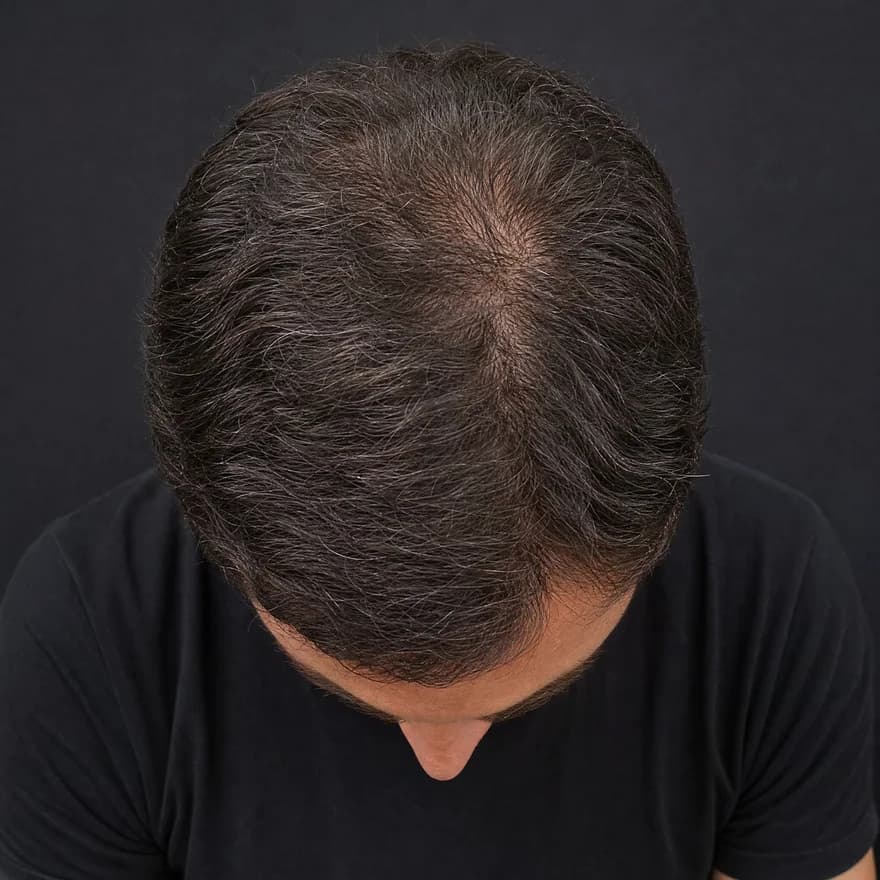
Top · Crown
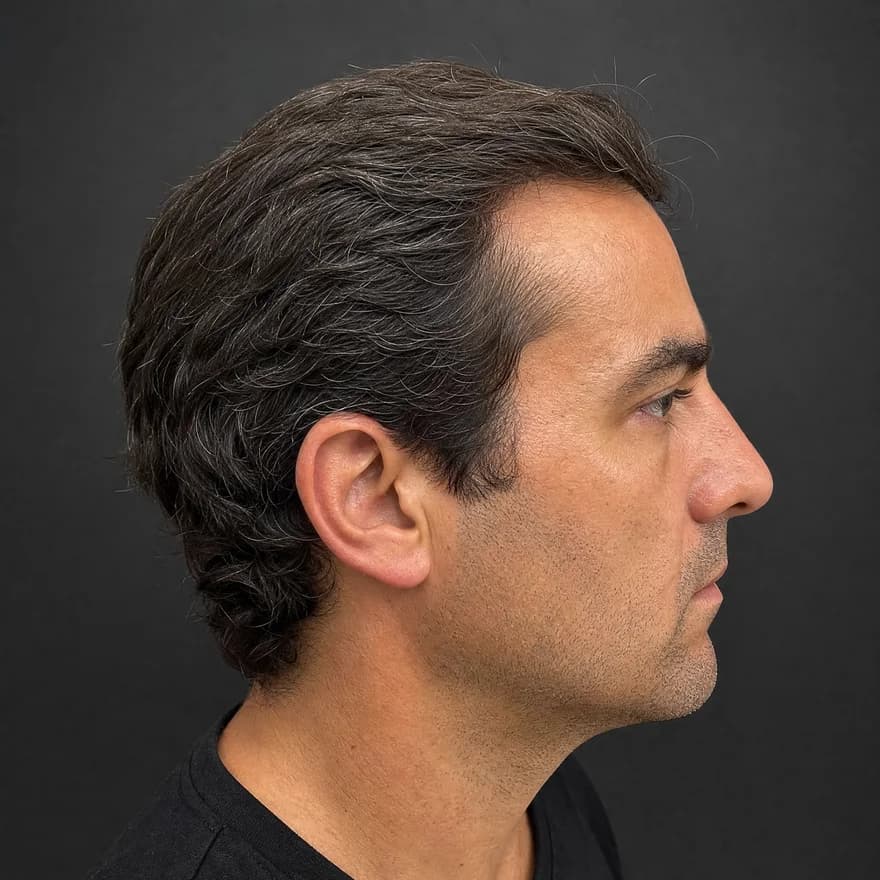
Side · Temple
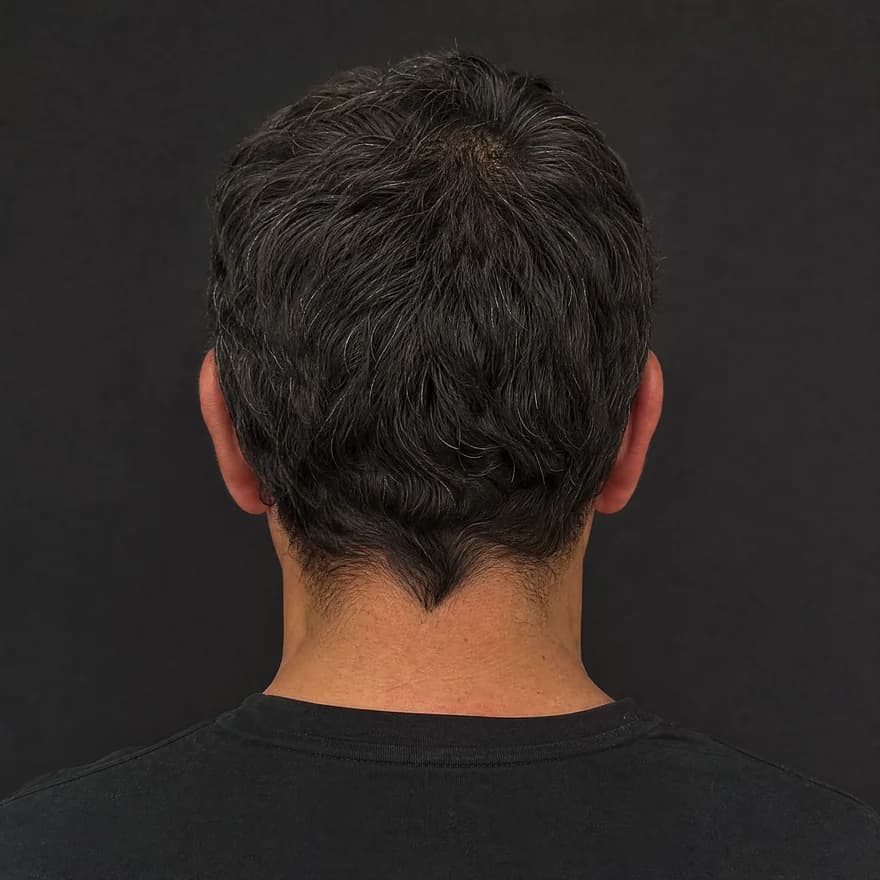
Back
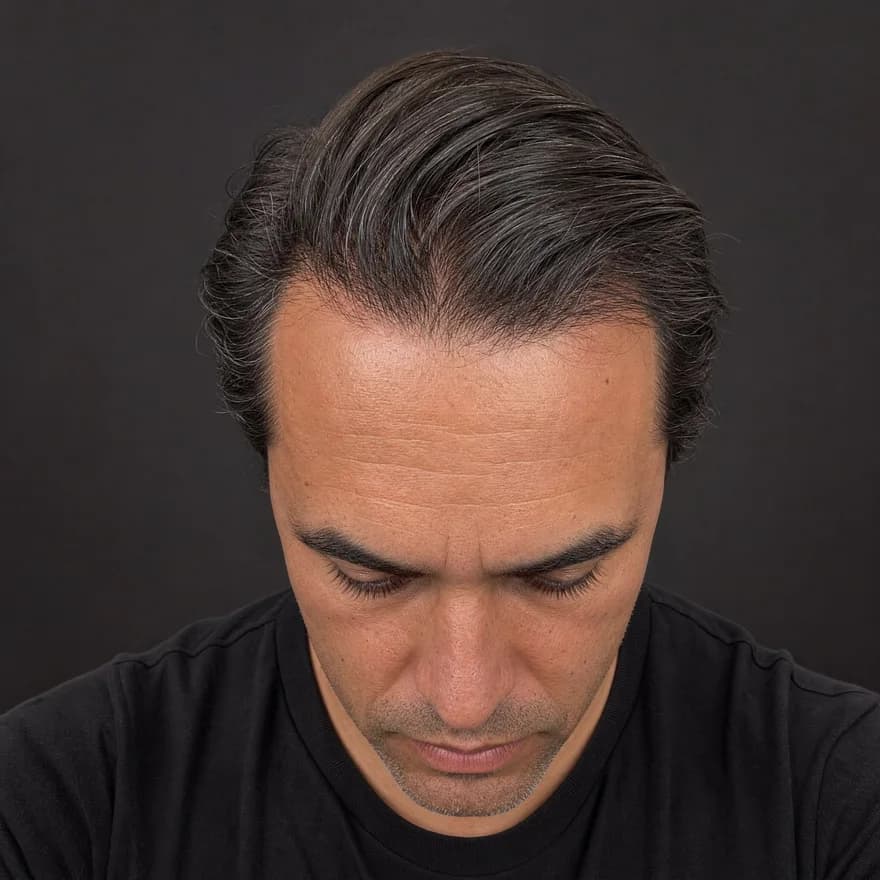
Front · Hairline
Same four angles, every time — illustrative example
Front · crown · temple · back
Four guided angles in about 30 seconds — the same views every time.
Hairline · density · scalp
AI reads each angle for hairline shape, crown density, and scalp surface.
Usable · limited · low-light
Every reading shows its confidence — limited views are flagged, not guessed.
Your baseline, revisited
Save it, rescan later, and see exactly what moved.
Reading the line
Four visible cues separate a settling hairline from a moving one. None of them is a single bad-mirror day.
A maturing line sets back evenly; corners deepening faster than the middle is the classic receding shape.
A receding edge usually thins before it moves — finer, sparser hairs right at the line are an earlier cue than position.
Compare against photos from one or two years ago at the same angle — memory is the least reliable instrument in this test.
Wet hair, harsh top-light, and a new cut all shift the apparent line. Trends mean something; snapshots mostly don't.
From question to measurement
The front view is captured with guided framing, so the line sits in the same place in every scan — comparisons stay fair.
The visible silhouette — even, maturing, or M-shaped — is classified as a tier, with the confidence of the read shown.
Today's line, on record. The whole question becomes "has it moved since?" — which photos can actually answer.
Same angle, months later. Stable is an answer too — and often the most reassuring one you can get.
Questions
A maturing hairline tends to set back evenly — roughly a finger's width — and then hold stable. A receding pattern usually deepens at the temple corners faster than the middle, and keeps moving over months. Photos at the same angle, months apart, show which one is happening.
Angle, lighting, wet hair, and a fresh haircut all move the apparent line day to day — and memory drifts. A fixed-angle photo baseline makes the comparison fair, which is the whole game.
The visible hairline shape — even, maturing, or M-shaped — plus edge density and any visible recession signals at the temples, each with its own confidence level.
If the line moves noticeably between scans, or you notice sudden or patchy loss, take the evidence to a qualified professional. This tool tracks appearance; it doesn't diagnose — but it does give you dated photos to bring along.
No — you can take the four photos and preview a blurred report without an account. Unlocking the full hairline analysis is $2.99 per scan, or invite 3 friends for one free analysis; your baseline is saved with it so you can compare against it later.
A note on transparency
ScalpAnalysis AI reads appearance-based signals and tracks visible change over time. It does not diagnose, treat, cure, or prevent any condition.
If you have pain, sudden shedding, or signs of infection, a qualified professional is the right next step.
The report it produces
This is the exact report format a scan unlocks — qualitative tiers, your visible features, and a confidence level on every reading. Saved as a baseline you compare against on every rescan.
Your Hair Profile
Temples just starting to open — crown still covered
Density
Medium
Type
Wavy
Texture
Medium
Shine
Medium
Risk of Recession
Low
Hair Loss
Mild
Illustrative example · sample data
Related guides
From the blog
Photos and a blurred preview are free. The full analysis is $2.99, or invite 3 friends for one free analysis.
