Norwood Stage 2
Stage 2 on the Norwood scale describes a hairline that has settled back modestly from its juvenile position, with slight triangular recession at the temples. Here's what most charts don't say plainly: this zone overlaps heavily with a normal mature hairline — the even, settled line most adult men end up with. That's why stage 2 causes more late-night searching than almost any other stage: it's the boundary between 'my hairline grew up' and 'my hairline is going somewhere.' A chart alone can't tell you which side of that boundary you're on, because the difference isn't the shape today — it's whether the shape is still changing. A photo baseline reads where your visible pattern sits now, and a rescan months later answers the only question stage 2 actually raises: is it holding, or moving?
Photos and a blurred preview are free. The full reading is $2.99 — your stage, whether it looks early, and what to do next.
How it works
Same four angles, every time — so each new scan compares fairly to your very first.
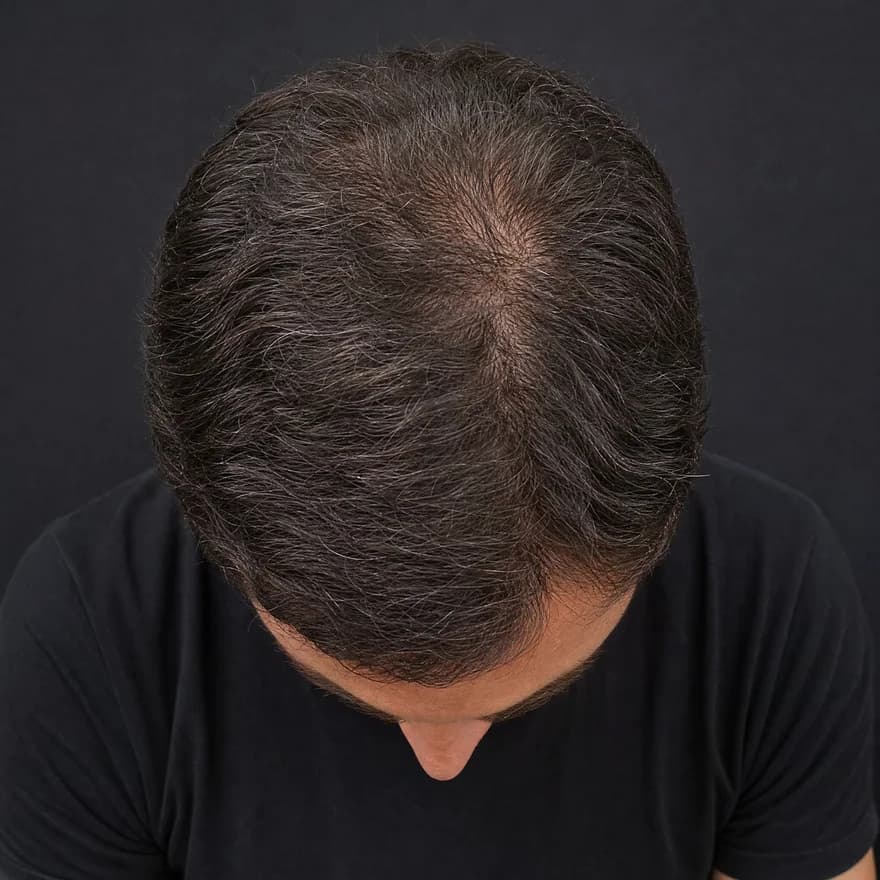
Top · Crown
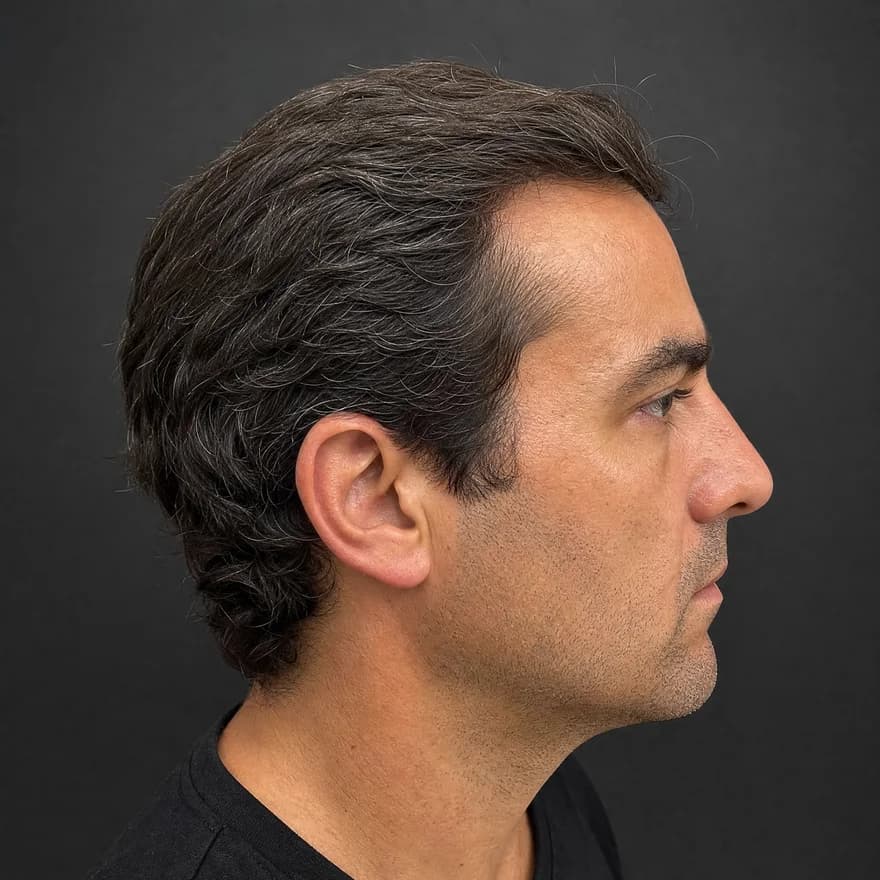
Side · Temple
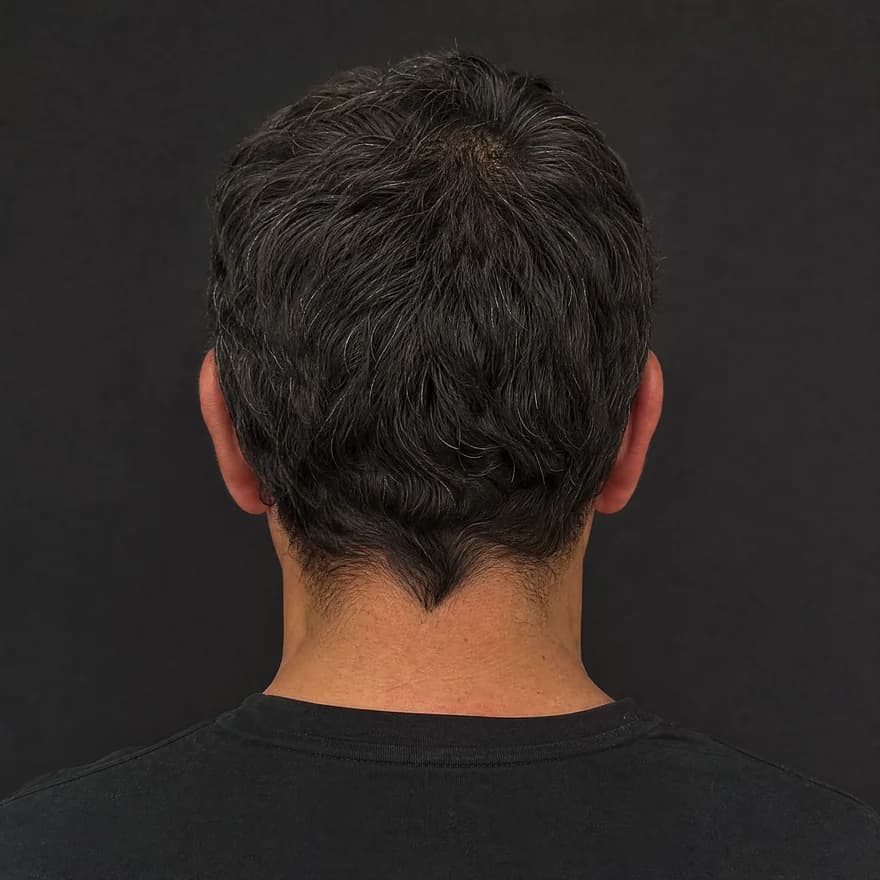
Back
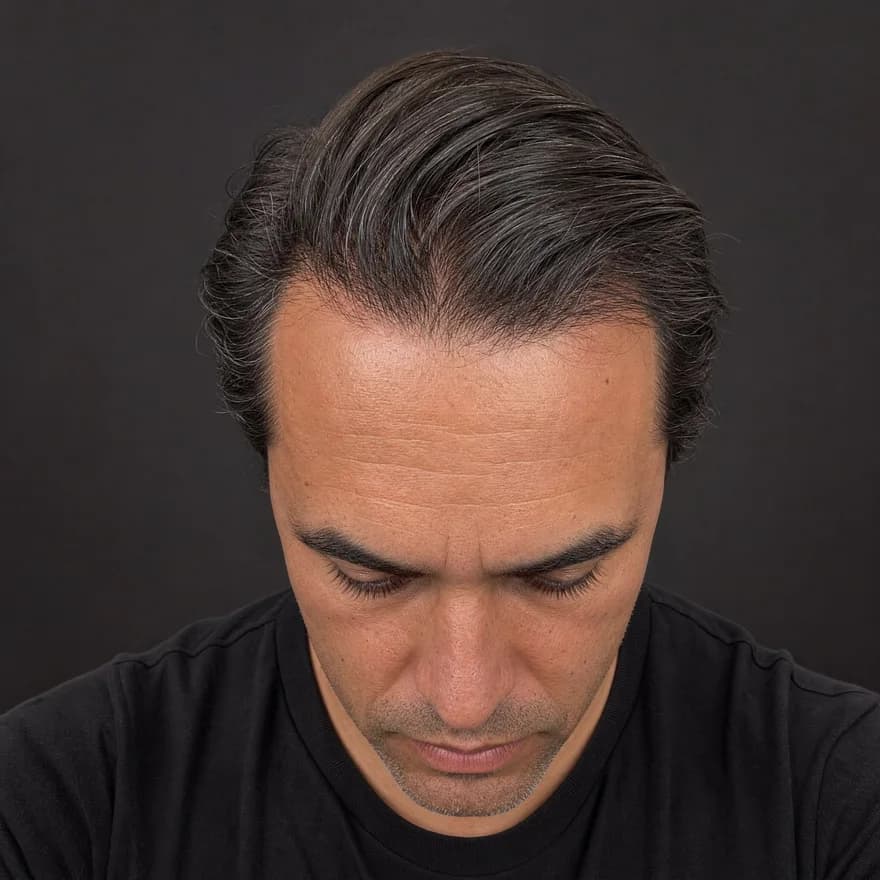
Front · Hairline
Same four angles, every time — illustrative example
Front · crown · temple · back
Four guided angles in about 30 seconds — the same views every time.
Hairline · density · scalp
AI reads each angle for hairline shape, crown density, and scalp surface.
Usable · limited · low-light
Every reading shows its confidence — limited views are flagged, not guessed.
Your baseline, revisited
Save it, rescan later, and see exactly what moved.
Where stage 2 sits
The Norwood scale runs from an even juvenile line to advanced patterns. Stage 2 is the second stop — and the one that overlaps most with a normal adult hairline. Use the reference views to see the whole progression before judging one square of it.
Stage 1
A full, even hairline with no visible recession at the temples.
Stage 2
The hairline sets back a little at the temples — common and often stable.
Stage 3
More visible recession at both temples, forming an early M-shape.
Stage 4
Temple recession with a separate thinning area starting at the crown.
Stage 5
The band of hair between front and crown looks narrower and less dense.
Stage 6
Front and crown areas connect as the separating band thins out.
Stage 7
Hair remains mainly around the sides and back in a horseshoe pattern.
How to read your stage
The boundary question
Two hairlines can photograph almost identically today and behave differently over a year. These are the visible patterns to watch — not a verdict on either side.
Appearance-based patterns for comparison — not a diagnosis either way.
From chart to answer
Squinting between your mirror and a chart is guesswork. The scan replaces it with the same read, repeated the same way.
Guided front and side angles frame the hairline and both temples identically every time — the exact features the Norwood scale is defined by.
ScalpAnalysis AI's own analysis engine reads the visible pattern and suggests where it sits on the appearance-based scale — clearly marked as a tracking reference, not a grade.
Stage 2's only real question is 'holding or moving?' A dated baseline is the first half of that answer.
Same angles, 8–12 weeks later. A flat trend is genuine reassurance; a moving one is early, useful knowledge to bring to a qualified professional.
Questions
On the appearance-based Norwood scale, stage 2 describes a hairline that sits modestly behind the juvenile line, with slight, roughly symmetrical recession at the temples. The overall shape still reads as a hairline rather than visible balding — which is exactly why this stage and a normal mature hairline are so hard to tell apart on a chart.
Not in itself. The stage-2 shape overlaps with a mature hairline — a normal adult settling that then holds for decades. What separates the two isn't how the line looks tonight but what it does next: a settled line stays put, a progressing pattern keeps deepening at the corners. That's a question photos over months can answer and a single chart comparison can't.
A hairline in the stage-2 zone is common across adult men of most ages — many arrive there in their twenties as the line matures and then simply stay. Age matters less than direction. If your line has looked the same for a couple of years, it's behaving like a settled line regardless of what a chart calls it.
Stage 2 reads as slight, even corner settling; stage 3 reads as distinctly deeper, more sculpted recession at the temples — the corners start to dominate the shape of the line. Eyeballing a chart is where most people get stuck. The scan reads your visible pattern from guided front and side photos and suggests where it sits, with the confidence of the read shown.
Many hairlines settle in this zone and hold there indefinitely — that's the classic mature-hairline story. Some keep moving. No photo tool can promise which yours will do, and this one doesn't try: it gives you a dated baseline and reads the direction between scans, which is the honest version of an answer.
The most useful move is unglamorous: put today's line on record and stop relying on memory. Rescan in 8–12 weeks and compare. If the trend is flat, you have real reassurance. If the corners keep deepening, you'll know early — and dated photos make a conversation with a qualified professional far more productive than 'I think it's worse.'
Taking the four guided photos and previewing your report is free, no sign-up needed. The full analysis — your appearance-based stage suggestion with confidence, plus density tiers, scalp signals, and style suggestions — is $2.99 for the scan.
A note on transparency
ScalpAnalysis AI reads appearance-based signals and tracks visible change over time. It does not diagnose, treat, cure, or prevent any condition.
If you have pain, sudden shedding, or signs of infection, a qualified professional is the right next step.
The report it produces
This is the exact report format a scan unlocks — qualitative tiers, your visible features, and a confidence level on every reading. Saved as a baseline you compare against on every rescan.
Your Hair Profile
Temples just starting to open — crown still covered
Density
Medium
Type
Wavy
Texture
Medium
Shine
Medium
Risk of Recession
Low
Hair Loss
Mild
Illustrative example · sample data
Related guides
From the blog
Photos and a blurred preview are free. The full analysis is $2.99, or invite 3 friends for one free analysis.
