Maturing vs Receding
Almost every adult hairline sets back from its teenage position — most settle a centimetre or so and hold for decades. The look-alike problem: early recession starts the same way. One photo can't separate them; the same photo repeated over months can.
Photos and a blurred preview are free. The full reading is $2.99 — your stage, whether it looks early, and what to do next.
How it works
Same four angles, every time — so each new scan compares fairly to your very first.
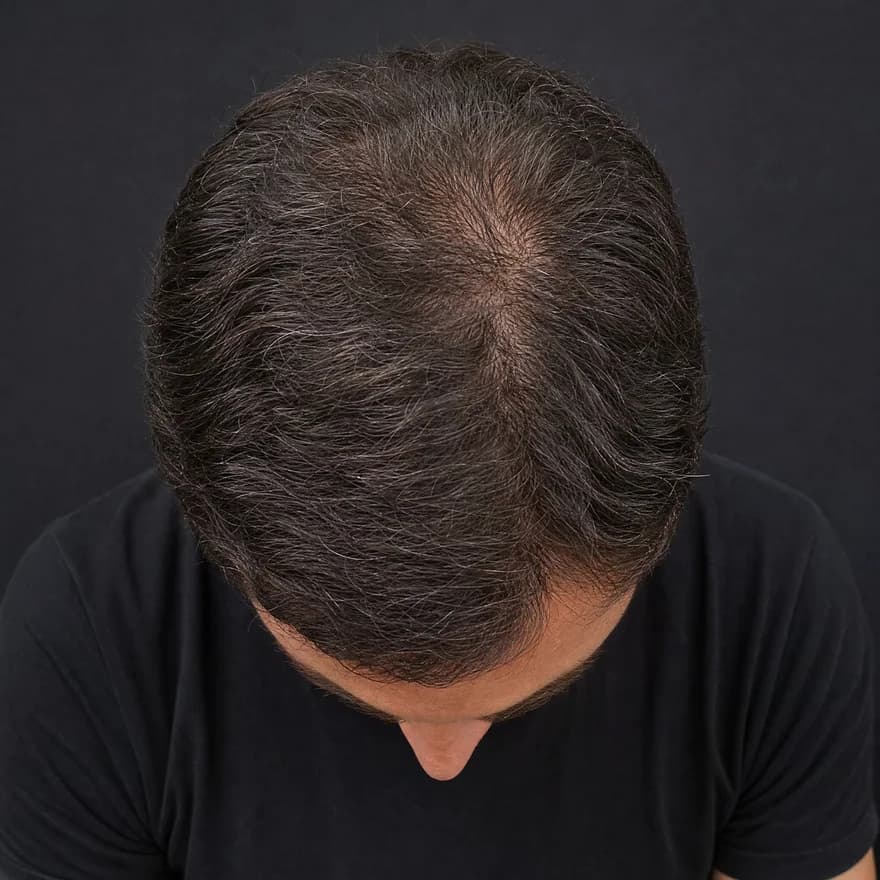
Top · Crown
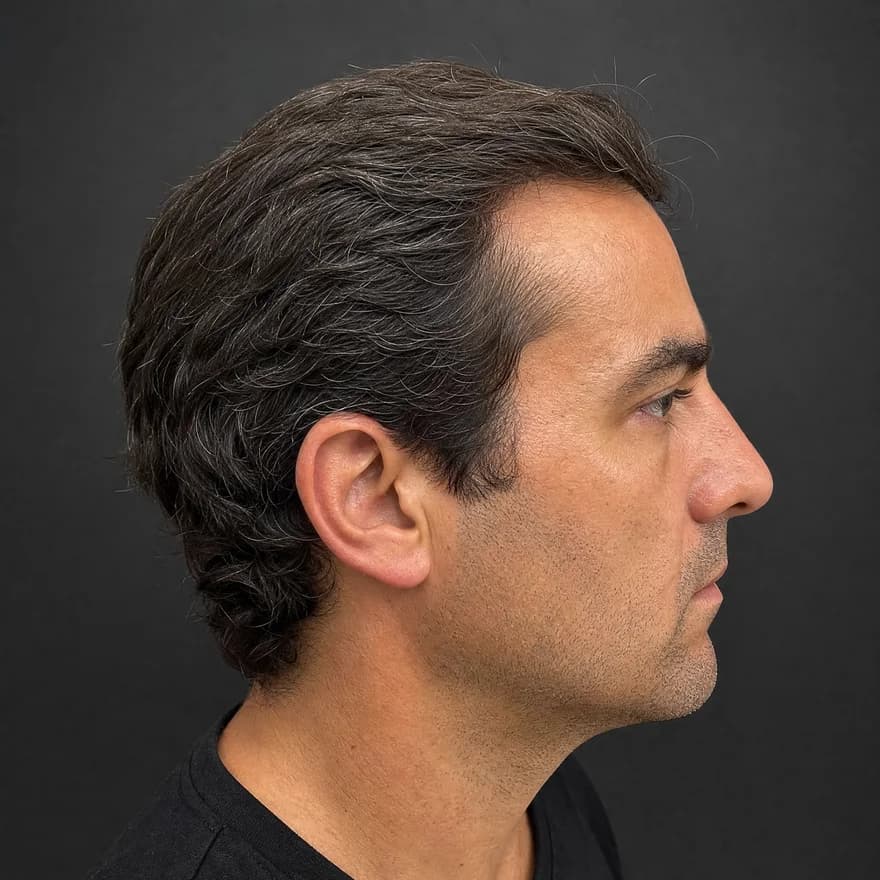
Side · Temple
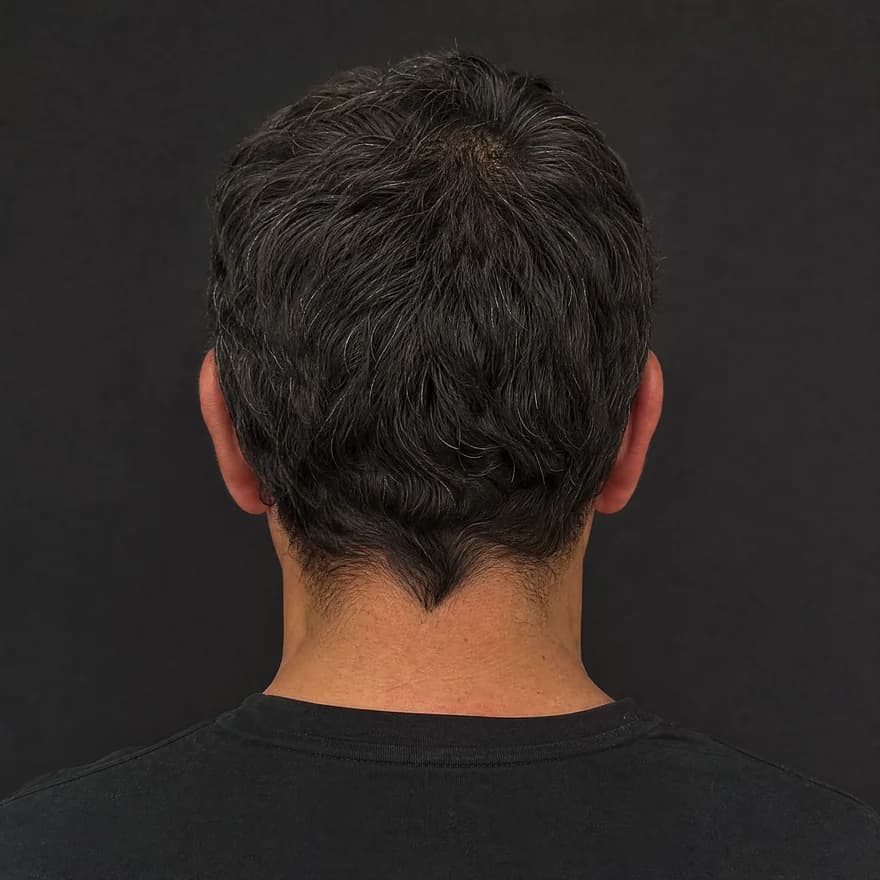
Back
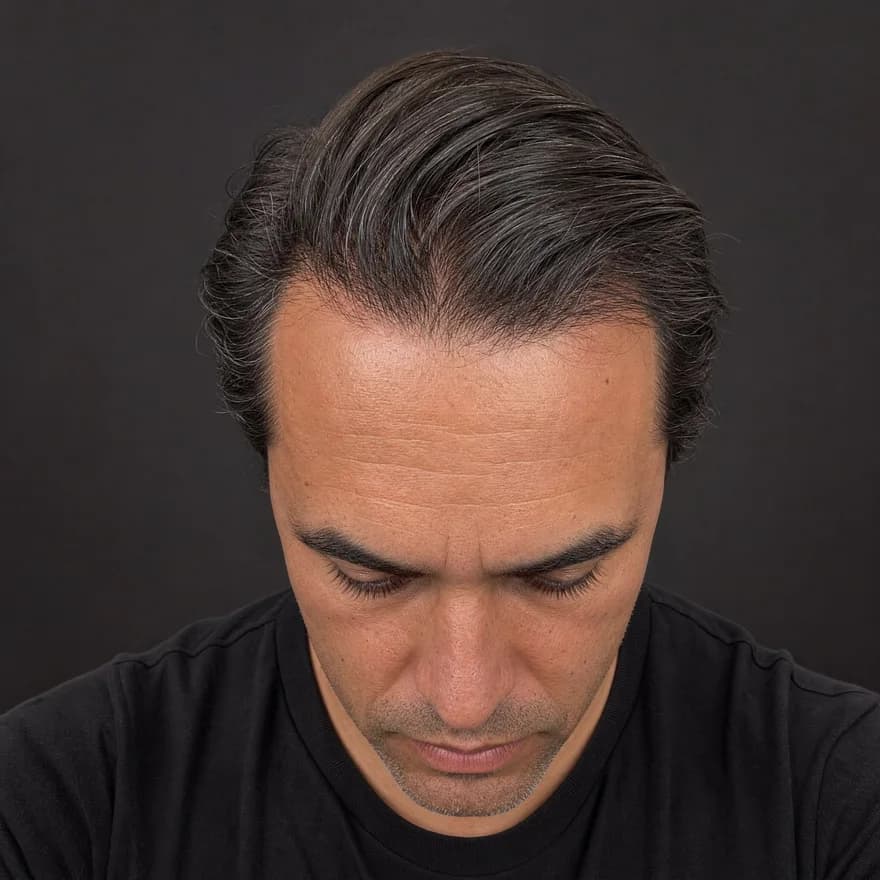
Front · Hairline
Same four angles, every time — illustrative example
Front · crown · temple · back
Four guided angles in about 30 seconds — the same views every time.
Hairline · density · scalp
AI reads each angle for hairline shape, crown density, and scalp surface.
Usable · limited · low-light
Every reading shows its confidence — limited views are flagged, not guessed.
Your baseline, revisited
Save it, rescan later, and see exactly what moved.
Side by side
Neither column is a verdict — they're visible patterns to check your own photos against.
Appearance-based patterns for comparison — not a diagnosis either way.
Settling the question
Guided front and top views fix the angle and framing, so every future comparison is fair by construction.
Maturing stabilises; recession progresses. Three to six months between scans is usually enough to see direction.
Identical framing means a difference between two scans is a difference on your head — not in the camera position.
The trend answers the question — and a flat, stable trend is a perfectly good answer to get.
Questions
A common, usually modest settling-back of the hairline in adulthood — typically even across the front, and stable once it settles. It's a normal appearance change, not in itself a sign that more is coming.
Commonly between the late teens and late twenties, though timing varies a lot. The visible tell isn't age — it's behaviour: a maturing line settles and holds, while a receding one keeps moving.
The honest answer: tracking is how you'd know. A line that keeps moving across scans is behaving like recession; one that holds is behaving like maturing. That's why the dated baseline matters more than today's label.
The front view for temple shape and symmetry, and the top view for whether the crown is involved — recession patterns often touch both, maturing usually doesn't. Those are two of the four angles every guided scan captures identically.
No. Both columns describe visible, appearance-based patterns to compare your own photos against. A qualified professional is the right call for anything medical — this page just helps you arrive with better evidence.
A note on transparency
ScalpAnalysis AI reads appearance-based signals and tracks visible change over time. It does not diagnose, treat, cure, or prevent any condition.
If you have pain, sudden shedding, or signs of infection, a qualified professional is the right next step.
The report it produces
This is the exact report format a scan unlocks — qualitative tiers, your visible features, and a confidence level on every reading. Saved as a baseline you compare against on every rescan.
Your Hair Profile
Temples just starting to open — crown still covered
Density
Medium
Type
Wavy
Texture
Medium
Shine
Medium
Risk of Recession
Low
Hair Loss
Mild
Illustrative example · sample data
Related guides
Photos and a blurred preview are free. The full analysis is $2.99, or invite 3 friends for one free analysis.
