Widow's Peak vs Receding
A widow's peak is a natural feature: a V-shaped point at the centre of the hairline, often there since childhood, that simply stays put. A receding pattern is different — it usually deepens at the temple corners into an M-shape and keeps moving over time. The shapes can look similar in a single mirror glance. What tells them apart is whether the line holds or keeps shifting — which is exactly what a baseline reveals.
How it works
Same four angles, every time — so each new scan compares fairly to your very first.
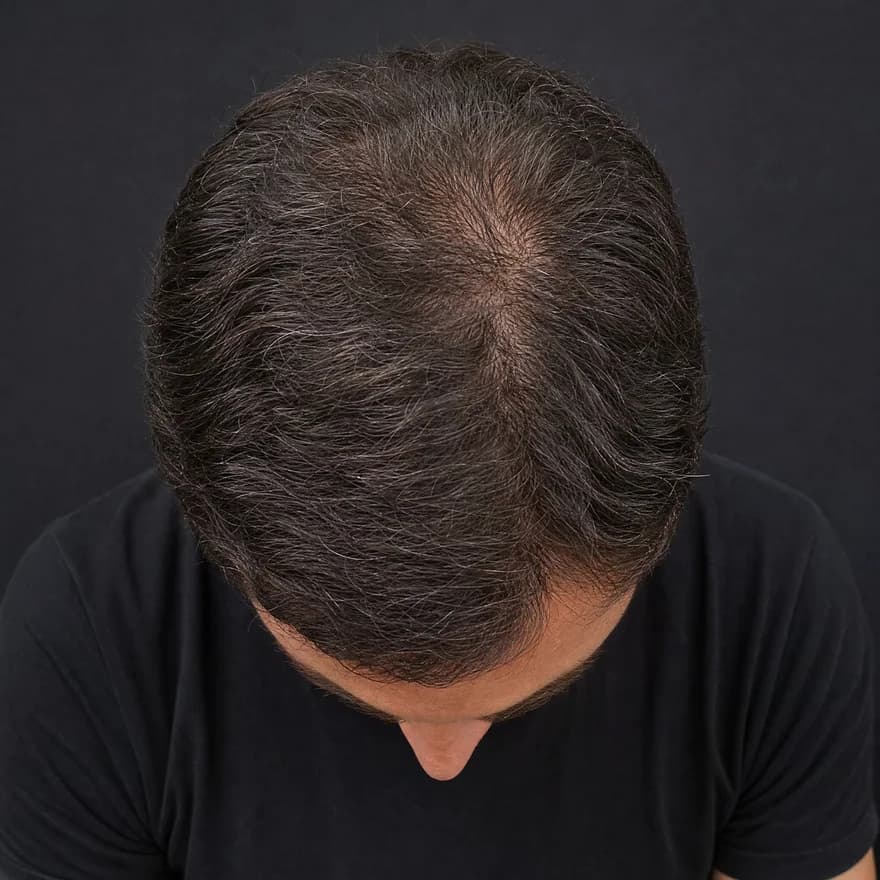
Top · Crown
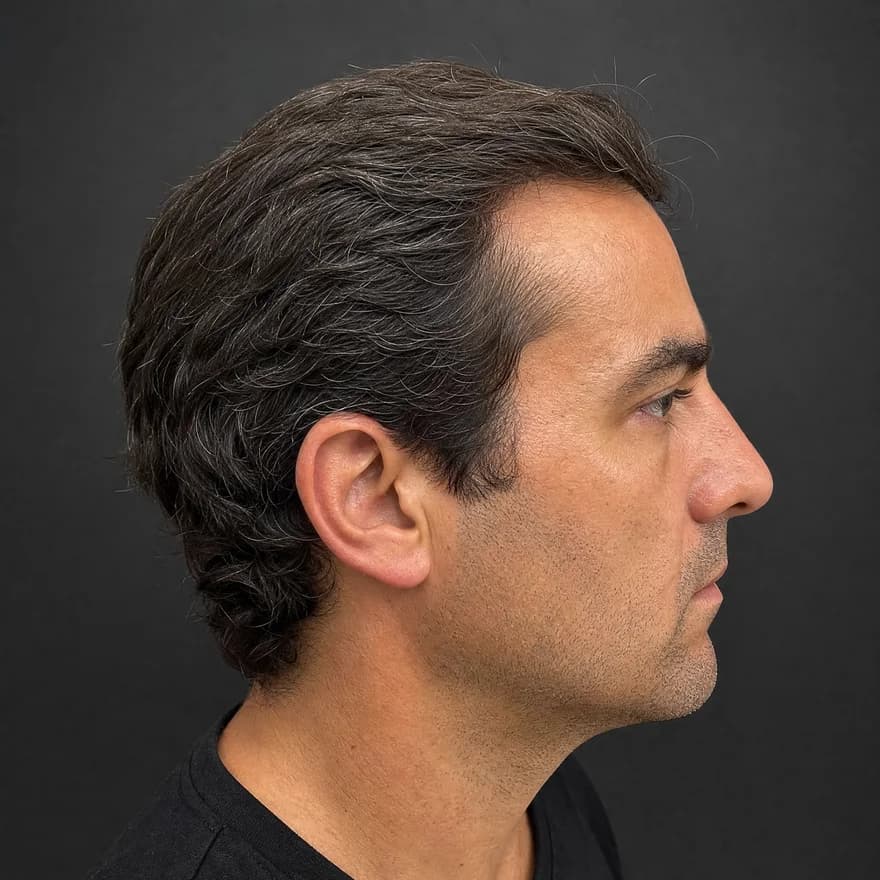
Side · Temple
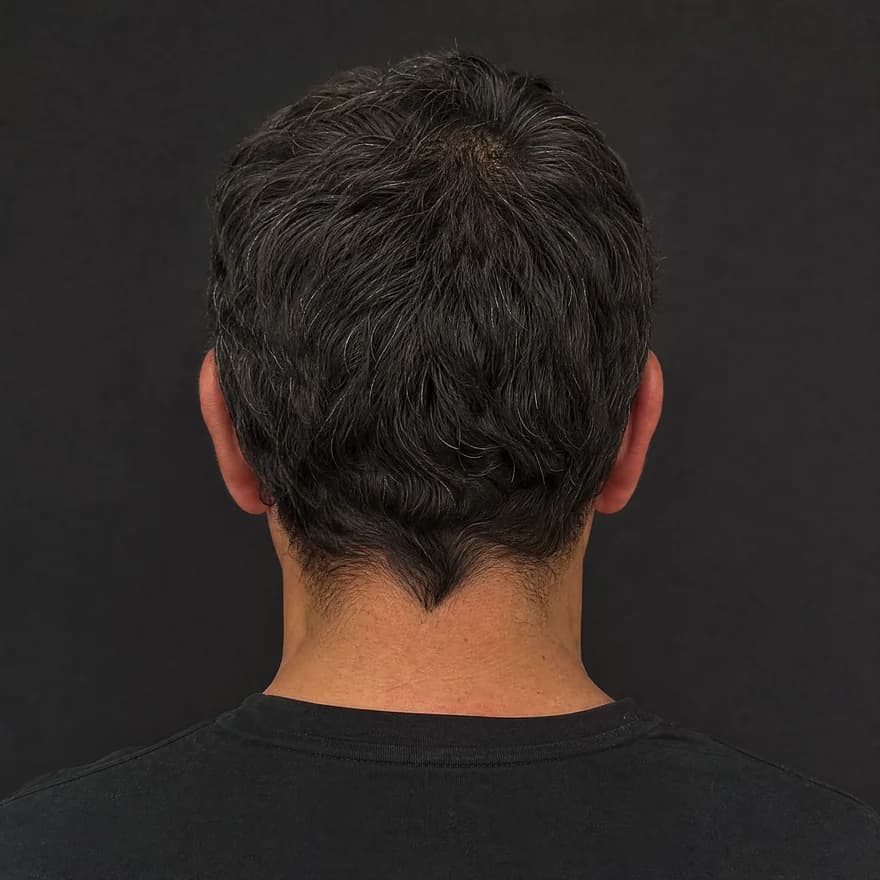
Back
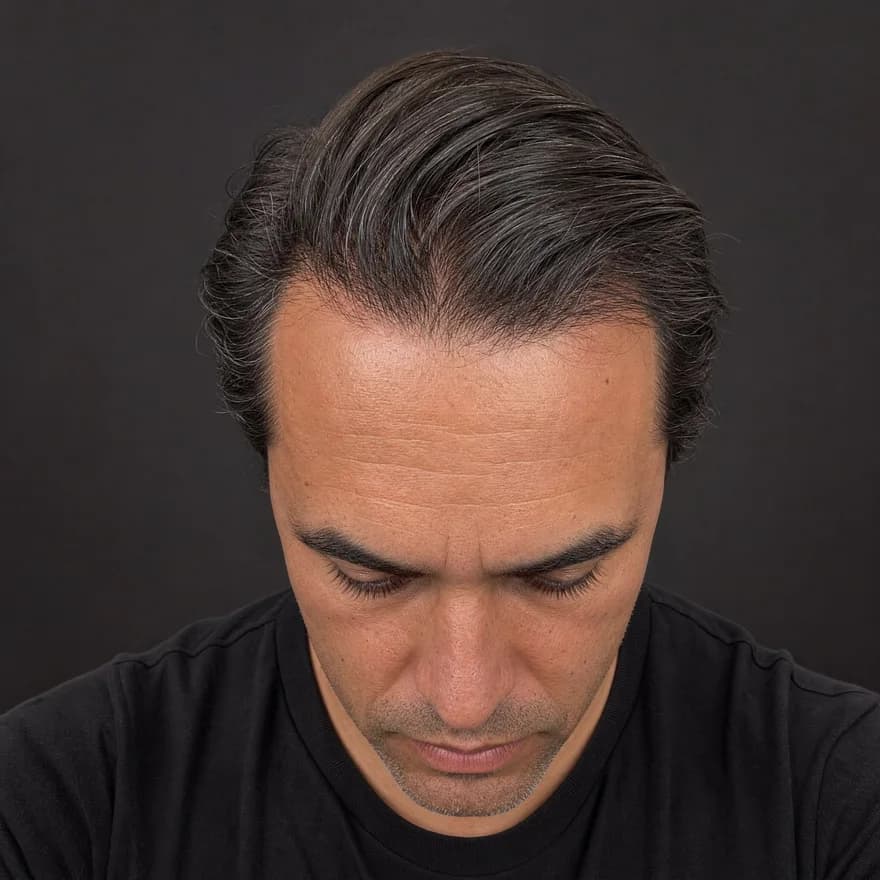
Front · Hairline
Same four angles, every time — illustrative example
Front · crown · temple · back
Four guided angles in about 30 seconds — the same views every time.
Hairline · density · scalp
AI reads each angle for hairline shape, crown density, and scalp surface.
Usable · limited · low-light
Every reading shows its confidence — limited views are flagged, not guessed.
Your baseline, revisited
Save it, rescan later, and see exactly what moved.
Shape and direction
Neither column is a verdict — they're visible patterns to check your own hairline against over time.
Appearance-based patterns for comparison — not a diagnosis either way.
Let the line settle it
A single mirror glance blurs the two. A fixed baseline and a rescan don't.
The front view is captured with guided framing, so your whole hairline shape — central point and both temple corners — sits in the same place every scan.
The visible silhouette is classified as a tier, with temple depth and symmetry read alongside it — a central point reads differently from deepening corners.
A widow's peak holds; recession progresses. Three to six months between scans is usually enough to see whether the corners are moving.
Stable is an answer — and a perfectly good one. If the corners keep moving, that's the trend to take to a qualified professional, dated photos in hand.
Questions
A widow's peak is a natural V-shaped point at the centre of the hairline — often present since childhood — that stays put. A receding pattern typically deepens at the two temple corners into an M-shape and keeps moving over time. The shapes differ, but the clearest tell is direction: a widow's peak holds, recession progresses.
Having a widow's peak doesn't cause recession — it's just a hairline shape. But a hairline with a widow's peak can still recede separately at the temples, which is why people confuse the two. Tracking whether the temple corners move over months is how you tell a stable V-point from a moving M-pattern.
Look at where the change is. A central V-point that's looked the same for years reads like a widow's peak; corners deepening faster than the centre, and continuing to deepen across months, read like recession. The front view captures the whole silhouette, and a rescan shows whether it's holding or shifting.
It classifies the visible hairline silhouette as a tier and reads temple depth and symmetry with a confidence level — it describes the shape, it doesn't deliver a verdict. The useful part is comparison over time: a stable line behaves like a natural feature, a moving one is worth a professional's look.
No. Both columns describe visible, appearance-based patterns to compare your own photos against. A qualified professional is the right call for anything medical — this page just helps you tell a stable shape from a moving one with better evidence.
A note on transparency
ScalpAnalysis AI reads appearance-based signals and tracks visible change over time. It does not diagnose, treat, cure, or prevent any condition.
If you have pain, sudden shedding, or signs of infection, a qualified professional is the right next step.
The report it produces
This is the exact report format a scan unlocks — qualitative tiers, your visible features, and a confidence level on every reading. Saved as a baseline you compare against on every rescan.
Your Hair Profile
Even crown coverage with a soft cowlick
Density
High
Type
Wavy
Texture
Medium
Shine
Medium
Risk of Recession
Low
Hair Loss
Minimal
Illustrative example · sample data
Related guides
Photos and a blurred preview are free. The full analysis is $2.99, or invite 3 friends for one free analysis.
