Hairline Test
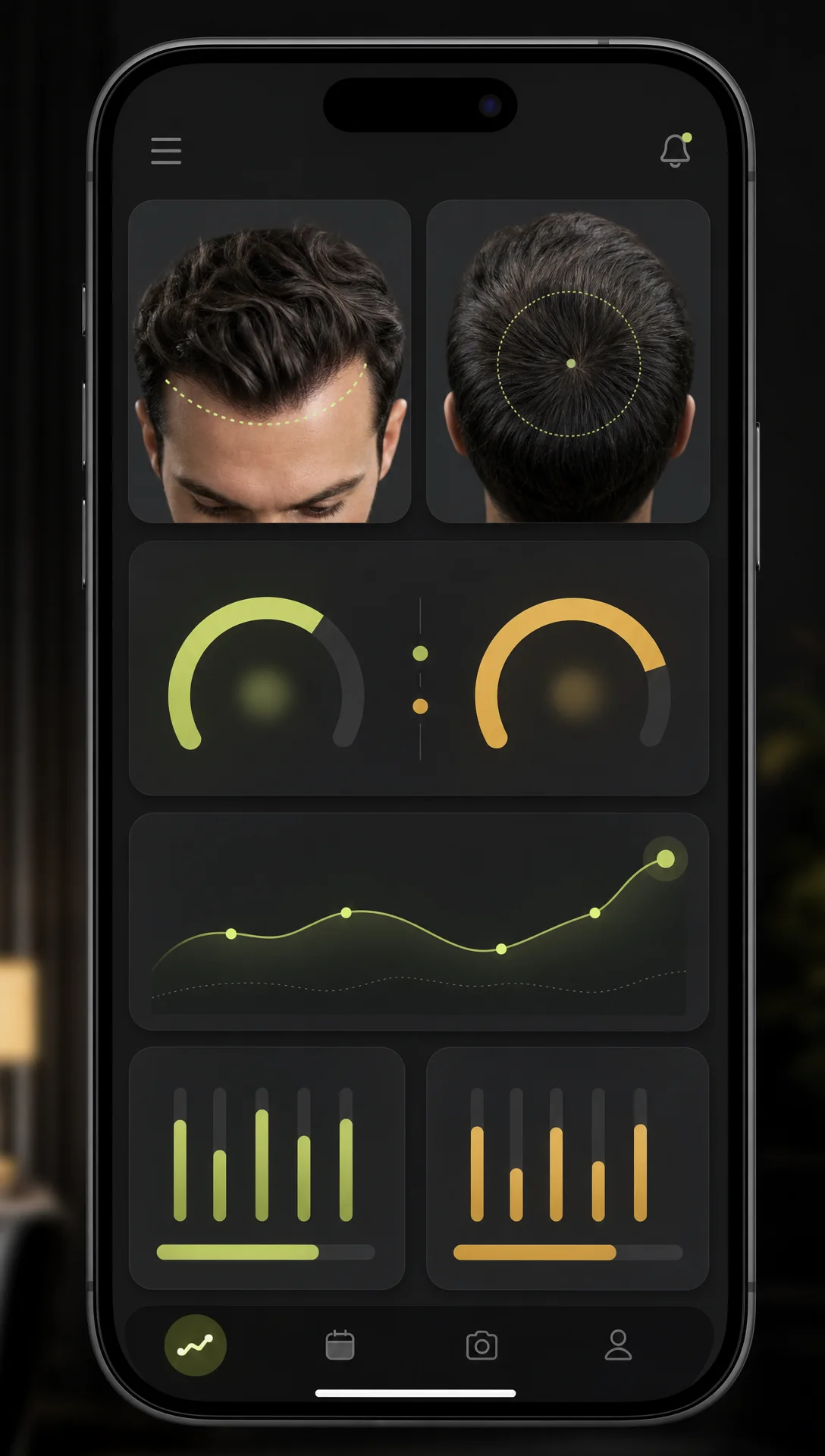
The useful part of a hairline test isn't today's label; it's repeatability. Guided framing puts your hairline in the same position every time, so the second test actually means something. Shape, temples, and edge density — read in about 30 seconds.
Photos and a blurred preview are free. The full reading is $2.99 — your stage, whether it looks early, and what to do next.
How it works
Same four angles, every time — so each new scan compares fairly to your very first.
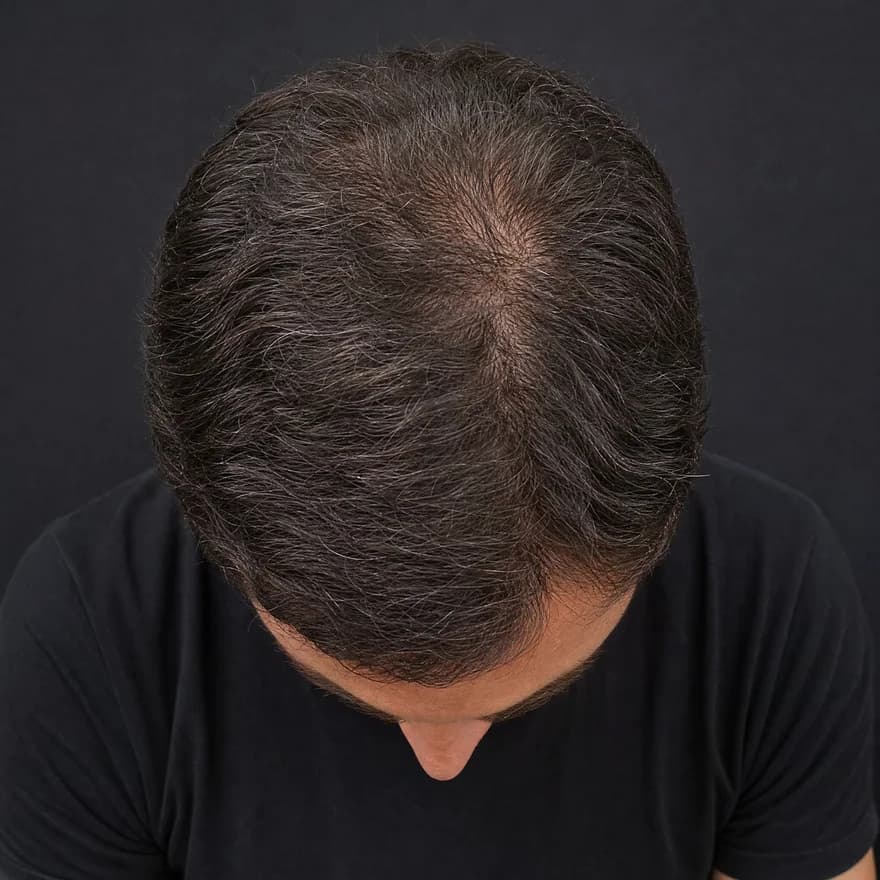
Top · Crown
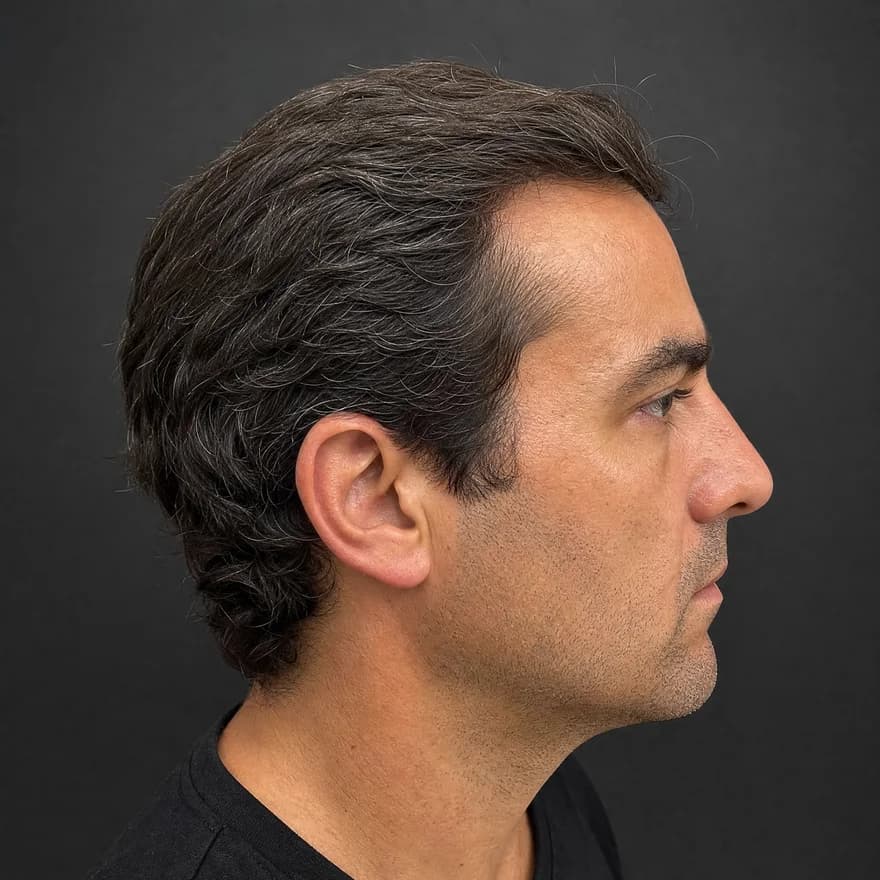
Side · Temple
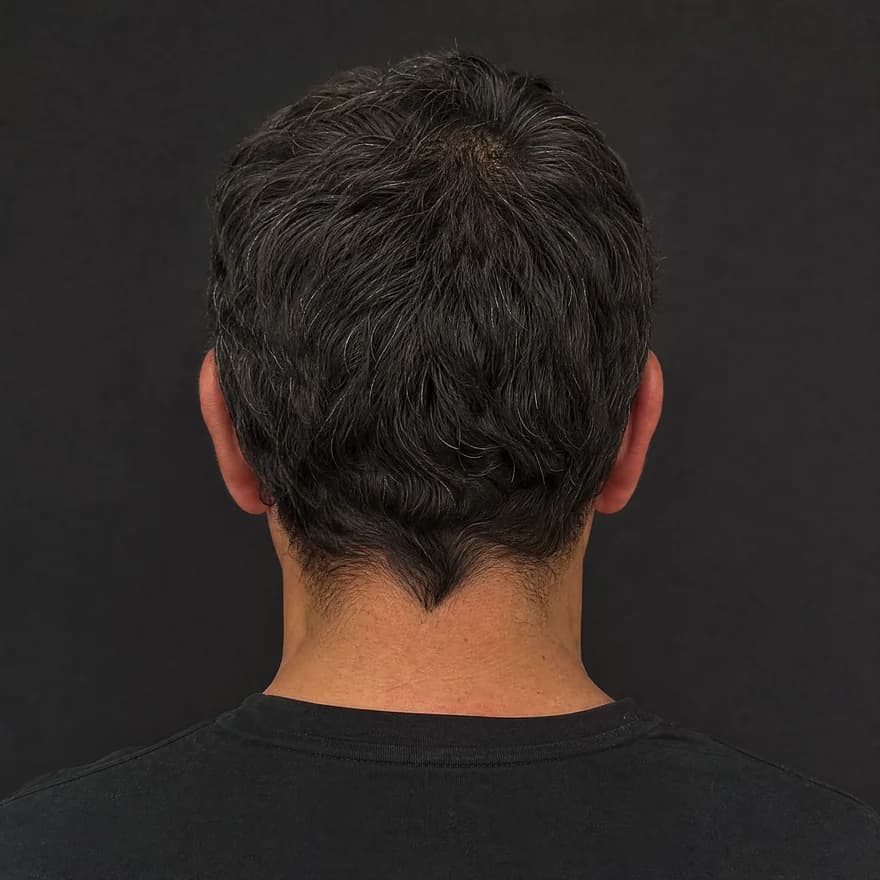
Back
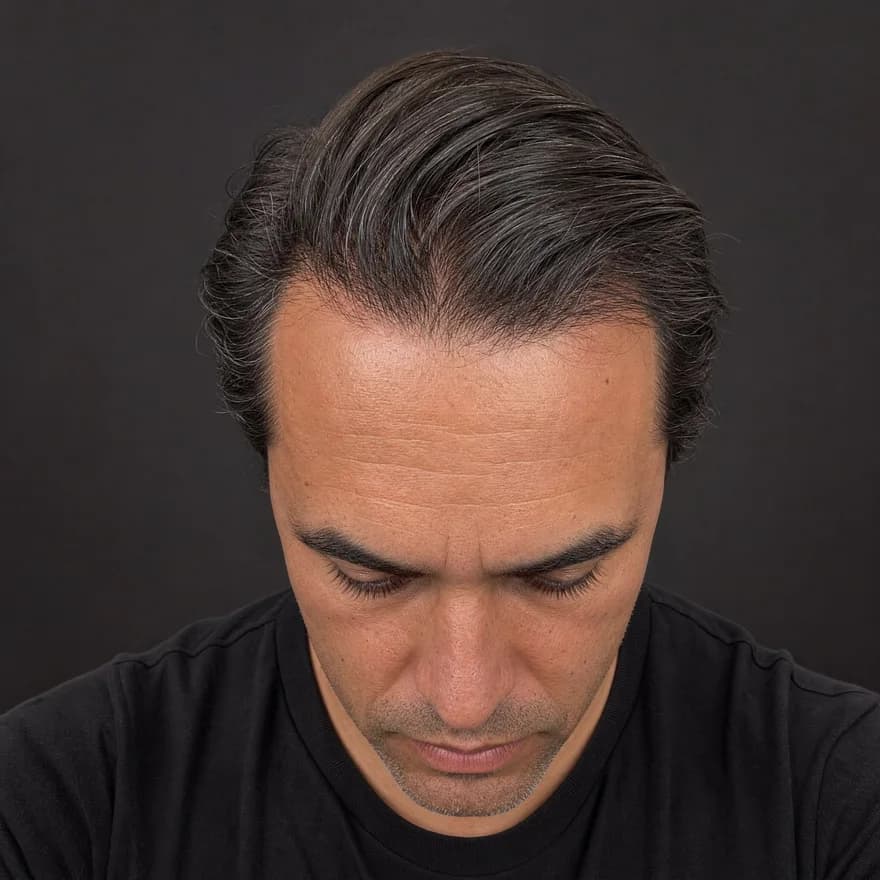
Front · Hairline
Same four angles, every time — illustrative example
Front · crown · temple · back
Four guided angles in about 30 seconds — the same views every time.
Hairline · density · scalp
AI reads each angle for hairline shape, crown density, and scalp surface.
Usable · limited · low-light
Every reading shows its confidence — limited views are flagged, not guessed.
Your baseline, revisited
Save it, rescan later, and see exactly what moved.
What the test reads
Four reads from your front and top views make up the hairline result.
Classified by visible silhouette — even, maturing, or M-shaped — not by a single stray hair on a bad day.
Depth and symmetry at the two corners — the spot where most visible movement starts first.
How dense the frontal edge reads. Thinning at the line often shows before the line itself moves.
Fringe down? Harsh light? The test says when it can't see well — instead of returning a confident-sounding guess.
What you get
An illustrative example of the hairline read — yours is built from your own front and top photos.
Questions
You take four guided photos; the front view drives the hairline read. The visible shape is classified as a tier — even, maturing, or M-shaped — alongside temple and edge-density signals, each with its confidence shown.
There's no single normal — even, slightly set-back, and M-shaped lines are all common, at every age. What matters for tracking isn't where your line sits against anyone else's; it's whether it changes between two identical tests.
Yes — just pull hair back so the line is visible. If the edge is covered or the light is poor, the reading's confidence drops and says so, rather than guessing through it.
Every 8–12 weeks. Hairline change is slow; identical angles a few months apart give a fair comparison, and more frequent testing mostly measures lighting.
Pull your hair back from the front, find soft even light, and capture your hairline at the same angle each time — that consistency is the whole point. The online test handles the framing for you: the front view drives the read, classifying the visible shape as a tier so two checks are actually comparable rather than two different mirror moments.
Photos and a blurred preview are free in any browser — no app to install. Unlocking the full hairline analysis is $2.99 per scan, or invite 3 friends to sign up through your link and earn one free scan. Photos are uploaded securely for analysis.
No — it's an appearance-based reference for tracking your own line over time. Medical questions about hair loss belong with a qualified professional.
A note on transparency
ScalpAnalysis AI reads appearance-based signals and tracks visible change over time. It does not diagnose, treat, cure, or prevent any condition.
If you have pain, sudden shedding, or signs of infection, a qualified professional is the right next step.
The report it produces
This is the exact report format a scan unlocks — qualitative tiers, your visible features, and a confidence level on every reading. Saved as a baseline you compare against on every rescan.
Your Hair Profile
Temples just starting to open — crown still covered
Density
Medium
Type
Wavy
Texture
Medium
Shine
Medium
Risk of Recession
Low
Hair Loss
Mild
Illustrative example · sample data
Related guides
Photos and a blurred preview are free. The full analysis is $2.99, or invite 3 friends for one free analysis.
