What Norwood Stage Am I?
It's one of the most-typed questions in the hair world, and the usual answer — squint at a chart, squint at the mirror, pick the drawing that stings least — fails in predictable ways. You can't see your own crown, which is where the difference between several stages actually lives. The front view flatters, because you instinctively photograph your good angle. And the stages people agonise over most, 2 versus 3, hinge on temple depth that's nearly impossible to judge on yourself. A four-angle scan removes the self-grading problem: top, sides, back, and front, framed the same way every time, read by ScalpAnalysis AI's own analysis engine into an appearance-based stage with its confidence shown. It's a tracking reference, not a diagnosis — but it's a reference you didn't pick to feel better.
Photos and a blurred preview are free. The full reading is $2.99 — your stage, whether it looks early, and what to do next.
How it works
Same four angles, every time — so each new scan compares fairly to your very first.
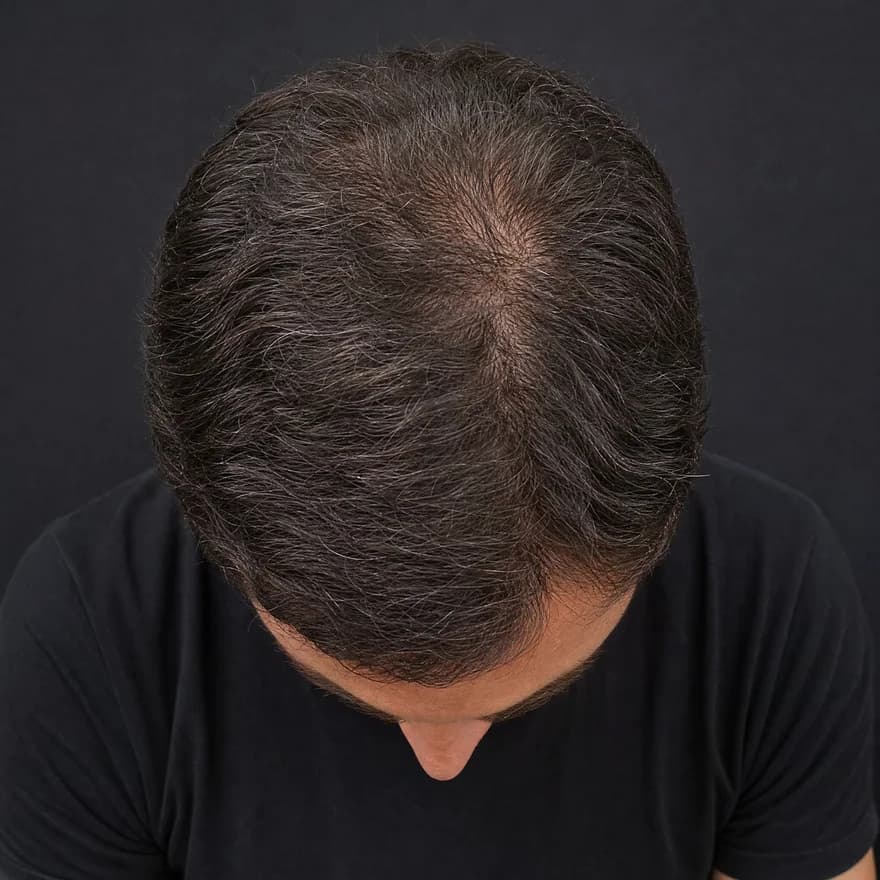
Top · Crown
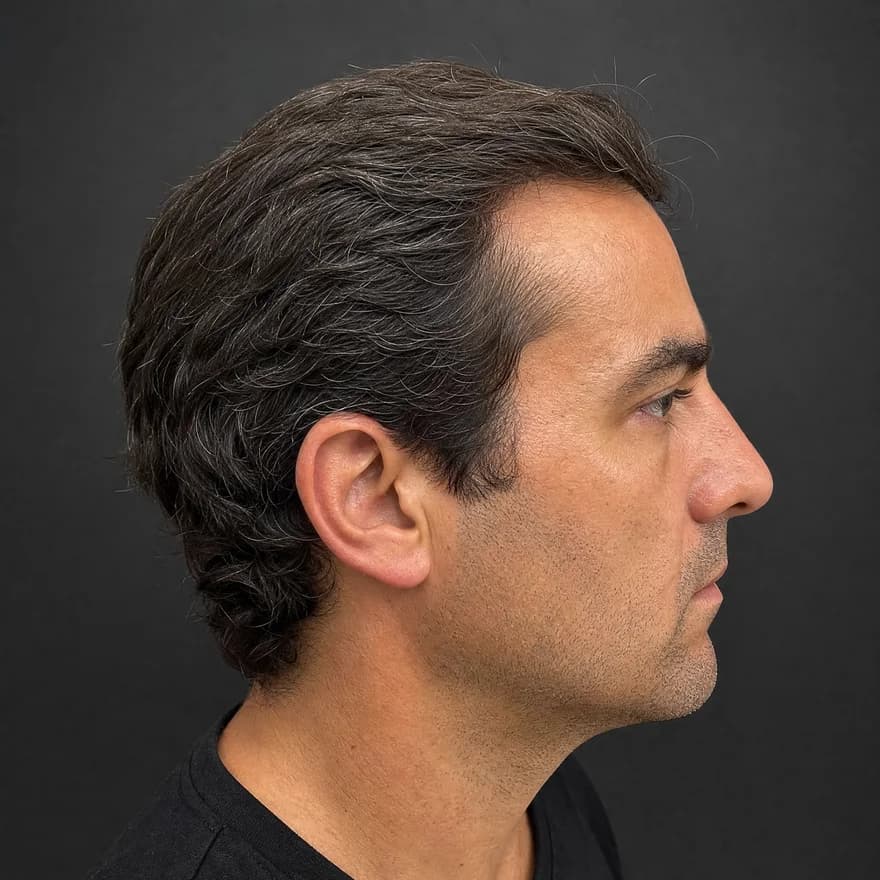
Side · Temple
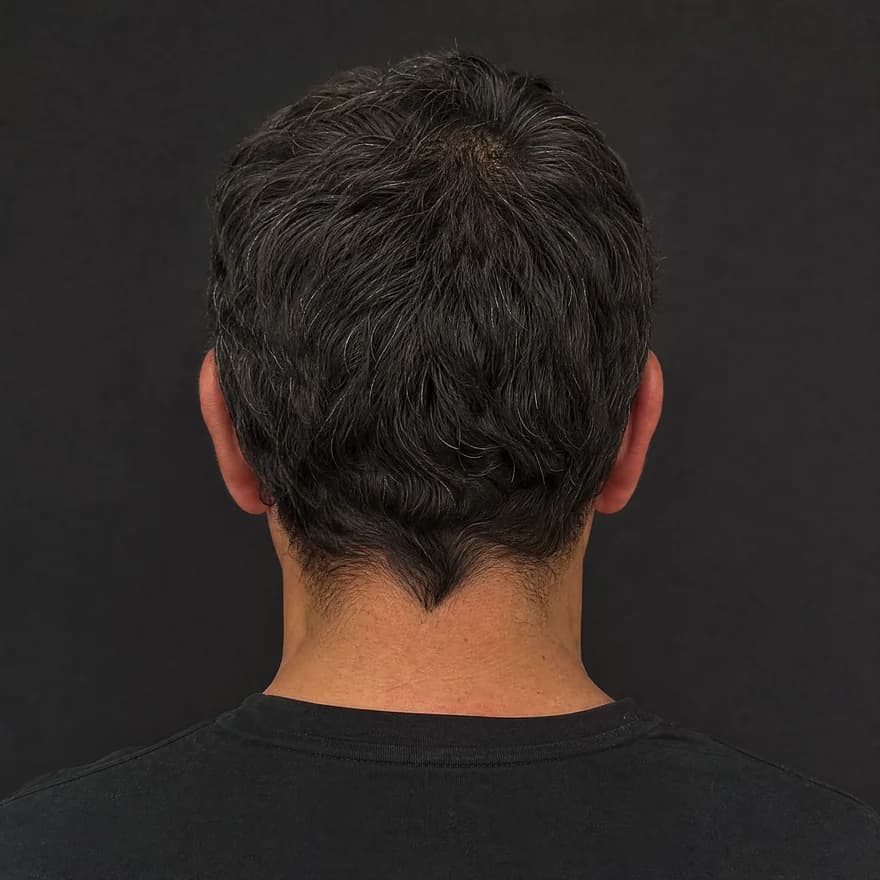
Back
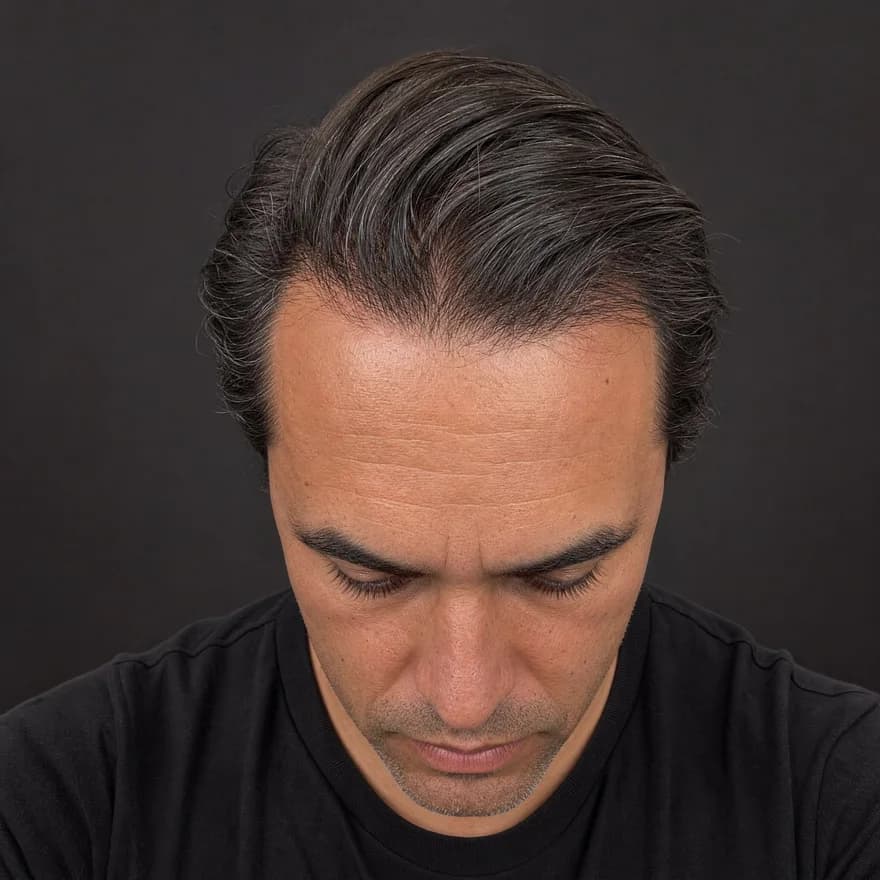
Front · Hairline
Same four angles, every time — illustrative example
Front · crown · temple · back
Four guided angles in about 30 seconds — the same views every time.
Hairline · density · scalp
AI reads each angle for hairline shape, crown density, and scalp surface.
Usable · limited · low-light
Every reading shows its confidence — limited views are flagged, not guessed.
Your baseline, revisited
Save it, rescan later, and see exactly what moved.
Why self-grading fails
None of them are stupidity — they're geometry. Your own head is the one head you can't see properly.
From stage 4 the scale is decided at the crown — the one zone you physically can't see without a second mirror or a camera on a fixed angle.
You tilt, you angle, you pick the mirror with kinder light — instinctively. A guided front photo doesn't negotiate.
The 2-vs-3 call lives in temple depth you can't judge straight-on. It's the most argued line on the scale for a reason.
Eyeballing gives you an answer with no error bars. A scan tells you the stage and how sure the read is — which is half the information.
The reference
Overhead views of how a pattern progresses on the scale. Use them as a shape reference for your own top and front photos — a tracking aid, not a verdict.
Stage 1
A full, even hairline with no visible recession at the temples.
Stage 2
The hairline sets back a little at the temples — common and often stable.
Stage 3
More visible recession at both temples, forming an early M-shape.
Stage 4
Temple recession with a separate thinning area starting at the crown.
Stage 5
The band of hair between front and crown looks narrower and less dense.
Stage 6
Front and crown areas connect as the separating band thins out.
Stage 7
Hair remains mainly around the sides and back in a horseshoe pattern.
How to read your stage
Free self-check
No photos, no account — answer three quick questions about how your hairline and crown look and see which stage reads closest. For reference only; the photo scan is the version worth tracking.
Answer 3 quick questions
0/3
From question to answer
The same visual logic the scale is defined by — applied to your photos instead of your reflection.
Guided capture frames top, side, back, and front identically every time. The crown finally gets seen; the front stops flattering.
The analysis reads hairline silhouette and crown coverage together and suggests the closest appearance-based stage — with its confidence shown, not hidden.
The stage, the tiers, and the dated photos go on record. 'What stage am I?' becomes 'has my stage moved?' — a better question with a checkable answer.
Every 8–12 weeks, same angles. A holding stage is real reassurance; a moving one is early, dated evidence worth showing a professional.
Questions
Match the overall shape of your hairline and crown against the scale's patterns — ideally from photos rather than the mirror, and always including the top view. The front hairline alone can't place you: from stage 4 onward the scale is largely a crown story, which is exactly the angle you can't see on yourself. A guided scan reads all four angles and suggests the closest stage with its confidence shown.
Because self-grading runs on variables that change daily: lighting, hair length, how you combed it, which mirror, and how you're feeling about it. The chart stays still — you don't. A photo-based read from fixed angles removes most of those variables, and repeating it under the same guidance makes the answer stable enough to track.
That's the most-argued line on the scale, and it hinges on temple depth — modest, even settling reads toward stage 2, while corners cutting visibly deeper than the mid-line read toward 3. It's genuinely hard to judge on your own head because you never see your temples straight-on. Fixed front and side photos make the shape legible; the scan reads them and shows how confident the read is.
No. The scale describes visible patterns — it says nothing about causes, and this tool doesn't either. The stage you get is an appearance-based reference for tracking: useful for watching direction over months, and useful to show a qualified professional, who remains the right person for any medical question.
The scale doesn't come with a worry threshold, and we won't invent one. More useful than any single stage is direction: a stage that holds across scans is a very different story from one that steps up. If your trend is moving — at any stage — that's a sensible time for professional eyes, with dated photos in hand.
Yes — the three-question self-check below is free and runs in your browser, and taking the four guided photos with a report preview is free too, no account needed. The full analysis, including your stage read with confidence and a saved baseline, is $2.99 per scan.
A note on transparency
ScalpAnalysis AI reads appearance-based signals and tracks visible change over time. It does not diagnose, treat, cure, or prevent any condition.
If you have pain, sudden shedding, or signs of infection, a qualified professional is the right next step.
The report it produces
This is the exact report format a scan unlocks — qualitative tiers, your visible features, and a confidence level on every reading. Saved as a baseline you compare against on every rescan.
Your Hair Profile
Temples just starting to open — crown still covered
Density
Medium
Type
Wavy
Texture
Medium
Shine
Medium
Risk of Recession
Low
Hair Loss
Mild
Illustrative example · sample data
Related guides
From the blog
Photos and a blurred preview are free. The full analysis is $2.99, or invite 3 friends for one free analysis.
