See the Back of Your Head
The back of your head and your crown sit in a genuine blind spot — you physically can't look at them directly, which is why most people first hear about a change there from a photo someone else took. There are a few honest ways to get eyes on that area: a two-mirror setup, a phone held overhead, or asking someone. The catch with all of them is consistency — a freehand look is different every time. Putting that area on record the same way each scan is what turns 'I can't see back there' into something you can actually check.
How it works
Same four angles, every time — so each new scan compares fairly to your very first.
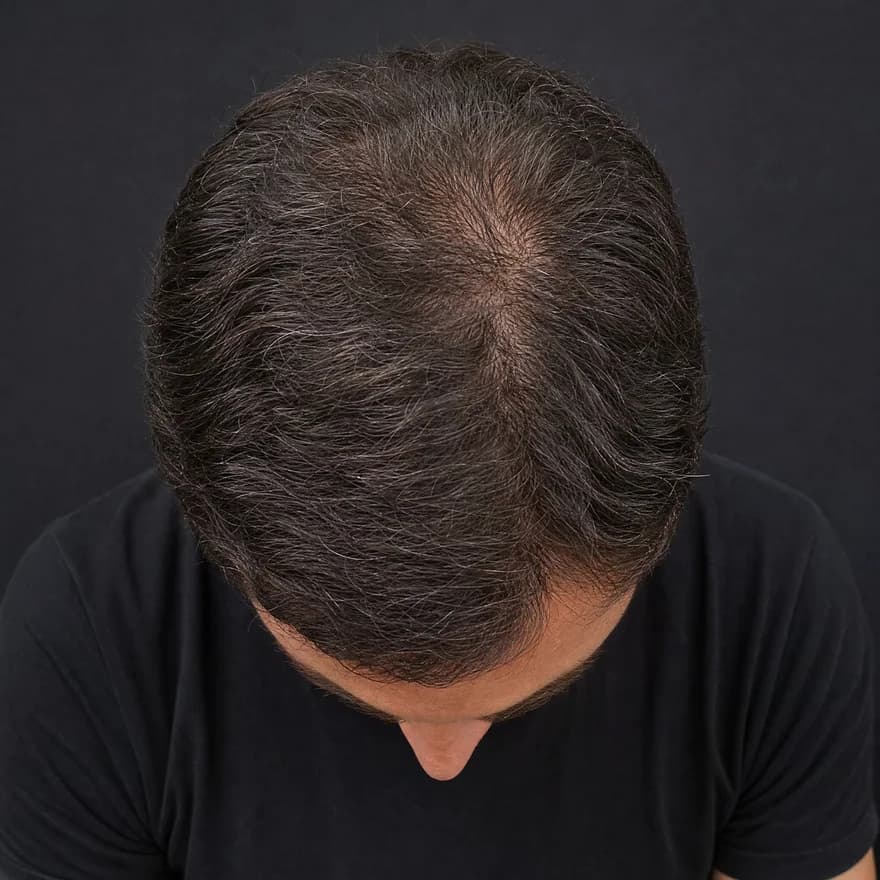
Top · Crown
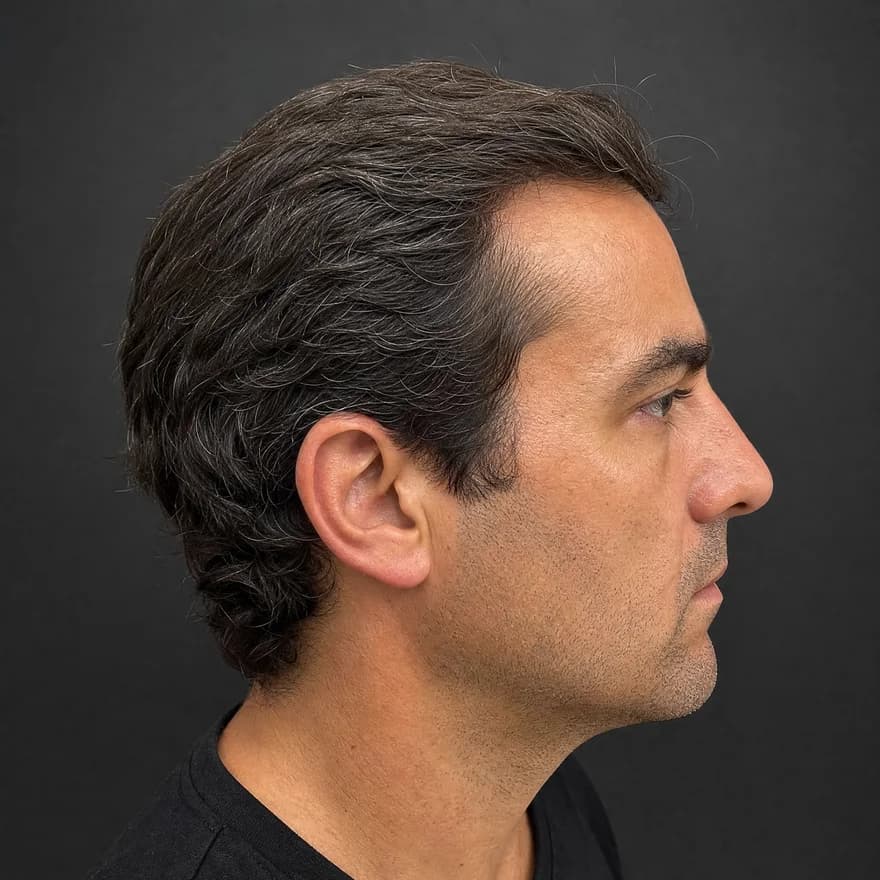
Side · Temple
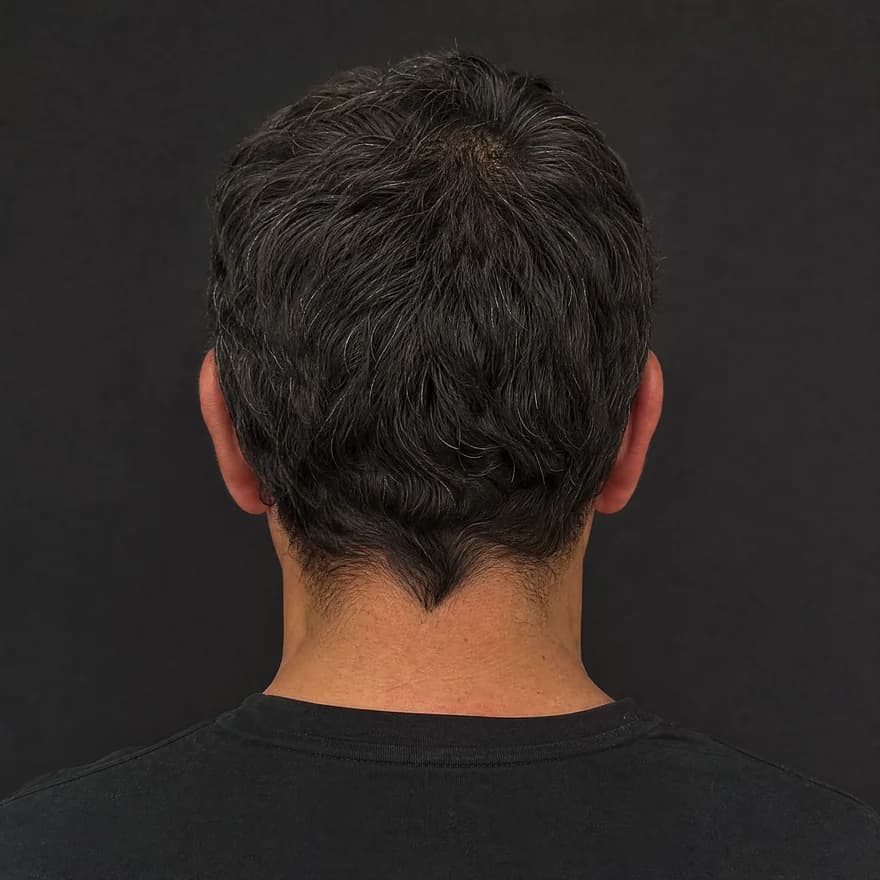
Back
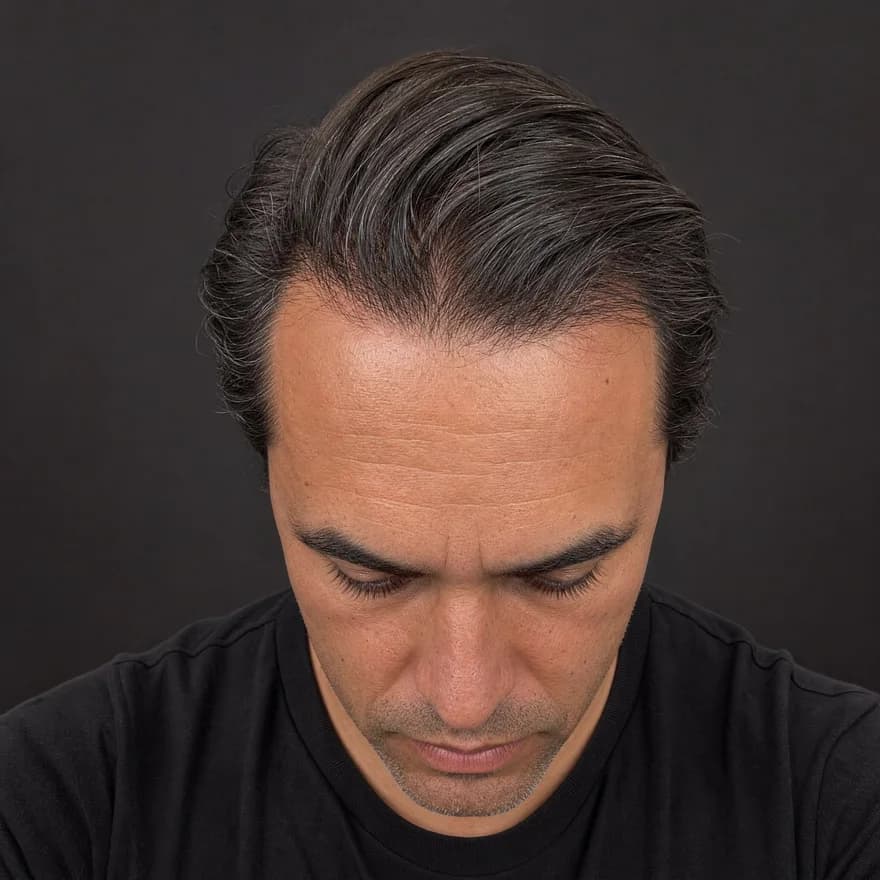
Front · Hairline
Same four angles, every time — illustrative example
Front · crown · temple · back
Four guided angles in about 30 seconds — the same views every time.
Hairline · density · scalp
AI reads each angle for hairline shape, crown density, and scalp surface.
Usable · limited · low-light
Every reading shows its confidence — limited views are flagged, not guessed.
Your baseline, revisited
Save it, rescan later, and see exactly what moved.
Three ways to get eyes on it
All of these can show you the back of your head once. The challenge is doing it the same way twice.
Back to a wall mirror, hand mirror in front, bounce the reflection. Great for a look — but the angle and light change every time you try it.
Hold the phone above and behind your head, lens down, burst mode on. Easiest solo, but freehand framing drifts shot to shot.
Another person gets the clearest single photo — though you can't always get one, and casual shots vary in crop and lighting.
Guided top and back capture frames the same area the same way every scan — the part none of the quick methods do well.
From blind spot to baseline
Seeing it once answers curiosity. Seeing it the same way over months answers the real question.
Top and back angles with fixed framing — no contortions with a hand mirror, no relying on one unflattering photo from last weekend.
The crown and back come back as a stable qualitative tier with a confidence level, comparable between scans rather than a one-off impression.
Today's back-of-head picture, dated and on record. The whole question becomes 'has it changed since?' — which photos can actually answer.
Same angles, months later. If anything is moving you'll catch it early; a stable trend is reassuring — and dated photos make a professional's visit count.
Questions
Three common ways: stand with your back to a bathroom mirror and hold a hand mirror in front of you to bounce the reflection, hold your phone above and behind your head with the lens pointed at the crown (burst mode helps catch a steady frame), or ask someone to take the photo. Each works for a quick look — the harder part is doing it the same way twice so two looks are comparable.
A phone in burst mode held overhead is usually easiest solo, but freehand framing drifts every time, which makes two photos hard to compare. Guided top-and-back capture is built to line that whole area up consistently on every scan — so you're tracking your head, not your grip on the phone.
One mirror only shows you the front. To see the back you need a second, angled mirror to bounce the reflection — or a camera. Even then, the angle and light shift each time you try it, so a single mirror look is fine for curiosity but unreliable for noticing real change over months.
It captures guided top and back views as two of its four fixed angles, framing the crown and the back of the head the same way every time. That consistency is the whole point: it reads visible coverage there as a tier with a confidence level and saves it as a baseline, so a later scan answers 'has this changed?' instead of 'did I hold the mirror differently?'
If coverage at the crown or back looks genuinely reduced across several scans, or you notice a spot that appeared suddenly or looks patchy, that's a question for a qualified professional rather than a tracking app. This is an informational, appearance-based check — not a diagnosis — and dated photos make that visit more useful.
A note on transparency
ScalpAnalysis AI reads appearance-based signals and tracks visible change over time. It does not diagnose, treat, cure, or prevent any condition.
If you have pain, sudden shedding, or signs of infection, a qualified professional is the right next step.
The report it produces
This is the exact report format a scan unlocks — qualitative tiers, your visible features, and a confidence level on every reading. Saved as a baseline you compare against on every rescan.
Your Hair Profile
Even crown coverage with a soft cowlick
Density
High
Type
Wavy
Texture
Medium
Shine
Medium
Risk of Recession
Low
Hair Loss
Minimal
Illustrative example · sample data
Related guides
Photos and a blurred preview are free. The full analysis is $2.99, or invite 3 friends for one free analysis.
