Dry vs Oily Scalp
Dry and oily leave close to opposite visible signatures, yet people routinely guess wrong about their own scalp — usually because they're judging by feel, by one bad hair day, or by whatever their last shampoo bottle promised to fix. On camera the split is more legible: dryness tends to read as a matte, duller surface with fine flaking at partings and edges, while oil reads as reflective shine along the part and crown, with hair that clumps and flattens. A guided four-angle scan reads those signals where the photos actually show them — as appearance, not as a scalp-type diagnosis — and saves the picture as a dated baseline. That matters because the honest answer can also be 'neither, today' or 'different zones, different stories,' which is exactly the nuance a one-word label flattens.
Photos and a blurred preview are free. The full reading is $2.99 — your stage, whether it looks early, and what to do next.
How it works
Same four angles, every time — so each new scan compares fairly to your very first.
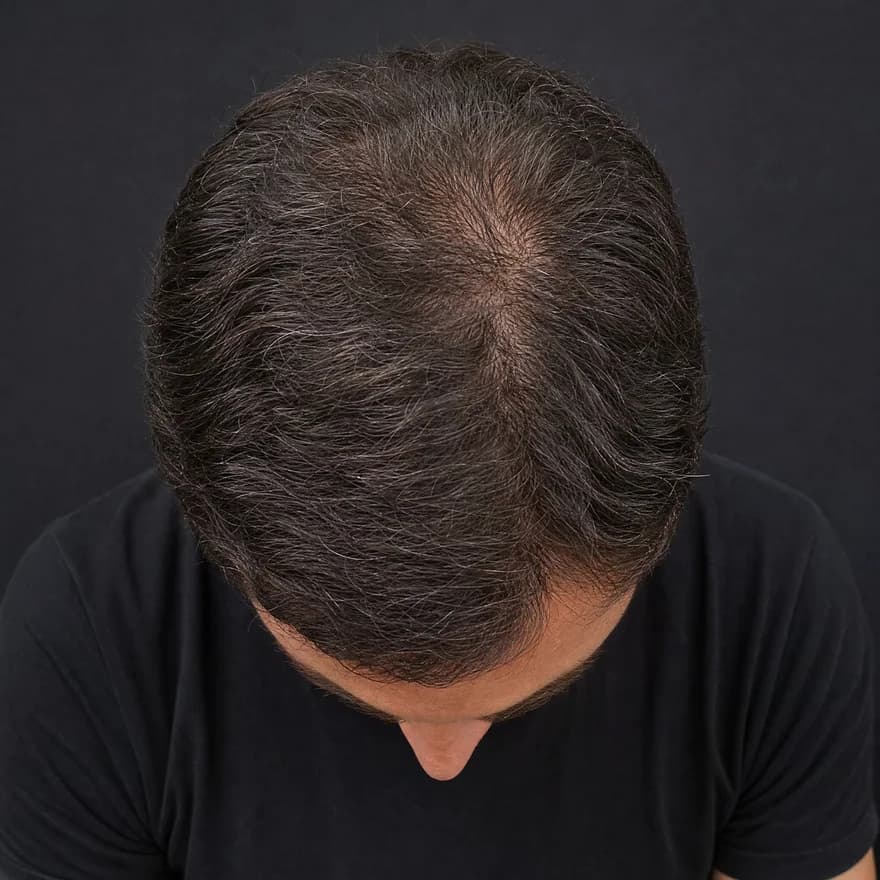
Top · Crown
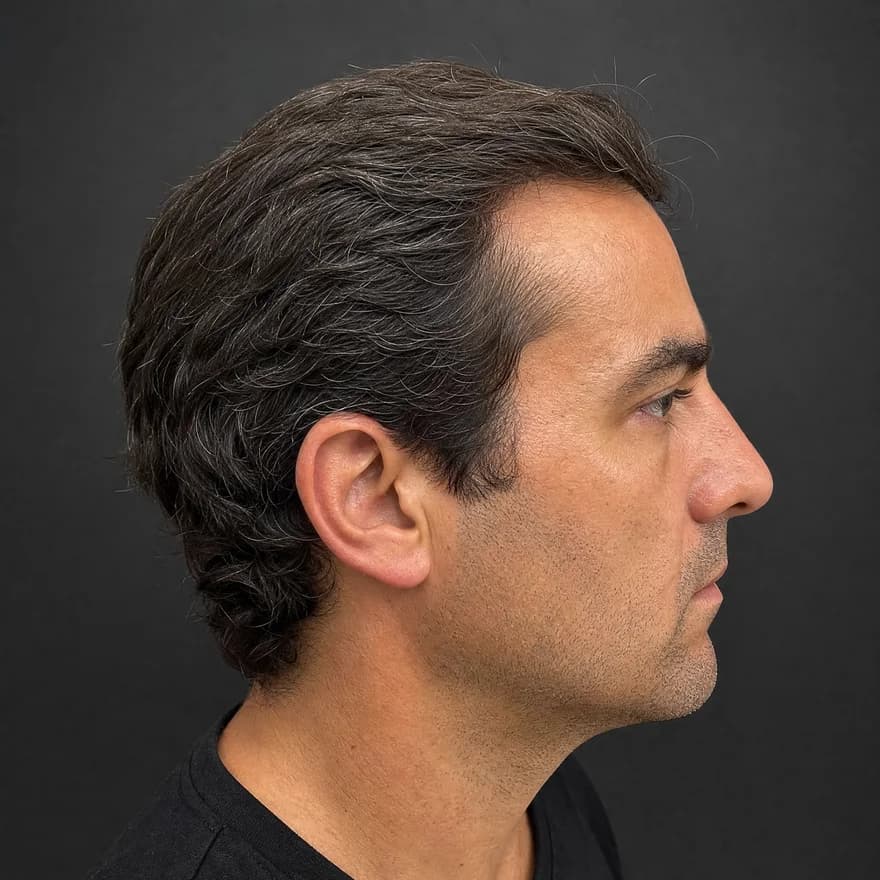
Side · Temple
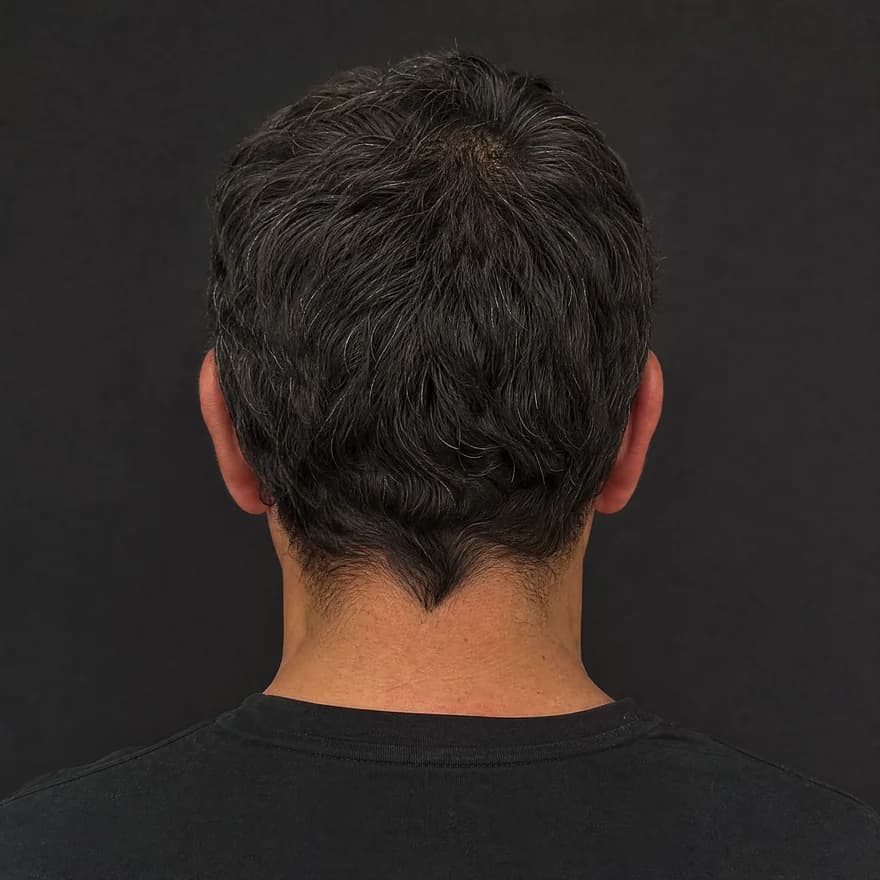
Back
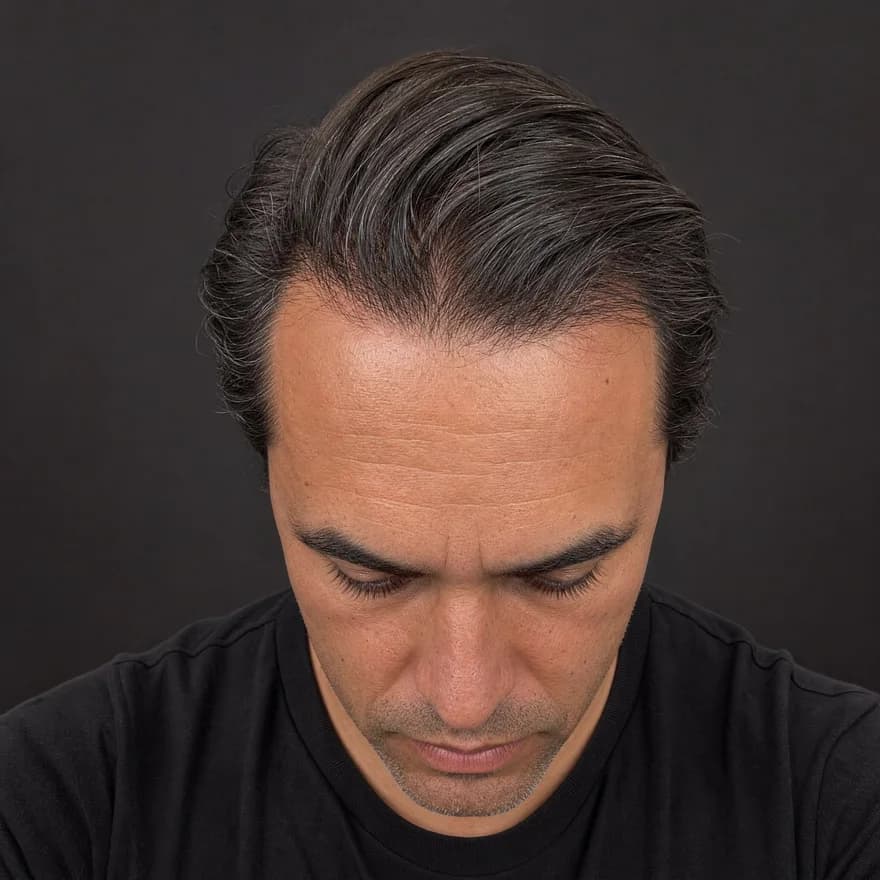
Front · Hairline
Same four angles, every time — illustrative example
Front · crown · temple · back
Four guided angles in about 30 seconds — the same views every time.
Hairline · density · scalp
AI reads each angle for hairline shape, crown density, and scalp surface.
Usable · limited · low-light
Every reading shows its confidence — limited views are flagged, not guessed.
Your baseline, revisited
Save it, rescan later, and see exactly what moved.
Side by side
Neither column is a diagnosis — they're the visible patterns each state tends to leave, for checking your own photos against.
Both columns describe appearance only. Naming a condition behind either is a professional's job.
Why the mirror gets it wrong
A scalp can feel tight or itchy without photographing dry, and feel fine while shining like glass. The visible record and the feeling are different data.
Any scalp reads drier right after washing and oilier days later. Judging your 'type' at random points in the cycle guarantees inconsistent answers.
Warm bathroom light hides shine; harsh overhead light invents it. Even, consistent lighting is half the reason guided photos beat mirror checks.
Crown, part, and hairline can each show a different signal on the same day. One glance at the front tells you almost nothing about the top.
Check yours properly
The point isn't the label — it's knowing what your surface actually shows, and whether it's changing.
Pick a repeatable moment — clean and fully dry works best — so the shine and flaking your photos show are comparable scan to scan.
Part, crown, hairline, and back each get read separately. A surface signal that only shows in one zone is a finding, not an error.
The report gives you shine and flaking where the photos show them, with confidence levels — appearance you can track, not a scalp-type verdict.
New season, new routine, new shampoo — rescan a few weeks in and compare the same angles. Visible difference or no visible difference, both are real answers.
Questions
Look at the visible signals rather than the feeling. A drier surface tends to photograph matte and dull, with fine flakes at partings and edges; an oilier one photographs with reflective shine along the part and crown, and hair that clumps into strands. A four-angle scan reads both sets of signals where your photos show them, with confidence on each — which beats guessing off one glance in bathroom light.
The visible signals don't have to agree across zones — photos can show shine along the crown while a parting shows matte flaking, and both reads are honest. That's a good reason to check four fixed angles rather than crown yourself one 'type' from a single glance in the mirror.
Not necessarily — visible flakes have more than one possible source, and naming which one you have is a professional's call, not a photo's. What a scan can honestly report is where flaking is visible and whether it's changing between scans. If flaking is heavy, itchy, or persistent, professional eyes beat any camera.
That's a cause question, and this tool deliberately doesn't answer those. Surface signals and coverage are read as separate signals: your photos might show a shinier surface with rock-steady coverage, or a matte one with a drifting trend. Keeping them apart is what makes the record useful — including to a qualified professional if you take it to one.
You can eyeball it — plenty of people get it right. What the scan adds is consistency and a record: the same four angles under the same guidance every time, signals read with confidence levels, and a dated baseline so 'my scalp got oilier this year' becomes something you can check rather than a vibe.
Yes — taking the four guided photos and previewing your report is free, no account needed. The full analysis, including surface signals, density tiers, and a saved baseline, is $2.99 per scan.
A note on transparency
ScalpAnalysis AI reads appearance-based signals and tracks visible change over time. It does not diagnose, treat, cure, or prevent any condition.
If you have pain, sudden shedding, or signs of infection, a qualified professional is the right next step.
The report it produces
This is the exact report format a scan unlocks — qualitative tiers, your visible features, and a confidence level on every reading. Saved as a baseline you compare against on every rescan.
Your Hair Profile
Temples just starting to open — crown still covered
Density
Medium
Type
Wavy
Texture
Medium
Shine
Medium
Risk of Recession
Low
Hair Loss
Mild
Illustrative example · sample data
Related guides
From the blog
Photos and a blurred preview are free. The full analysis is $2.99, or invite 3 friends for one free analysis.
