Scalp Health Check
Hair gets all the attention, but it grows out of skin — and that skin shows visible signals: shine where there's oil, flakes where it's dry, show-through where coverage thins. A guided scan reads them across four angles and keeps the record.
Photos and a blurred preview are free. The full reading is $2.99 — your stage, whether it looks early, and what to do next.
How it works
Same four angles, every time — so each new scan compares fairly to your very first.
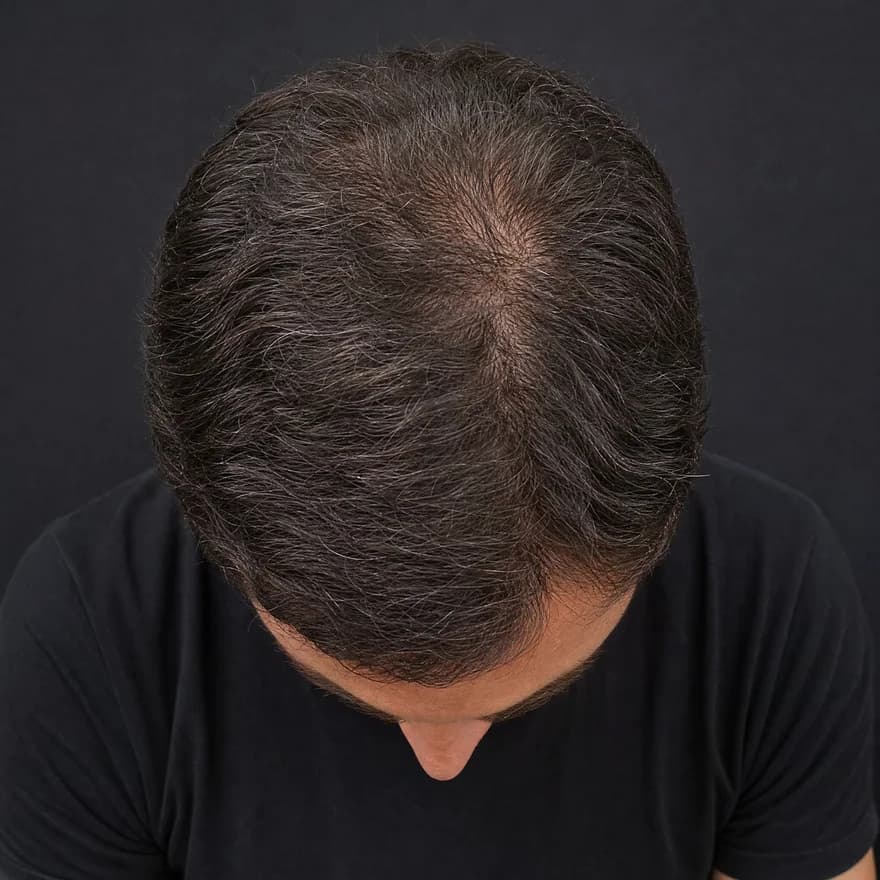
Top · Crown
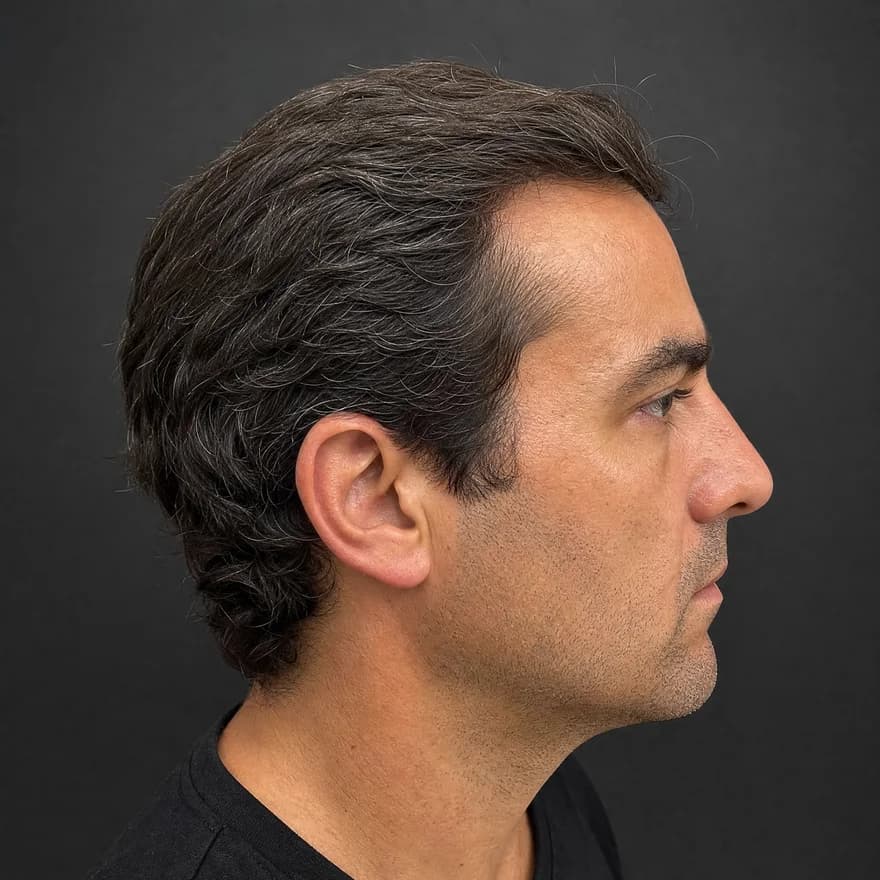
Side · Temple
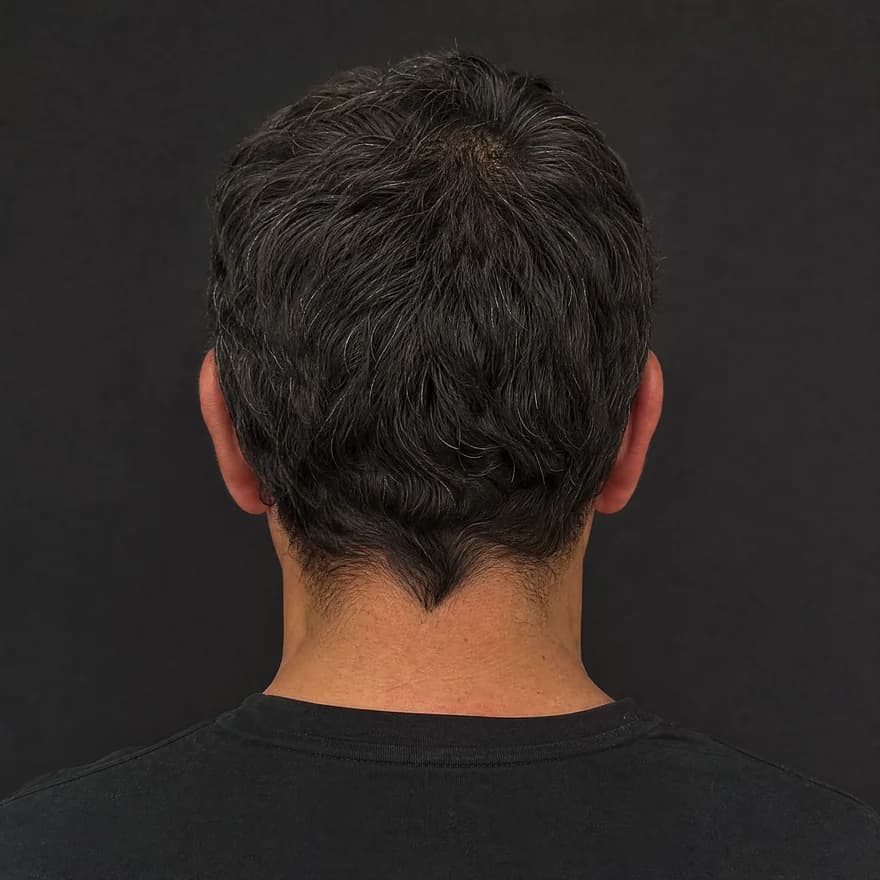
Back
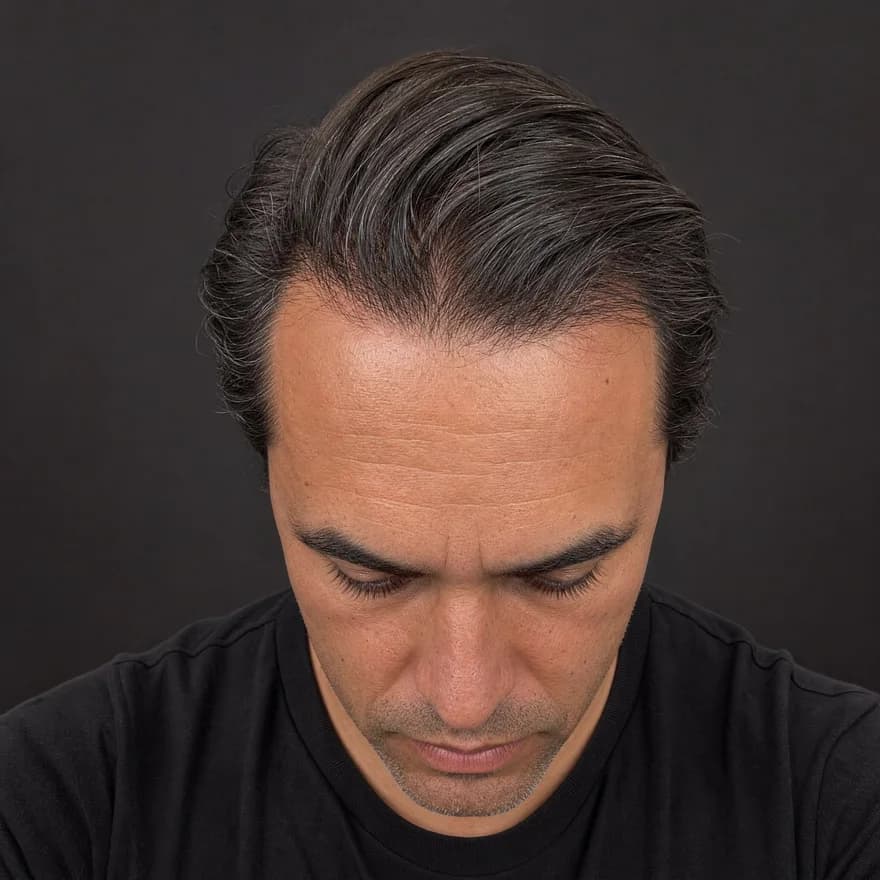
Front · Hairline
Same four angles, every time — illustrative example
Front · crown · temple · back
Four guided angles in about 30 seconds — the same views every time.
Hairline · density · scalp
AI reads each angle for hairline shape, crown density, and scalp surface.
Usable · limited · low-light
Every reading shows its confidence — limited views are flagged, not guessed.
Your baseline, revisited
Save it, rescan later, and see exactly what moved.
Surface signals
Three visible signals, read only where the photos support them — plus an honest flag when they don't.
Reflective patches under even light — the appearance signal behind what people call an oily scalp.
Visible flakes at partings and edges — reported only where the photos actually show them, never assumed.
How much scalp shows through at the crown and part — the context every other surface signal sits in.
Scalp close-ups are genuinely hard. Anything the photos can't support is flagged as low confidence, not invented.
Check, don't guess
Guided capture keeps conditions comparable — which matters more for surface signals than for anything else in the report.
The check names what's visible — shine, flaking, show-through — and stops there. Naming conditions is a professional's job.
Trying a new routine? A dated baseline shows whether the visible picture looks any different a month later.
Itch, pain, or irritation don't photograph. If that's what brought you here, a professional beats any camera.
Questions
Visible surface signals: shine, flaking, and scalp show-through, read across four angles with a confidence level on each. It describes what the photos show — appearance only.
No — it doesn't name or detect conditions, by design. It describes visible signals and tracks how they change over time. Anything that needs a name needs a professional.
You can use it to see whether the visible picture changes: scan before a routine change, rescan a month later, and compare the same angles. It's informational only — for treatment advice, a professional is the right source.
Because different zones show different signals — shine tends to read along the part and crown, flaking at partings and edges, show-through wherever coverage thins. One selfie can't cover that; four fixed angles can.
Yes. They're processed to build your report only — never used to train AI, never sold, never used for advertising.
A note on transparency
ScalpAnalysis AI reads appearance-based signals and tracks visible change over time. It does not diagnose, treat, cure, or prevent any condition.
If you have pain, sudden shedding, or signs of infection, a qualified professional is the right next step.
The report it produces
This is the exact report format a scan unlocks — qualitative tiers, your visible features, and a confidence level on every reading. Saved as a baseline you compare against on every rescan.
Your Hair Profile
Temples just starting to open — crown still covered
Density
Medium
Type
Wavy
Texture
Medium
Shine
Medium
Risk of Recession
Low
Hair Loss
Mild
Illustrative example · sample data
Related guides
From the blog
Photos and a blurred preview are free. The full analysis is $2.99, or invite 3 friends for one free analysis.
