Seasonal Shedding
Every September, the same quiet panic: more hairs on the pillow, a fuller brush, a shower drain that suddenly needs attention. A mild seasonal rhythm to shedding is commonly reported, and studies suggest it tends to peak around late summer and autumn for many people, easing as the months turn. If that's what your head is doing, it's noise with a calendar — uncomfortable, but self-limiting. The catch is that a real, slow-moving trend can hide inside a noisy season: you can't tell 'October being October' from 'this year is genuinely different' by staring at the drain. The clean way to split them is a dated record. A four-angle baseline now, a rescan as the season turns, and — the comparison seasonal worriers actually need — this October against last October. Same season, same angles, honest answer.
Photos and a blurred preview are free. The full reading is $2.99 — your stage, whether it looks early, and what to do next.
How it works
Same four angles, every time — so each new scan compares fairly to your very first.
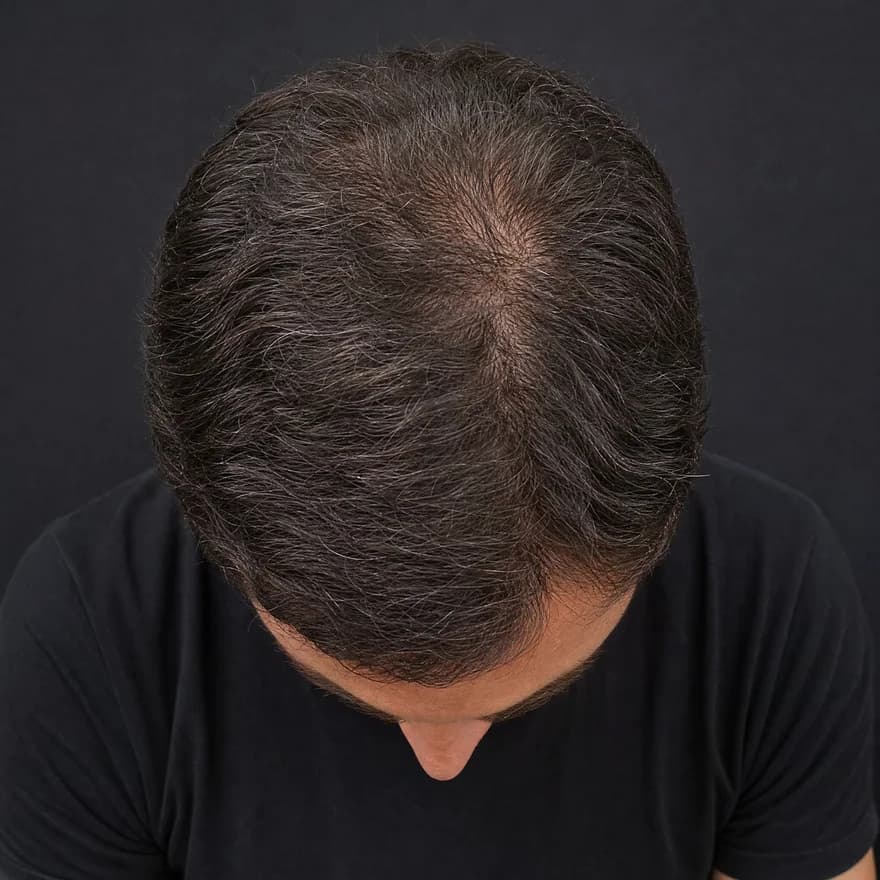
Top · Crown
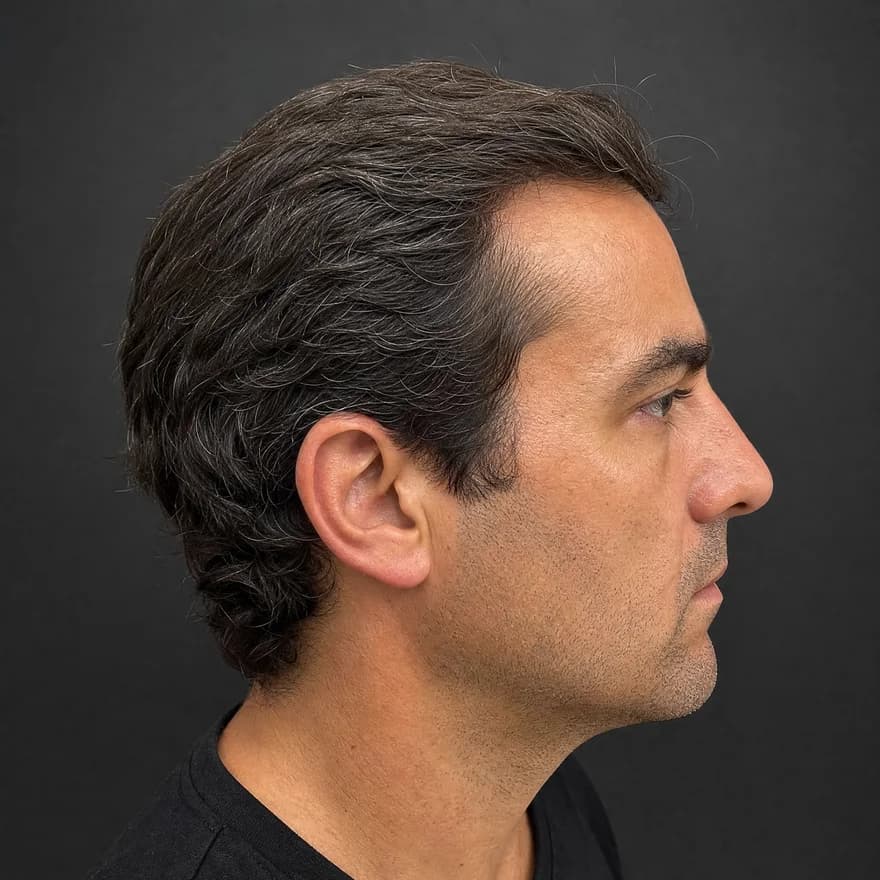
Side · Temple
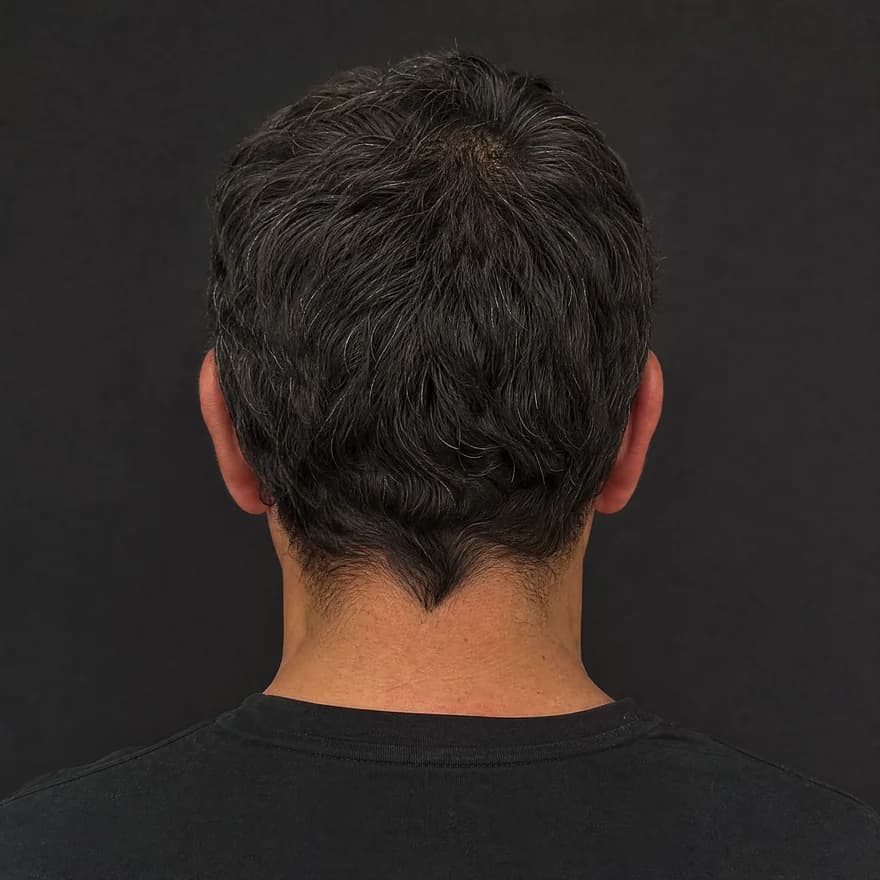
Back
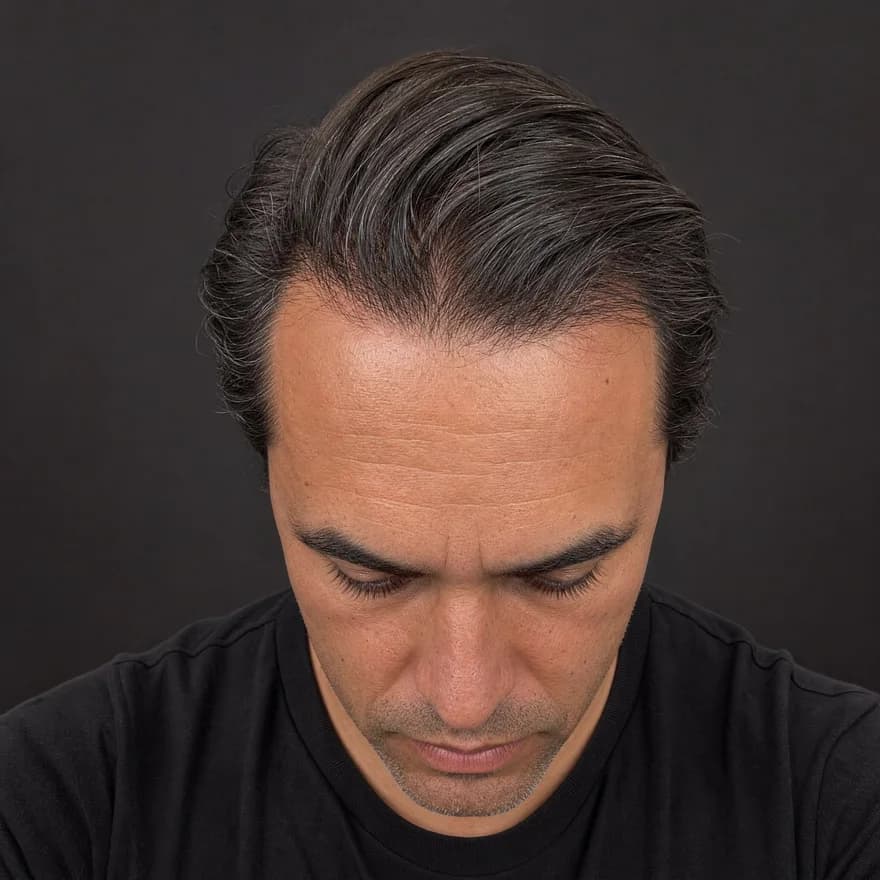
Front · Hairline
Same four angles, every time — illustrative example
Front · crown · temple · back
Four guided angles in about 30 seconds — the same views every time.
Hairline · density · scalp
AI reads each angle for hairline shape, crown density, and scalp surface.
Usable · limited · low-light
Every reading shows its confidence — limited views are flagged, not guessed.
Your baseline, revisited
Save it, rescan later, and see exactly what moved.
Season vs. trend
Neither column is a diagnosis — they're visible behaviours to check your own scans against as the months turn.
Appearance-based patterns for comparison — not a diagnosis either way.
The year-over-year method
Seasons repeat — which makes them the easiest noise to control for, if you have dated records.
Four guided angles turn a vague 'it's shedding more' into coverage and hairline tiers with confidence shown — dated, so the calendar context is part of the record.
8–12 weeks later shows whether the shedding eased on schedule. Recovery back toward baseline is the seasonal script playing out.
The killer comparison for seasonal worriers: this October against last October. Same month, same angles — the season cancels itself out of the equation.
A trend that survives the season change, or steps down year over year, belongs in front of a qualified professional — with your dated scans as the opening exhibit.
Why the drain misleads
Nobody counts pillow hairs in June. The season's reputation makes people start auditing — and auditing always finds something.
A heavier autumn can trace back to a stressful summer. The hair you lose in October often left the growth cycle months earlier.
Cooler months flatten and dull hair, showing more scalp under indoor light. The style changes faster than the density does.
You can't remember how much you shed last fall. A dated scan remembers exactly — which is the entire point of keeping one.
Questions
A mild seasonal pattern is commonly reported, and research suggests shedding tends to run a little heavier for many people around late summer and autumn, settling in the months after. The effect is modest and varies person to person — some notice it every year, others never do. What matters practically is that seasonal shedding is temporary by definition; anything that doesn't ease as the season turns deserves a closer look.
The honest answer is that the mechanism isn't fully settled — the pattern is commonly reported, the explanation less so. What this tool can tell you is whether your autumn is following the seasonal script: shedding that builds for a stretch and then eases, with coverage that holds or recovers. Why your particular head runs a seasonal rhythm — if it does — isn't something a photo can answer.
Commonly a stretch of weeks rather than a whole season — building, peaking, then easing as the months turn. But 'commonly' is a population word. Your pattern is knowable only by watching it: a baseline scan when you first notice, a rescan 8–12 weeks later, and you'll see whether the picture recovered or kept drifting. The second outcome is the one worth taking to a professional.
Behaviour over time is the tell. Seasonal shedding is diffuse, arrives around the same months, and coverage recovers when it passes. A steadier pattern is often zone-specific — temples, part, crown — and each scan sits behind the last regardless of the calendar. The strongest comparison is year over year: this autumn's scan against last autumn's, same angles, same season. If coverage is stepping down October to October, the season isn't the story.
A noisier autumn with recovery afterwards reads like the commonly reported pattern, and tracking it is usually all it needs. Worth escalating to a qualified professional: shedding that's sudden, patchy, or heavy; a trend that keeps drifting after the season turns; or scalp irritation alongside. Dated photos from the same angles make that conversation concrete.
Taking the four guided photos and previewing your report is free, no sign-up needed. The full analysis — coverage tiers, hairline read, and a saved baseline you can compare season to season — is $2.99 per scan.
A note on transparency
ScalpAnalysis AI reads appearance-based signals and tracks visible change over time. It does not diagnose, treat, cure, or prevent any condition.
If you have pain, sudden shedding, or signs of infection, a qualified professional is the right next step.
The report it produces
This is the exact report format a scan unlocks — qualitative tiers, your visible features, and a confidence level on every reading. Saved as a baseline you compare against on every rescan.
Your Hair Profile
Temples just starting to open — crown still covered
Density
Medium
Type
Wavy
Texture
Medium
Shine
Medium
Risk of Recession
Low
Hair Loss
Mild
Illustrative example · sample data
Related guides
From the blog
Photos and a blurred preview are free. The full analysis is $2.99, or invite 3 friends for one free analysis.
