How Much Is Normal?
Shedding is a normal part of the hair cycle — everyone loses some every day, and the amount swings with season, stress, washing, and styling. The honest catch: a strand count off your pillow or drain is noisy and easy to misread. The question worth answering isn't "how many today?" but "is my visible coverage holding steady over months?" — and that's what a photo baseline is built to show.
How it works
Same four angles, every time — so each new scan compares fairly to your very first.
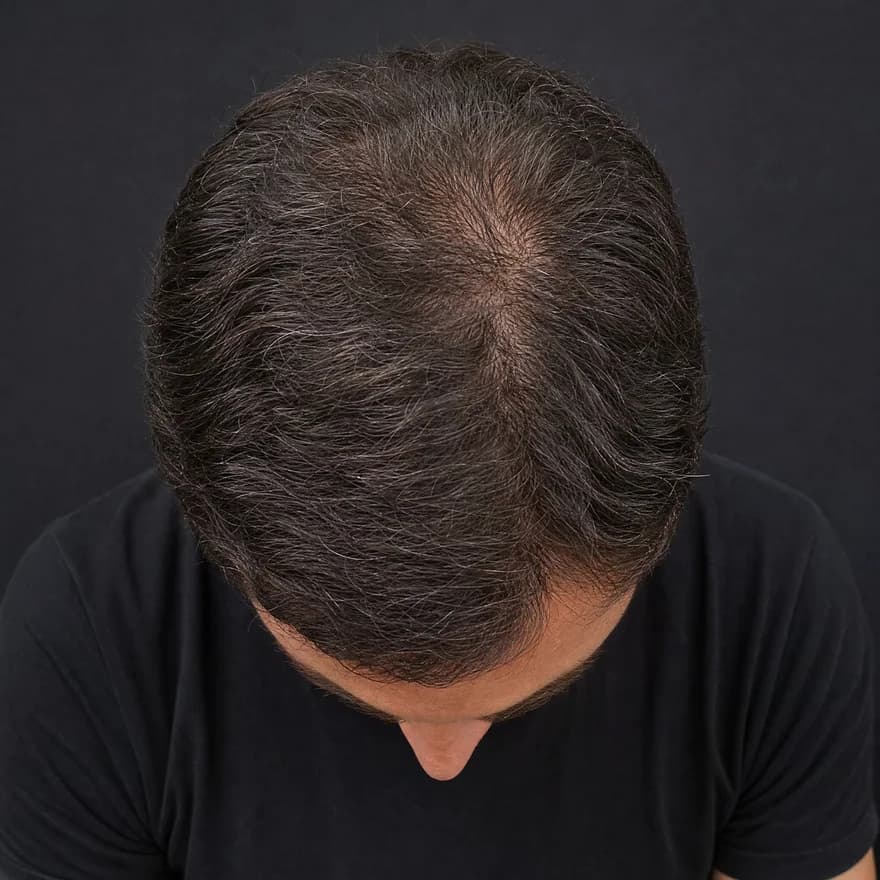
Top · Crown
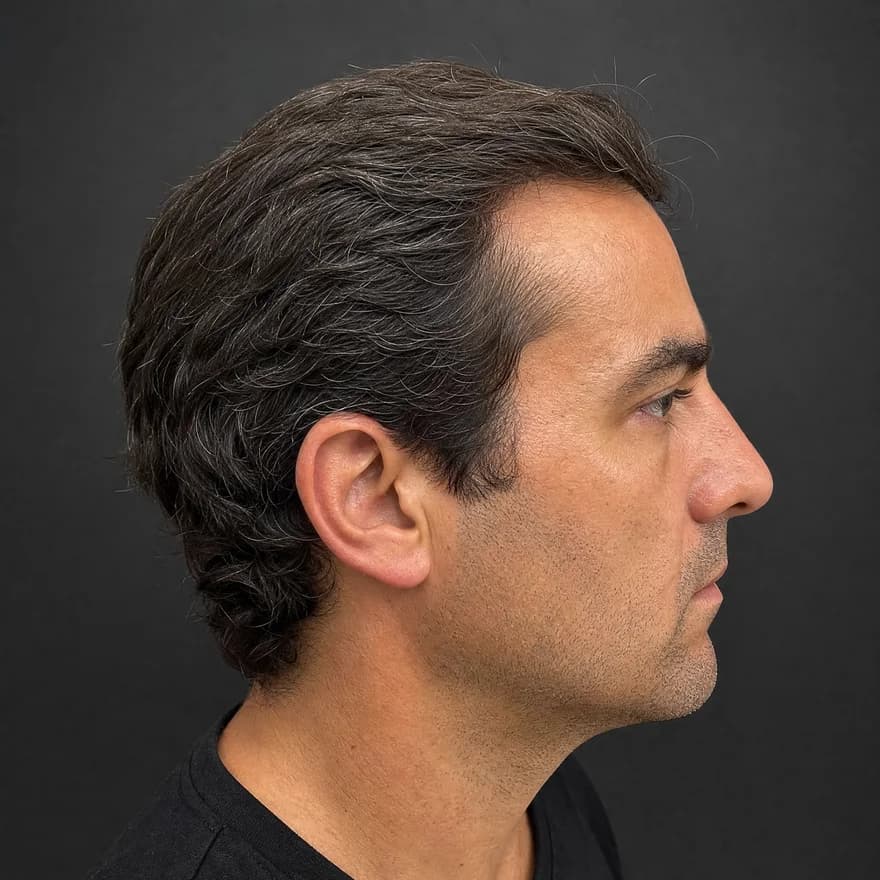
Side · Temple
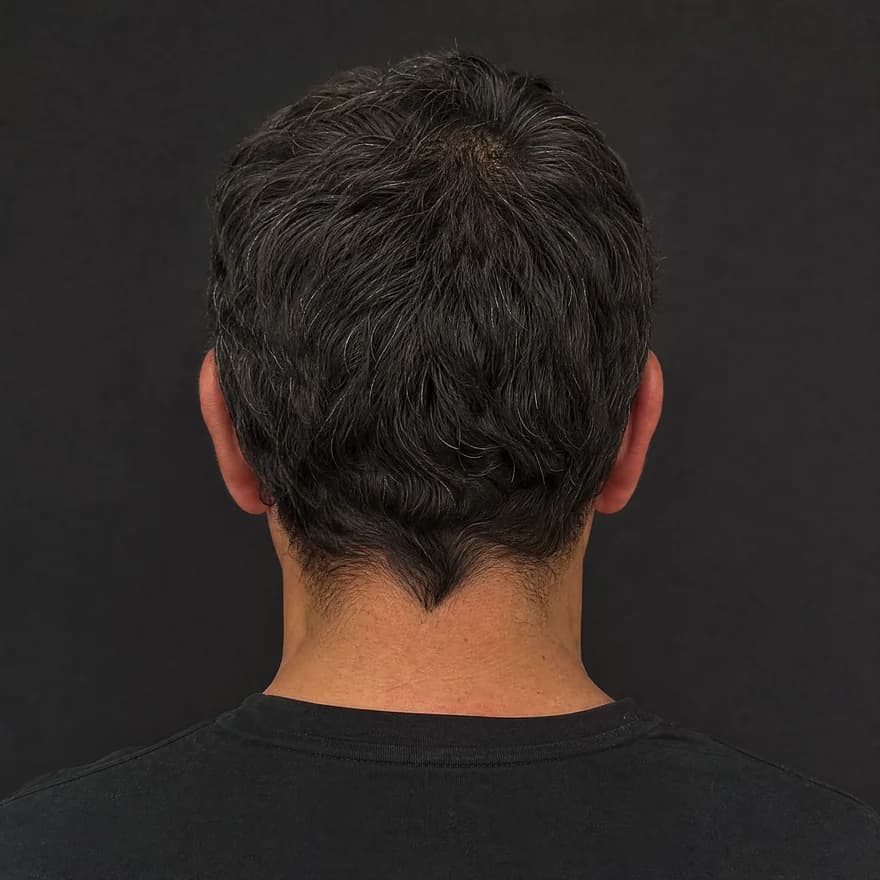
Back
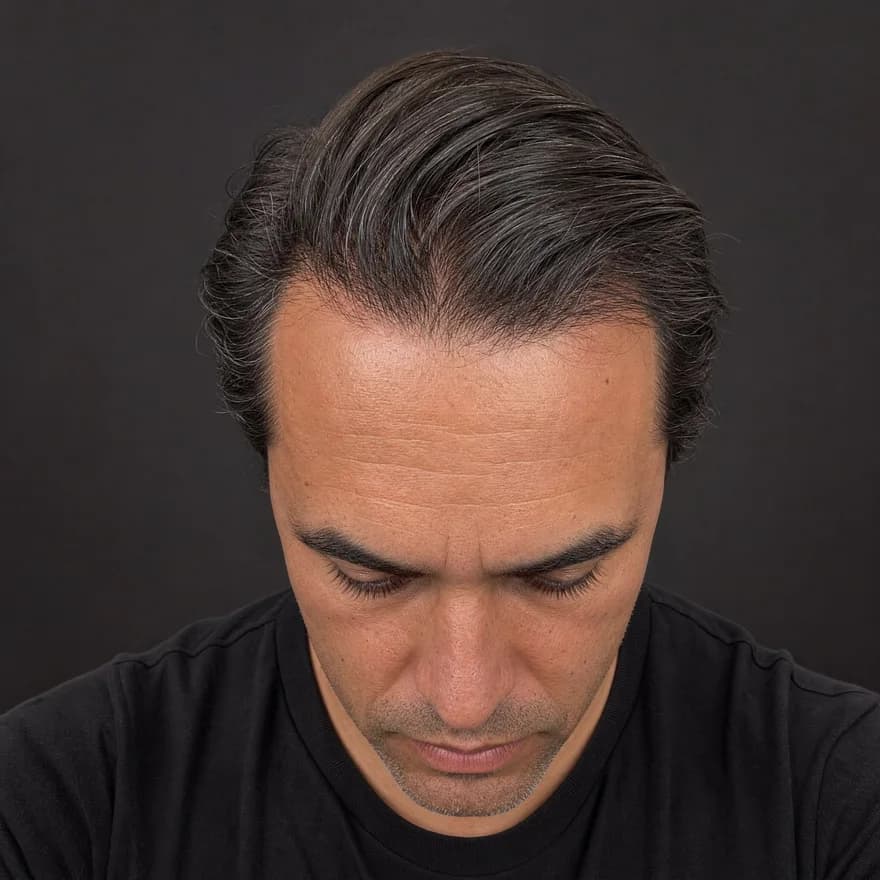
Front · Hairline
Same four angles, every time — illustrative example
Front · crown · temple · back
Four guided angles in about 30 seconds — the same views every time.
Hairline · density · scalp
AI reads each angle for hairline shape, crown density, and scalp surface.
Usable · limited · low-light
Every reading shows its confidence — limited views are flagged, not guessed.
Your baseline, revisited
Save it, rescan later, and see exactly what moved.
Two ways to ask the question
Both try to answer "is this normal?" — only one gives you something steady to act on.
Appearance-based tracking, informational only — not a diagnosis or a normal-for-you number.
Ask a steadier question
Stop trying to count what you lose. Start tracking what stays.
Four guided angles read your visible hairline and crown coverage as tiers, with a confidence level on each — your starting point, on record.
Daily shedding rises and falls; coverage over months is the steadier signal. Rescanning every 8–12 weeks smooths the day-to-day noise a count can't.
Identical framing means a difference between two scans is a difference on your head — not a heavier wash day or a harsher bathroom light.
A flat, stable coverage trend is a genuinely reassuring answer. If it's moving, you'll see it early — and dated photos make a professional's visit count.
Questions
Most people shed a steady, ordinary amount of hair daily as part of the natural cycle, and it varies with washing, season, and stress. The widely cited figures are rough averages, not a pass-or-fail line — which is exactly why a one-day count is a shaky way to judge anything.
You never catch them all, washing and brushing days inflate the tally, and the cycle naturally ebbs and flows week to week. A count is a noisy single data point. Whether your visible coverage is stable across months is the steadier, more meaningful signal.
The visible tells matter more than a number: a part that reads wider over time, more scalp showing at the crown, or temple corners setting back across months. If you also notice sudden or patchy shedding, scalp itch, or tenderness, that's a question for a qualified professional rather than a tracking app.
It reframes the question from "how many today?" — which is noisy — to "has my visible coverage moved since last time?" — which photos at the same angle, months apart, can actually answer. The trend is the signal; a single day's count mostly measures your morning.
No. This page is informational and appearance-based — it doesn't diagnose anything or tell you a normal number for you. For sudden, heavy, or patchy shedding, a qualified professional is the right next step, and dated photos make that visit more useful.
A note on transparency
ScalpAnalysis AI reads appearance-based signals and tracks visible change over time. It does not diagnose, treat, cure, or prevent any condition.
If you have pain, sudden shedding, or signs of infection, a qualified professional is the right next step.
The report it produces
This is the exact report format a scan unlocks — qualitative tiers, your visible features, and a confidence level on every reading. Saved as a baseline you compare against on every rescan.
Your Hair Profile
Even crown coverage with a soft cowlick
Density
High
Type
Wavy
Texture
Medium
Shine
Medium
Risk of Recession
Low
Hair Loss
Minimal
Illustrative example · sample data
Related guides
Photos and a blurred preview are free. The full analysis is $2.99, or invite 3 friends for one free analysis.
