Postpartum Hair Loss
Somewhere in the first months after giving birth, many people hit the same alarming moment: a handful of hair in the brush, a shower drain that needs clearing, a part line that suddenly looks wider. Postpartum shedding is commonly described as a delayed, temporary phase — often starting a few months after birth and easing over the months that follow — but 'commonly' and 'often' are population words. They say nothing about your timeline, and that gap is where the 3 a.m. searching lives. A photo baseline replaces the guessing with a record: four guided angles now, a rescan every couple of months, and you can see — not wonder — whether your coverage has turned the corner. The tool reads appearance for anyone, whatever your hair length or who you are; your situation and your health are yours to discuss with a professional.
Photos and a blurred preview are free. The full reading is $2.99 — your stage, whether it looks early, and what to do next.
How it works
Same four angles, every time — so each new scan compares fairly to your very first.
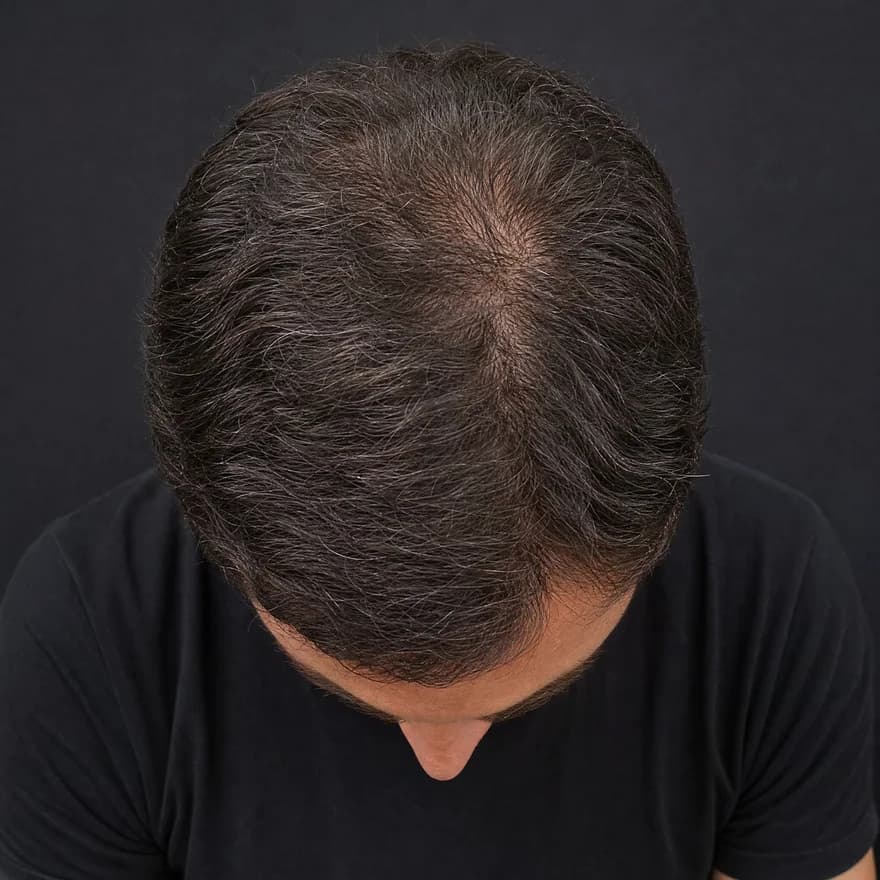
Top · Crown
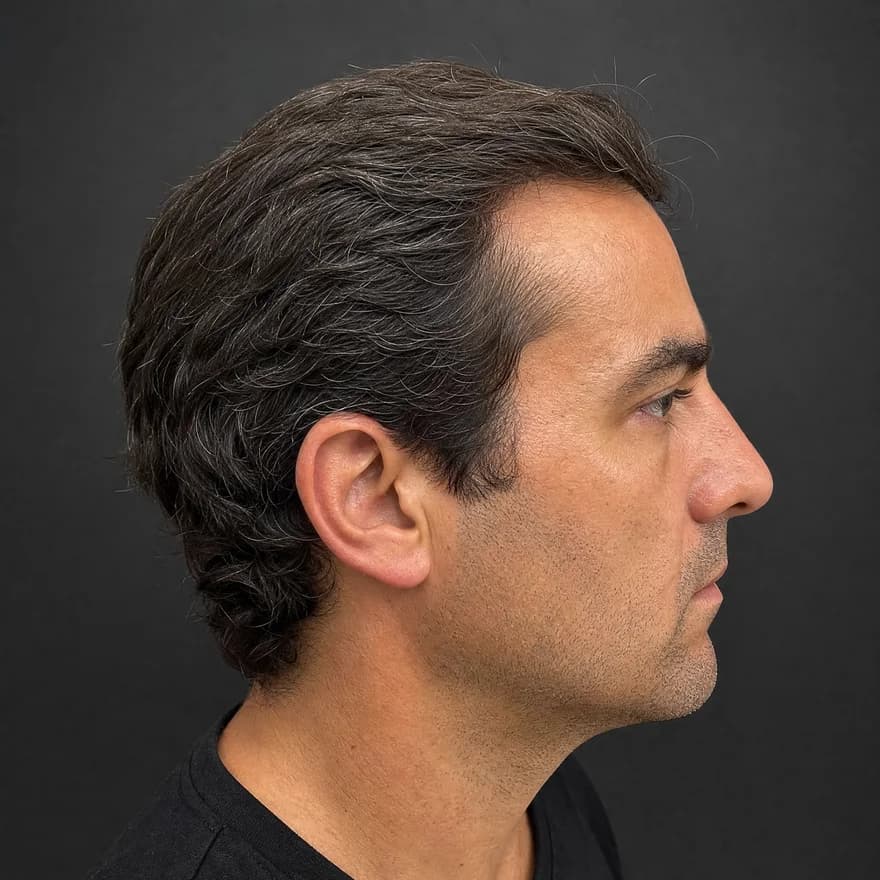
Side · Temple
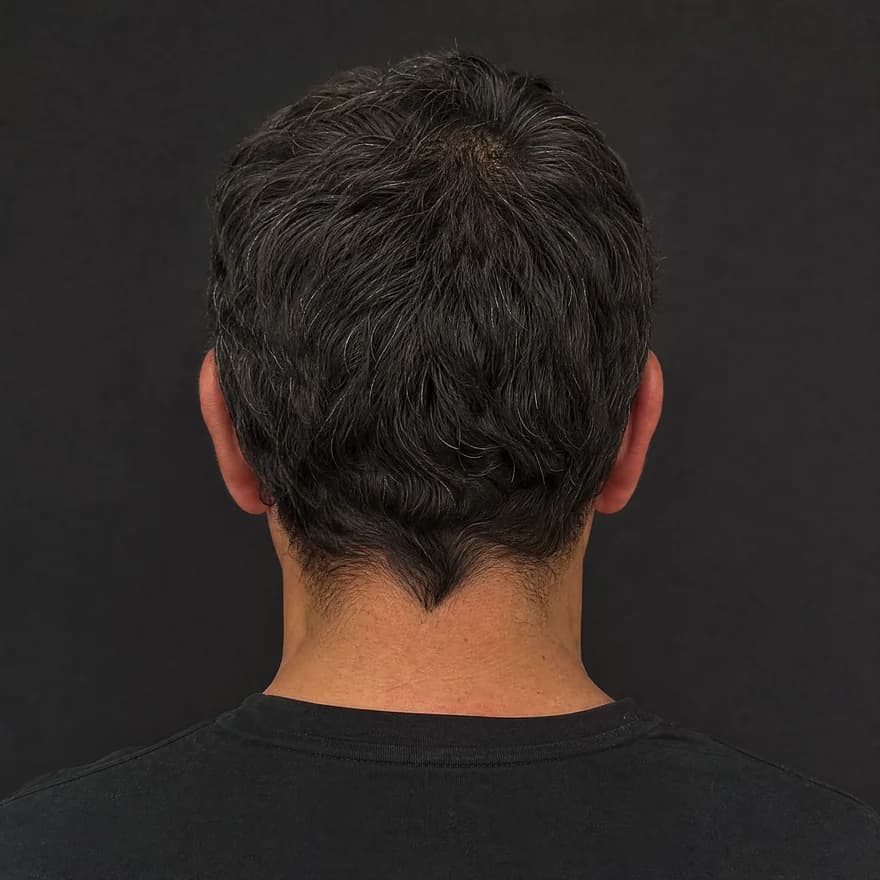
Back
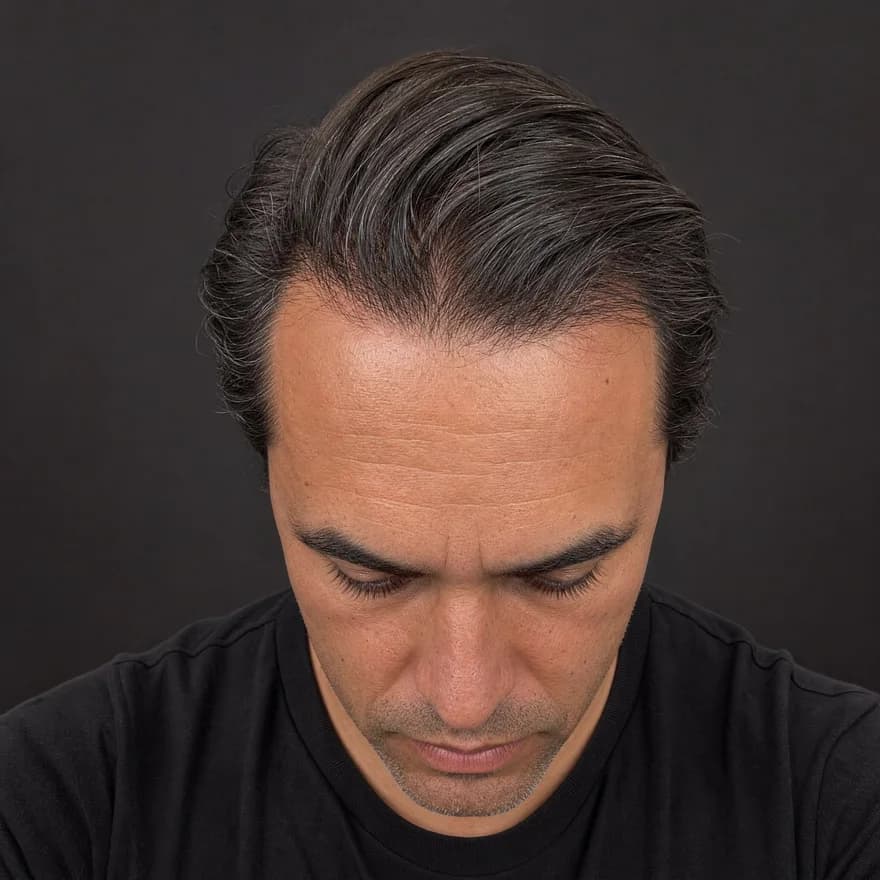
Front · Hairline
Same four angles, every time — illustrative example
Front · crown · temple · back
Four guided angles in about 30 seconds — the same views every time.
Hairline · density · scalp
AI reads each angle for hairline shape, crown density, and scalp surface.
Usable · limited · low-light
Every reading shows its confidence — limited views are flagged, not guessed.
Your baseline, revisited
Save it, rescan later, and see exactly what moved.
From worry to record
You can't rush the arc — but you can stop re-litigating it in the mirror every morning.
Mid-shed, early, late — it doesn't matter. Four guided angles record today as stable tiers, and every later scan gets compared against it. The best time was months ago; the second best is now.
Clean, dry hair, the same guided angles each time. Postpartum life makes routines hard; the capture flow keeps the photos consistent even when everything else isn't.
The meaningful moment isn't 'back to normal' — it's the scan where the part reads narrower than the last one. That's the arc bending, months before the mirror feels different.
Several months of scans still drifting, patchy shedding, or scalp irritation — those are professional questions. Dated same-angle photos make that appointment concrete instead of anecdotal.
Settling vs. drifting
Neither column diagnoses anything — they're visible patterns to compare your own scans against.
Appearance-based patterns only. Your health and your case belong with a qualified professional.
Built to be usable now
Four guided angles take about half a minute — a realistic ask in a stretch of life where nothing else is.
Sleep deprivation and a widening part are a bad combination for objective self-assessment. Dated tiers don't have moods.
Every reading shows how sure the analysis is. Hard-to-read photos get flagged, not papered over.
Your photos are processed to build your report only — never used to train AI, never sold, never shared for advertising.
Questions
The commonly described arc: shedding starts a few months after birth, runs for a stretch, and eases over the following months, with coverage gradually filling back in. But that's the population story, not a promise about yours — timelines genuinely vary. The honest way to know where you are in the arc is a dated record: scans a couple of months apart show whether your shedding is still building, plateauing, or already recovering.
The delay is the signature of this kind of shedding — it's commonly described as arriving weeks to months after the physical event rather than during it, which is why it can blindside you just when life is finding a rhythm. A photo tool can't explain your case — that's a professional's territory — but the lag itself is normal enough that the start date alone isn't a reason to panic.
The scan reads visible hair and scalp appearance — coverage, part width, density tiers, surface signals — and none of that is gendered. Much of our content is written for men over 30 because that's who we built for first, but the capture flow, the analysis, and the tracking work the same for anyone, at any hair length.
No photo tool can promise that, and you should be suspicious of any that does. What tracking can honestly show is direction: whether your part width and coverage tiers are moving back toward your baseline scan after scan. If months pass and the trend isn't turning, that's a concrete, dated finding to bring to a professional — far better than 'it still seems thin.'
You can't settle that from one photo, and this tool won't pretend to. What it can do is characterise what's visible: postpartum shedding is commonly diffuse and time-limited, while patterns worth a closer look tend to be zone-specific and keep drifting without recovering. If your trend doesn't ease over several months, or shedding is patchy or comes with scalp irritation, a qualified professional is the right next step — with your dated photos in hand.
Every 8–12 weeks is enough. Postpartum shedding moves on a monthly scale, so daily mirror checks mostly measure lighting and tiredness. A slower rhythm shows the arc — and spares you the daily audit.
Yes. Taking the four guided photos and previewing your report is free with no sign-up. The full analysis with saved baselines for tracking is $2.99 per scan.
A note on transparency
ScalpAnalysis AI reads appearance-based signals and tracks visible change over time. It does not diagnose, treat, cure, or prevent any condition.
If you have pain, sudden shedding, or signs of infection, a qualified professional is the right next step.
The report it produces
This is the exact report format a scan unlocks — qualitative tiers, your visible features, and a confidence level on every reading. Saved as a baseline you compare against on every rescan.
Your Hair Profile
Temples just starting to open — crown still covered
Density
Medium
Type
Wavy
Texture
Medium
Shine
Medium
Risk of Recession
Low
Hair Loss
Mild
Illustrative example · sample data
Related guides
From the blog
Photos and a blurred preview are free. The full analysis is $2.99, or invite 3 friends for one free analysis.
