Hair Loss After Weight Loss
It's a frustrating trade: months of discipline, a number on the scale you're proud of — and then more hair than usual in the shower drain. Shedding that follows a stretch of rapid weight loss is commonly delayed, showing up weeks or months after the loss itself, and it's commonly diffuse and time-limited, easing as the body settles into its new normal. Why it's happening in your case, and whether anything about your diet or routine matters, are questions for a qualified professional — not a photo app. What photos can do is settle the part you can see: set a dated baseline now, rescan every couple of months, and watch whether your coverage is drifting or already on its way back. For most people, watching the recovery arrive beats guessing about it.
Photos and a blurred preview are free. The full reading is $2.99 — your stage, whether it looks early, and what to do next.
How it works
Same four angles, every time — so each new scan compares fairly to your very first.
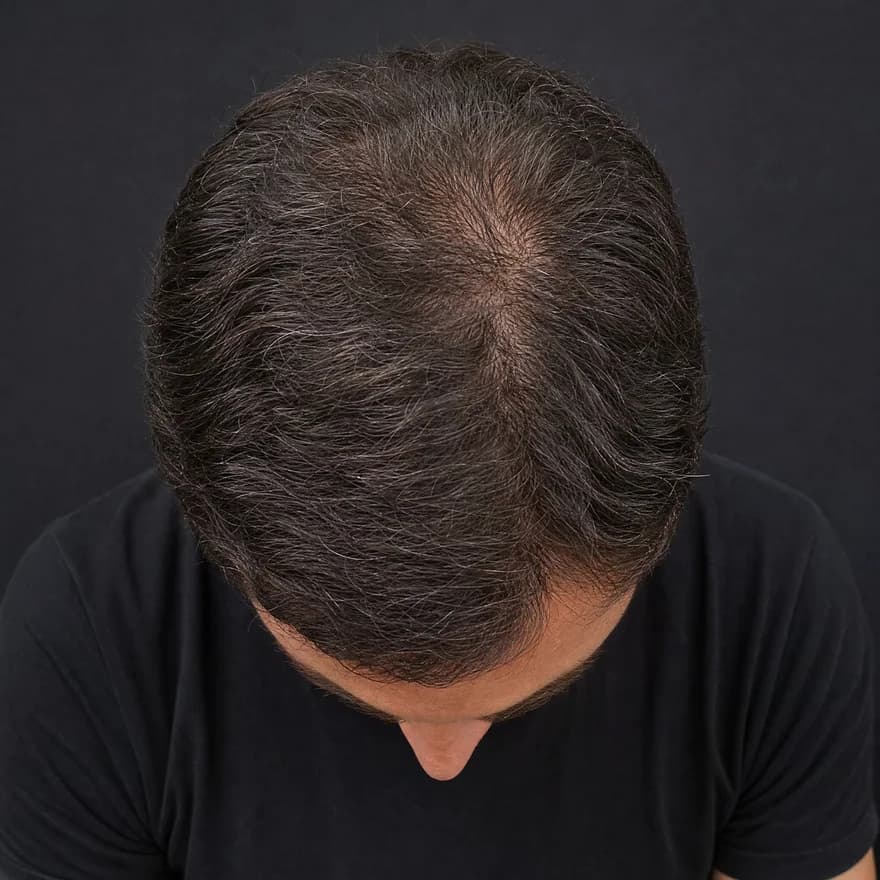
Top · Crown
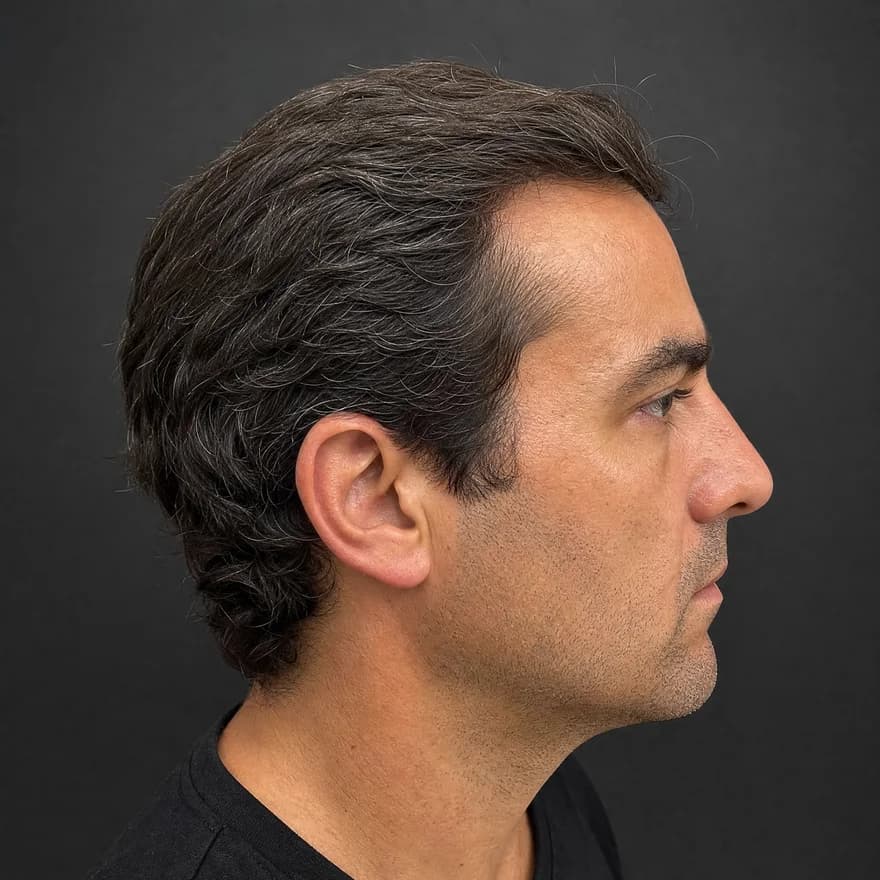
Side · Temple
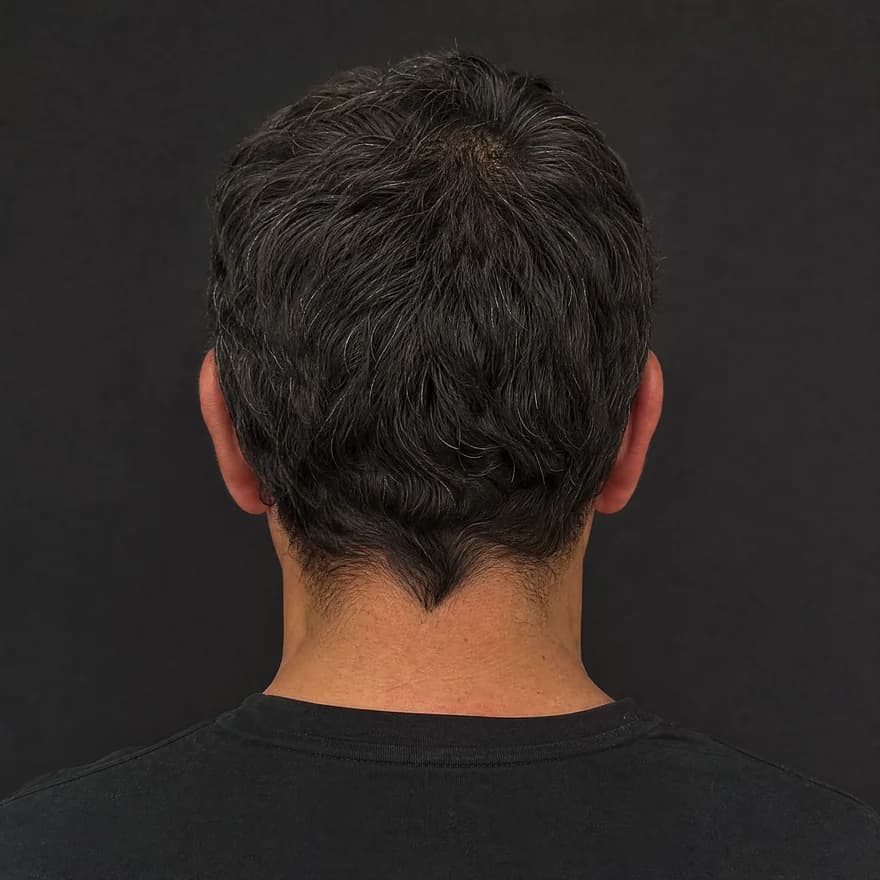
Back
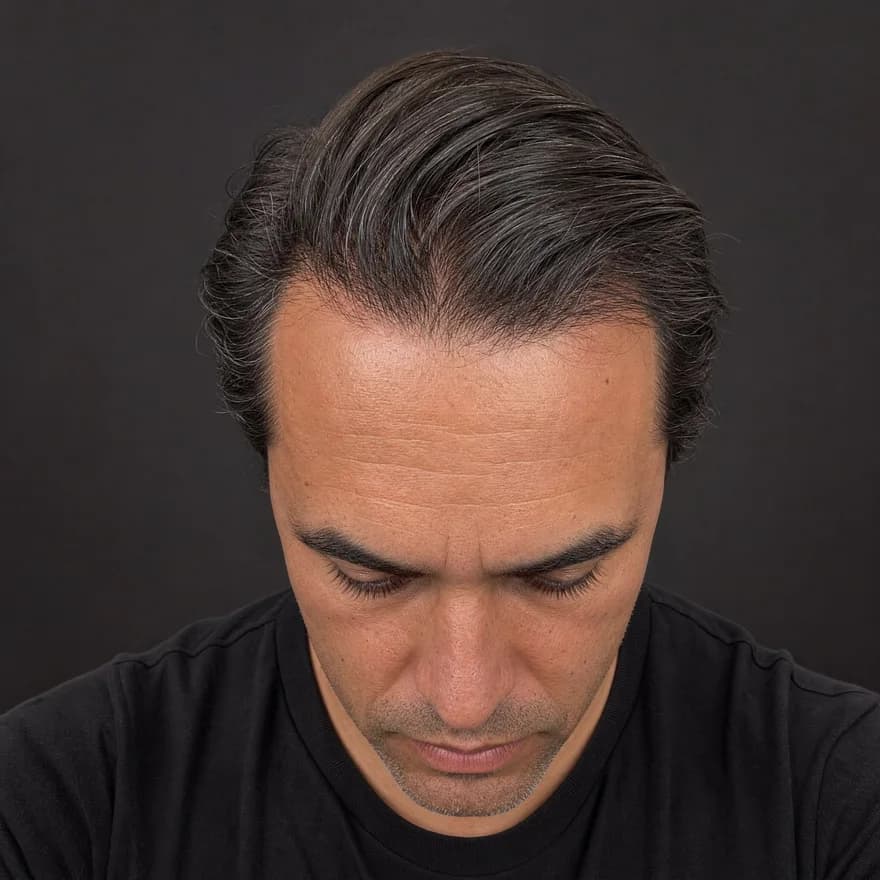
Front · Hairline
Same four angles, every time — illustrative example
Front · crown · temple · back
Four guided angles in about 30 seconds — the same views every time.
Hairline · density · scalp
AI reads each angle for hairline shape, crown density, and scalp surface.
Usable · limited · low-light
Every reading shows its confidence — limited views are flagged, not guessed.
Your baseline, revisited
Save it, rescan later, and see exactly what moved.
Two arcs
Neither column is a verdict — they're visible patterns to compare your own scans against over the coming months.
Appearance-based patterns for comparison — not a diagnosis either way.
Watch the recovery
The reassuring outcome — recovery — only shows up as a trend. Give it the conditions to show itself.
Four guided angles record today's coverage as stable tiers with confidence shown. Whenever the shedding started, today is the reference every future scan compares against.
Day-to-day shower counts are noisy and demoralising. The delayed, gradual nature of post-stressor shedding means monthly-scale comparisons are the only fair ones.
Same angles, same guidance, clean dry hair. Recovery reads as coverage bending back toward baseline; a drift reads as tiers stepping down scan to scan.
If months pass and the trend is still softening — or shedding turns sudden or patchy — bring your dated record to qualified eyes. It turns 'I think it's worse' into something they can work with.
Why a baseline helps here
A hundred hairs in the shower feels catastrophic and means little. A coverage tier from twelve weeks ago is a fair comparison; the memory of one bad morning isn't.
Both the shedding and the recovery play out over months. Two dated scans separate 'still getting worse' from 'already turning around' — feelings can't.
If you do consult a professional about your diet or your hair, arriving with same-angle photos months apart makes the conversation concrete from minute one.
Every reading carries a confidence level, and hard-to-read photos say so. A tool that guesses confidently would be worse than no tool.
Questions
A rapid change in weight is a physical stressor, and physical stressors are commonly followed — weeks to a few months later — by a temporary, diffuse increase in shedding. That lag is why it can feel so unfair: the shedding often starts after the hard part is done. What's driving it in your case is a professional's question; this page and this tool deliberately stop at the visible side.
When shedding follows a one-off stressor, coverage commonly drifts back over the months that follow — but no photo tool can promise that for you, and this one won't. What it can honestly show is which way yours is going: a baseline now, rescans every 8–12 weeks, and the trend either bends back toward baseline or it doesn't. Both outcomes are worth knowing early.
The commonly described arc is: a delayed start, a stretch of heavier shedding, then a gradual easing as the cycle rebalances — playing out over months rather than weeks. Your timeline is your own, though, which is exactly what a dated photo record is for. If the trend is still drifting after several months, that's a sensible moment for professional eyes.
Whether your eating pattern is playing a role is a nutrition and health question — a professional's territory, not a camera's. What a scan contributes is evidence: if you adjust something on qualified advice, a baseline from before and rescans after show whether the visible picture followed. That's more useful to you and to them than memory.
They tend to behave differently on camera. Post-stressor shedding is commonly diffuse — a bit from everywhere — and time-limited, with coverage that recovers. A steadier pattern tends to be zone-specific — temples, part line, crown — and keeps drifting scan after scan without bouncing back. One snapshot can't split those; a few months of identical angles usually can.
Taking the four guided photos and previewing your report is free, no sign-up. The full analysis — coverage tiers, hairline read, surface signals, and a saved dated baseline — is $2.99 per scan.
A note on transparency
ScalpAnalysis AI reads appearance-based signals and tracks visible change over time. It does not diagnose, treat, cure, or prevent any condition.
If you have pain, sudden shedding, or signs of infection, a qualified professional is the right next step.
The report it produces
This is the exact report format a scan unlocks — qualitative tiers, your visible features, and a confidence level on every reading. Saved as a baseline you compare against on every rescan.
Your Hair Profile
Temples just starting to open — crown still covered
Density
Medium
Type
Wavy
Texture
Medium
Shine
Medium
Risk of Recession
Low
Hair Loss
Mild
Illustrative example · sample data
Related guides
From the blog
Photos and a blurred preview are free. The full analysis is $2.99, or invite 3 friends for one free analysis.
