Hats & Hair Loss
Short version: there's no good evidence that ordinary hat-wearing causes hair loss. Hair follicles are fed by blood supply from underneath, not by airflow from above, and a resting cap doesn't change either. And yet the myth refuses to die — because the correlation is real even though the causation runs backwards. Men who notice thinning start wearing hats to cover it, so by the time anyone's counting, the hat-wearers really do have less hair. Add 'hat hair' — flattened, matted strands that show scalp for an hour after you take the cap off — and the daily habit of inspecting your hairline in the hat mirror, and you have a myth with perfect survival conditions. If the worry underneath is really 'is my hairline moving?', that's checkable: a four-angle baseline today, a rescan in a couple of months, and you're comparing evidence instead of anecdotes about caps.
Photos and a blurred preview are free. The full reading is $2.99 — your stage, whether it looks early, and what to do next.
How it works
Same four angles, every time — so each new scan compares fairly to your very first.
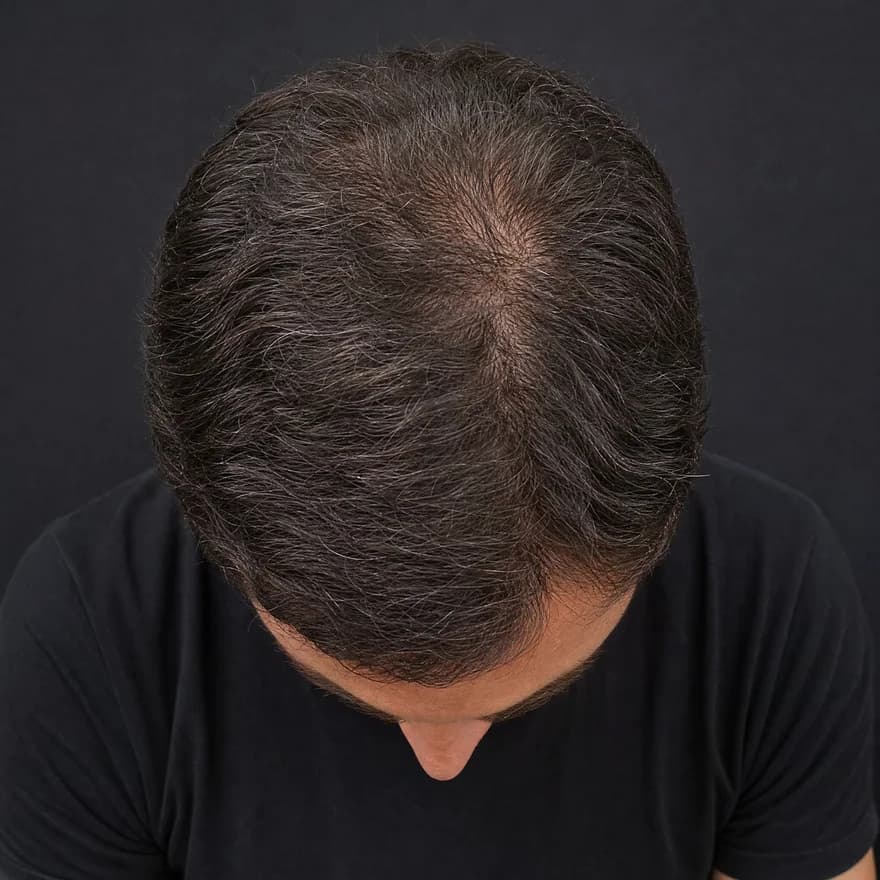
Top · Crown
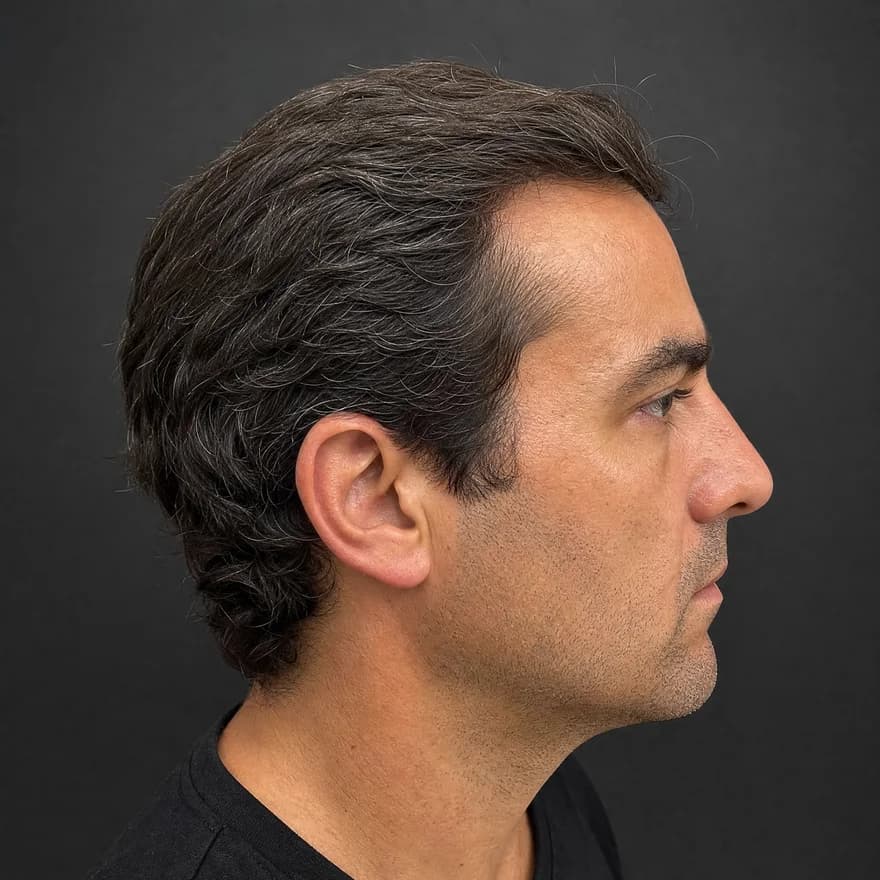
Side · Temple
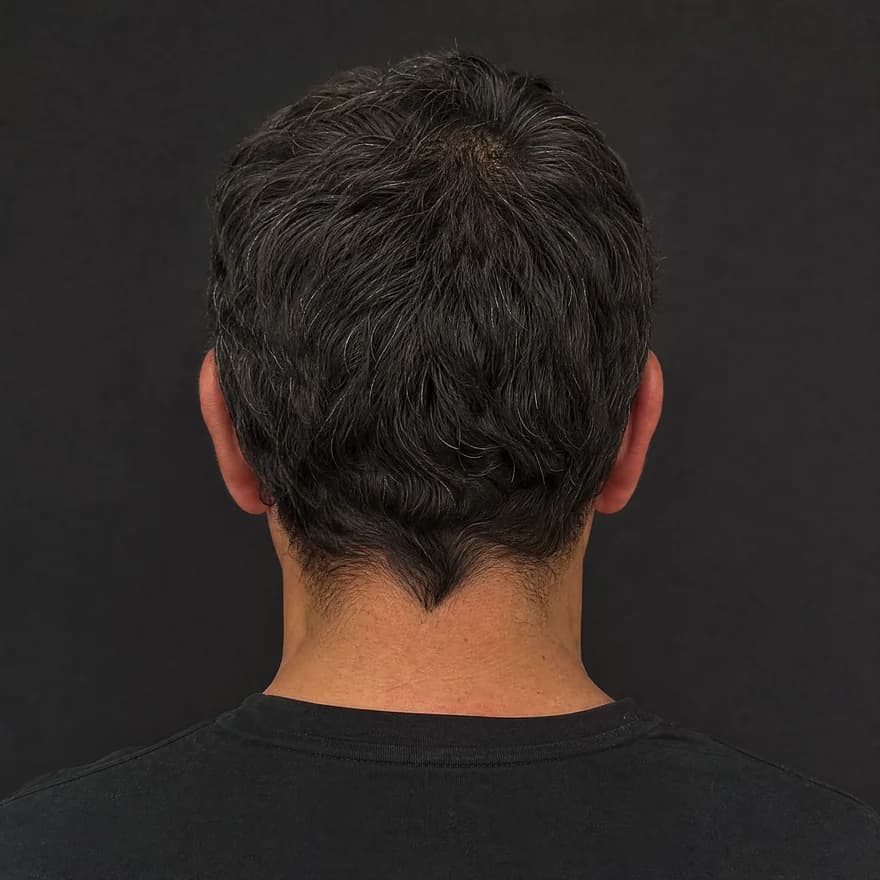
Back
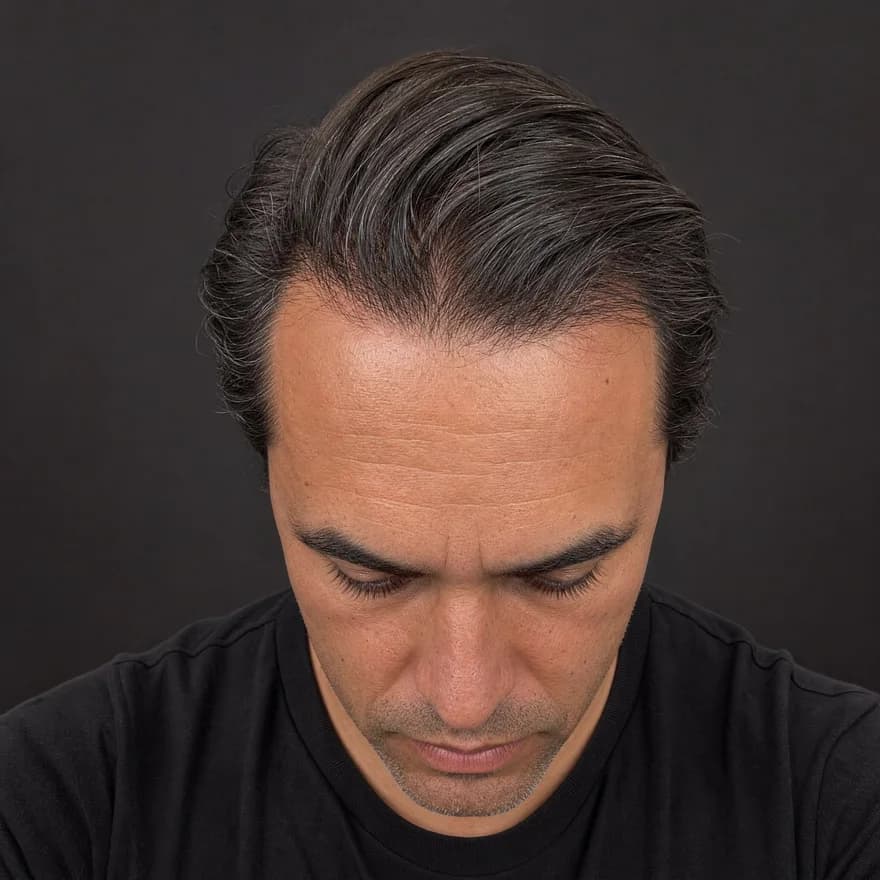
Front · Hairline
Same four angles, every time — illustrative example
Front · crown · temple · back
Four guided angles in about 30 seconds — the same views every time.
Hairline · density · scalp
AI reads each angle for hairline shape, crown density, and scalp surface.
Usable · limited · low-light
Every reading shows its confidence — limited views are flagged, not guessed.
Your baseline, revisited
Save it, rescan later, and see exactly what moved.
Anatomy of a myth
The myth isn't stupid — it's built on real observations wired up backwards.
Thinning men reach for hats, so hats and thin hair genuinely correlate. The arrow points from hair loss to hat — not the other way.
A flattened, matted post-cap head shows more scalp for an hour. Take the hat off in a mirror and you 'see' the damage the hat never did.
The 'scalp needs to breathe' line has it wrong — follicles are fed by blood supply underneath, not by airflow on top. A cap changes neither.
Hat removal is one of the few times men study their hairline up close, in bad light. More inspections, more alarms — no more actual change.
Sorted honestly
Both columns are appearance talk, not medical claims — the point is separating styling effects from real trends.
If hair loss is genuinely progressing, the hat is a bystander — and tracking, not headwear policy, is the useful response.
Settle it for your own head
The myth argues about causes. You can skip straight to the question that matters: is anything actually changing?
Scan with clean, dry, unflattened hair — four guided angles, about thirty seconds. Hairline shape, density, and crown coverage come back as tiers with confidence shown.
Nothing in your routine needs to change for tracking to work. The baseline sits on record while you live normally.
Same angles, same conditions. Stable tiers mean your hairline is holding — and the hat conversation is officially someone else's problem.
A drifting tier across scans is worth showing to a qualified professional. Dated photos of the same angles give them something real to work from — no hat theories required.
Questions
There's no good evidence that it does. Ordinary hats don't meaningfully affect what a hair follicle needs — follicles are supplied by blood from beneath the skin, not by air above it. The belief survives mostly on reverse causation: people who are already thinning wear hats to cover it, so hats and thin hair show up together without one causing the other.
Daily wear of a normal, comfortable hat has no good evidence behind it as a cause of balding. One honest caveat: headwear tight enough to constantly pull on the same hairs is a different, separately discussed question — if something you wear genuinely tugs at your hair all day, that's worth raising with a professional. A resting baseball cap doesn't do that.
That's 'hat hair' — hours under a cap flatten and clump the strands, which lets more scalp show through until the hair recovers its volume. It's a styling state, not a change in how much hair you have. Judging your density in the minute after removing a cap is one of the least fair reads you can give yourself.
It might be coincidence, and it might be the reverse of what you fear — many men start wearing hats because they've noticed thinning, then later wonder if the hat did it. A photo tool can't name the cause of anyone's thinning, but it can answer the more useful question: is it actually progressing? A dated baseline plus rescans shows the direction of your pattern, hat habits aside.
Nothing in the evidence says a comfortable hat needs protecting against — wear what you like. If the underlying worry is your hairline, redirect the energy: thirty seconds of guided photos gives you a baseline, and a rescan every 8–12 weeks tells you whether anything is moving. That's more protective than any hat decision, because it catches a real trend early.
Fix the conditions and compare over time. A guided scan frames your front, sides, top, and back the same way every time and reads hairline shape and density as stable tiers with confidence shown. Two scans a few months apart answer 'is it moving?' far better than any mirror-and-memory comparison — free to preview, $2.99 for the full analysis.
A note on transparency
ScalpAnalysis AI reads appearance-based signals and tracks visible change over time. It does not diagnose, treat, cure, or prevent any condition.
If you have pain, sudden shedding, or signs of infection, a qualified professional is the right next step.
The report it produces
This is the exact report format a scan unlocks — qualitative tiers, your visible features, and a confidence level on every reading. Saved as a baseline you compare against on every rescan.
Your Hair Profile
Temples just starting to open — crown still covered
Density
Medium
Type
Wavy
Texture
Medium
Shine
Medium
Risk of Recession
Low
Hair Loss
Mild
Illustrative example · sample data
Related guides
From the blog
Photos and a blurred preview are free. The full analysis is $2.99, or invite 3 friends for one free analysis.
