Diffuse Thinning · Crown
Diffuse thinning at the crown is the hardest hair change to catch, for two stacked reasons. Diffuse thinning is even by nature — coverage softens gradually across an area with no bald spot or sharp edge to catch your eye. And the crown is the one region of your head you physically cannot watch. Put those together and you get change that hides in the only place you can't look, in a form with nothing to point at. Most men discover it from a photo taken at someone else's height, or a glimpse under a shop's overhead lights — moments engineered to exaggerate, which makes the discovery feel worse than the change usually is. The fix isn't more vigilance; you can't out-stare a blind spot. It's measurement: a framed top-and-back baseline, coverage read as tiers, and a comparison months later that shows whether the softening is real, and whether it's moving.
Photos and a blurred preview are free. The full reading is $2.99 — your stage, whether it looks early, and what to do next.
How it works
Same four angles, every time — so each new scan compares fairly to your very first.
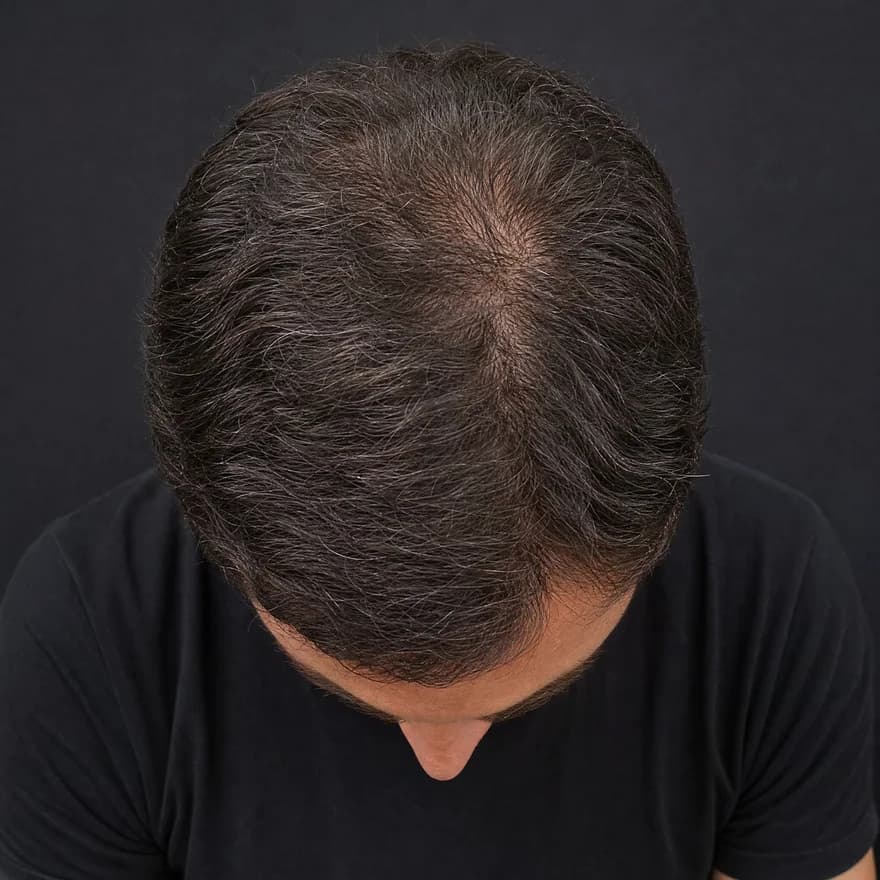
Top · Crown
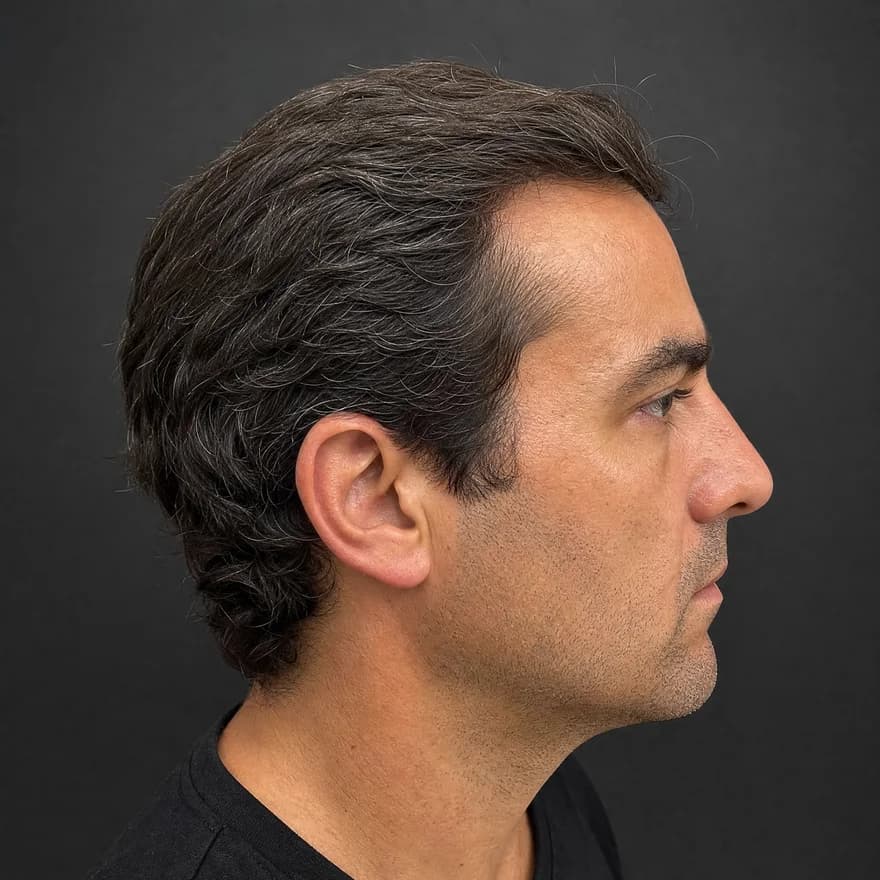
Side · Temple
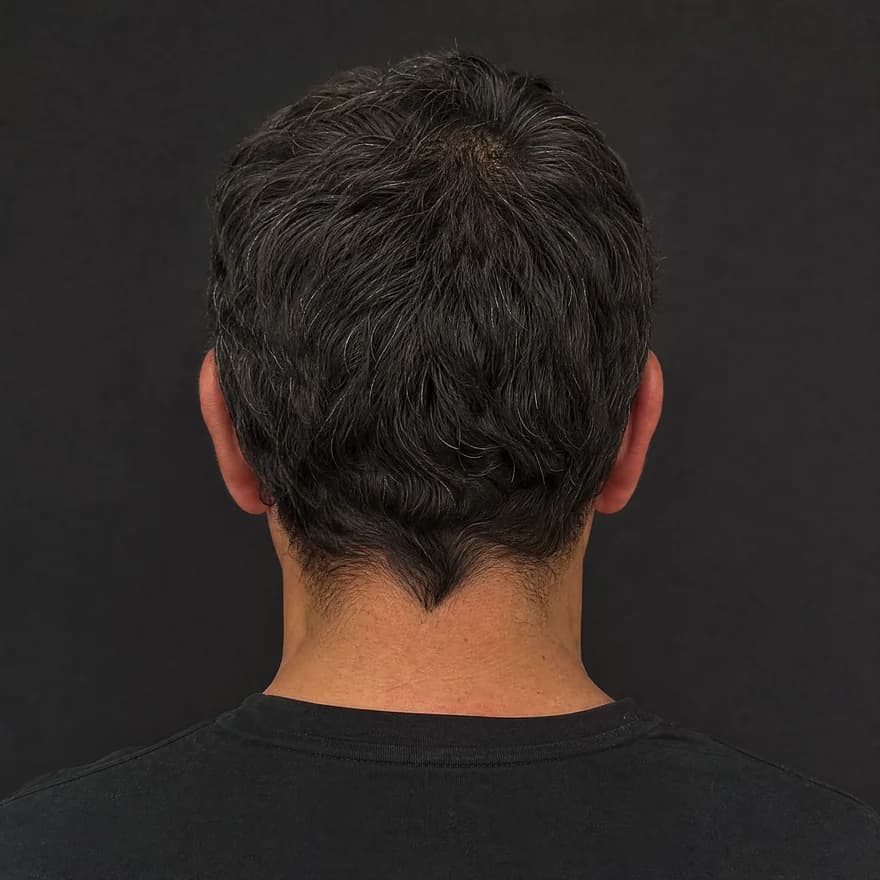
Back
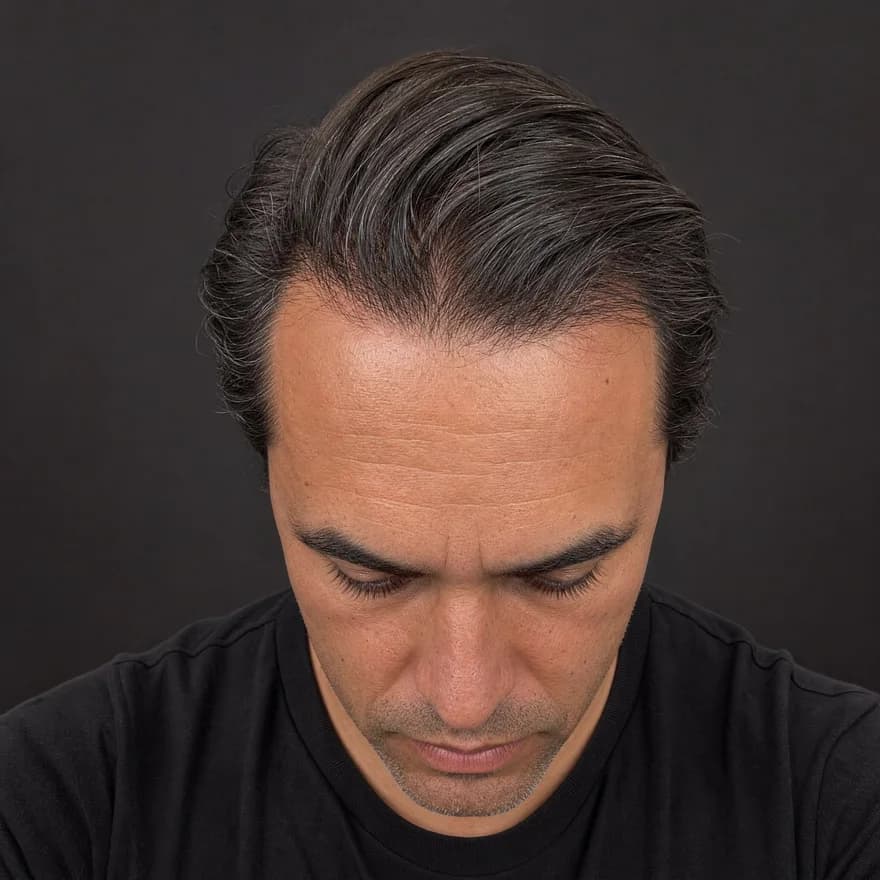
Front · Hairline
Same four angles, every time — illustrative example
Front · crown · temple · back
Four guided angles in about 30 seconds — the same views every time.
Hairline · density · scalp
AI reads each angle for hairline shape, crown density, and scalp surface.
Usable · limited · low-light
Every reading shows its confidence — limited views are flagged, not guessed.
Your baseline, revisited
Save it, rescan later, and see exactly what moved.
Why it hides
Diffuse crown thinning isn't hard to see because you're inattentive — it's hard to see by construction.
Even softening across a wide area gives your eye nothing to lock onto — no spot, no line, no border. Gradual and uniform is the perfect camouflage.
The crown can't be seen without two mirrors or someone else's phone. Change there goes unwatched by default — unless you photograph it deliberately.
Every crown has a swirl that shows scalp even on a full head. Telling swirl from softening needs the same angle twice — not a better squint.
Overhead spotlights exaggerate show-through; soft light hides it. Any single glimpse is mostly a lighting report. Tiers from consistent angles aren't.
Measure the invisible
You can't out-stare a blind spot — but two identical photographs of it, months apart, tell you everything the mirror can't.
Guided top and back angles put the whole crown on record the same way every scan — the consistency freehand overhead selfies never manage.
ScalpAnalysis AI's own analysis engine reports visible crown coverage as a stable qualitative tier with its confidence shown — built for comparison, not drama.
Diffuse change moves slowly. Scans 8–12 weeks apart on identical angles reveal direction; anything more frequent mostly re-measures the lighting.
A holding tier is a real answer. A softening one, caught early with dated photos, is exactly what makes a conversation with a qualified professional productive.
What you get
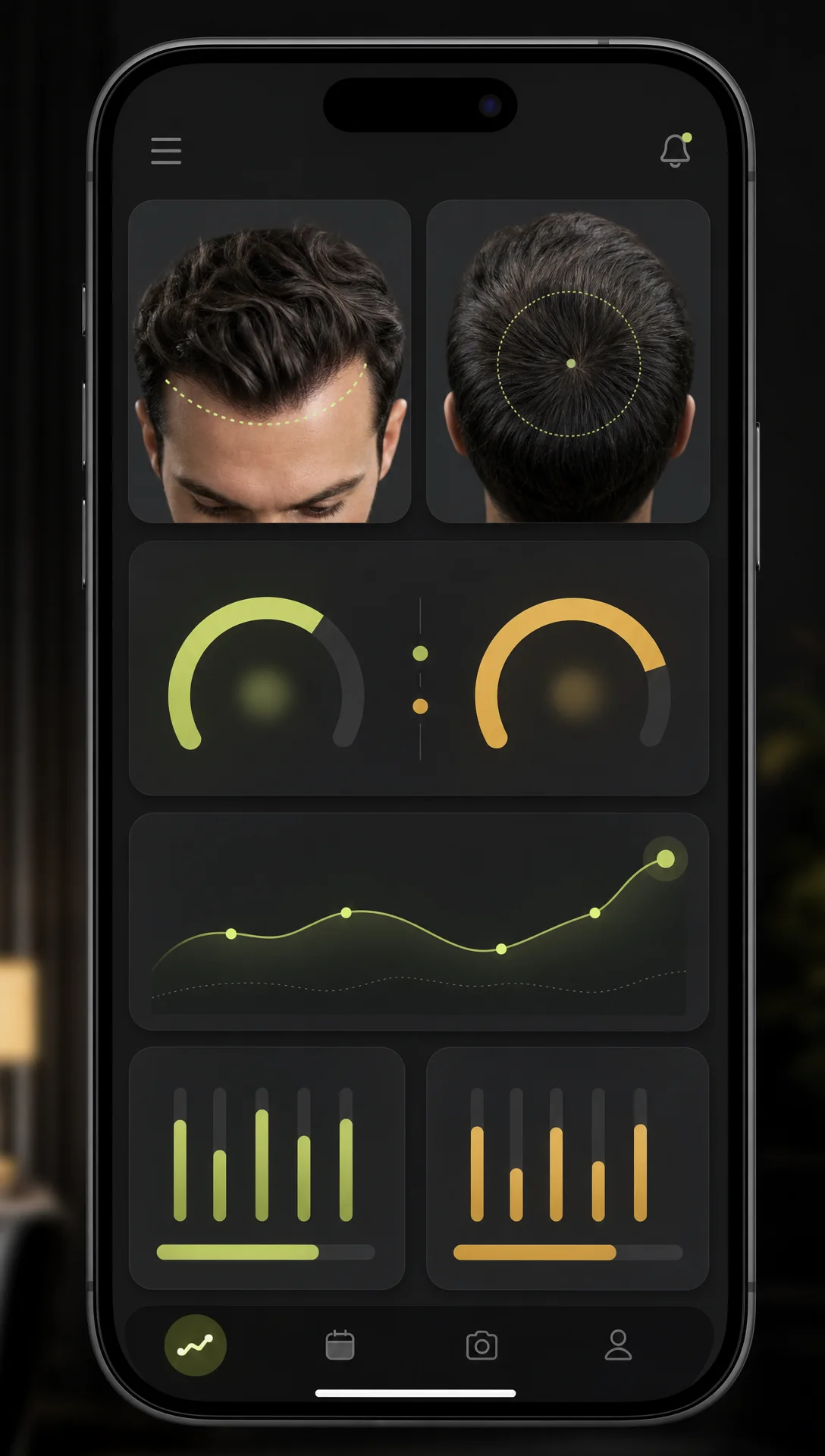
An illustrative example of the coverage read — yours is built from your own top and back views.
Questions
More scalp showing through across the whole crown area under even light — not a defined spot, not a sharp edge, just coverage reading gradually lighter over a wide zone. Because there's no single feature to point at, it tends to be visible in photos before it's obvious to the person carrying it around.
A bald spot is localised — a defined patch with an edge you can find and watch. Diffuse thinning is the opposite: even softening across the whole area with no border. The distinction matters for tracking: a spot gets measured by its size, diffuse change by overall coverage tiers — which is exactly what the top-view read reports.
That question, asked from a bathroom with one mirror, is genuinely unanswerable — which is why it loops. The swirl reads sparse on everyone, overhead light exaggerates show-through, and you can't hold an angle steady by hand. A guided baseline plus a rescan months later converts it into a question photos can settle: same angle, same light, did the tier move?
The crown and hairline can change independently — a crown-first pattern with a stable front line is common, as is the reverse. That's exactly why the scan reads them as separate zones with separate tiers rather than one overall impression. Whatever the combination, the useful information is each zone's own direction over time.
That depends on what's behind it, and that's a question for a qualified professional — not something a photo tool can or should answer. Diffuse change in particular has a range of possible causes, which is precisely why dated, same-angle photos are worth having: they show a professional the pattern, the area, and the pace instead of leaving everyone guessing from a description.
Not with a hand mirror — the angle changes every attempt, and diffuse change is too even to eyeball. The scan's guided top and back angles frame the crown identically every time; coverage comes back as a stable tier with its confidence shown, and the set is saved as a dated baseline. Two of those, 8–12 weeks apart, answer what the mirror can't.
Taking the four guided photos and previewing your report is free, no sign-up needed. Unlocking the full analysis — crown coverage tier, density read, scalp signals, and style suggestions — is $2.99 for the scan.
A note on transparency
ScalpAnalysis AI reads appearance-based signals and tracks visible change over time. It does not diagnose, treat, cure, or prevent any condition.
If you have pain, sudden shedding, or signs of infection, a qualified professional is the right next step.
The report it produces
This is the exact report format a scan unlocks — qualitative tiers, your visible features, and a confidence level on every reading. Saved as a baseline you compare against on every rescan.
Your Hair Profile
Temples just starting to open — crown still covered
Density
Medium
Type
Wavy
Texture
Medium
Shine
Medium
Risk of Recession
Low
Hair Loss
Mild
Illustrative example · sample data
Related guides
From the blog
Photos and a blurred preview are free. The full analysis is $2.99, or invite 3 friends for one free analysis.
