Crown Balding
Crown change has a cruel design flaw: it happens in the one spot you physically cannot watch. Most men find out from a changing-room mirror, an unflattering photo from behind, or a comment they'd rather not have heard — by which point the change has usually been underway for a while. The pattern itself tends to follow a recognisable route: it starts as a little extra show-through around the swirl under harsh light, widens into a more defined thinner patch, and only in later stages opens into the bare crown the word 'balding' brings to mind. Two facts keep this topic calmer than it feels. Crown change is typically slow — measured in seasons, not weeks. And every crown has a swirl that looks sparse even on a full head, which sends plenty of false alarms. A photographed baseline of the area you can't see is how you separate the two.
Photos and a blurred preview are free. The full reading is $2.99 — your stage, whether it looks early, and what to do next.
How it works
Same four angles, every time — so each new scan compares fairly to your very first.
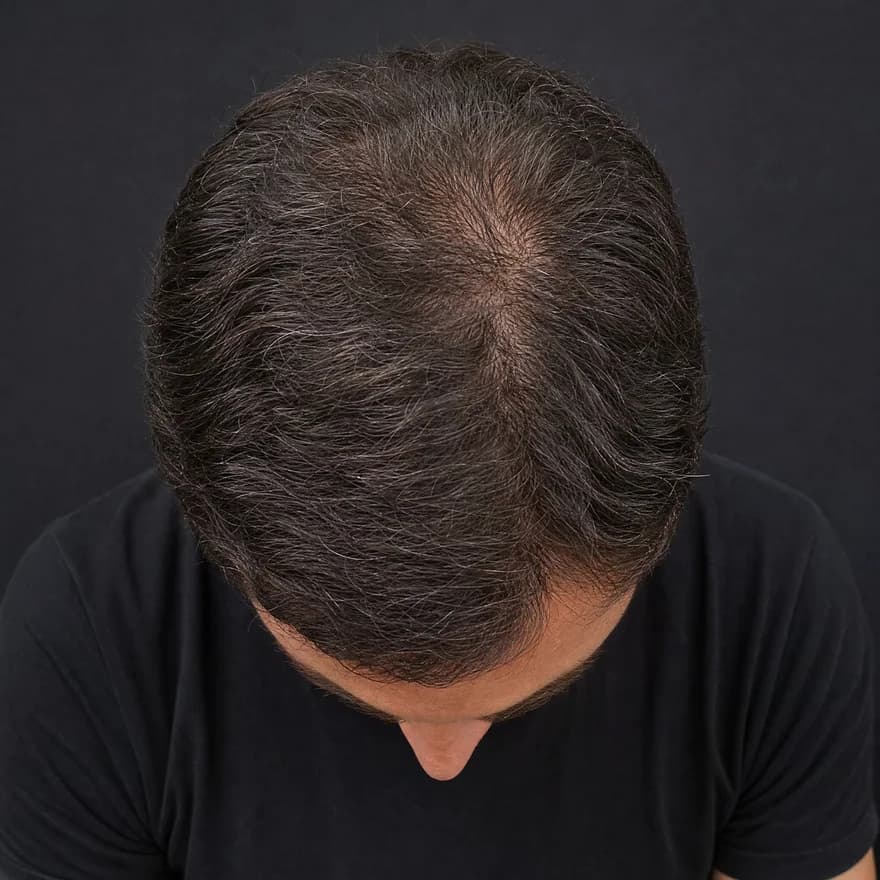
Top · Crown
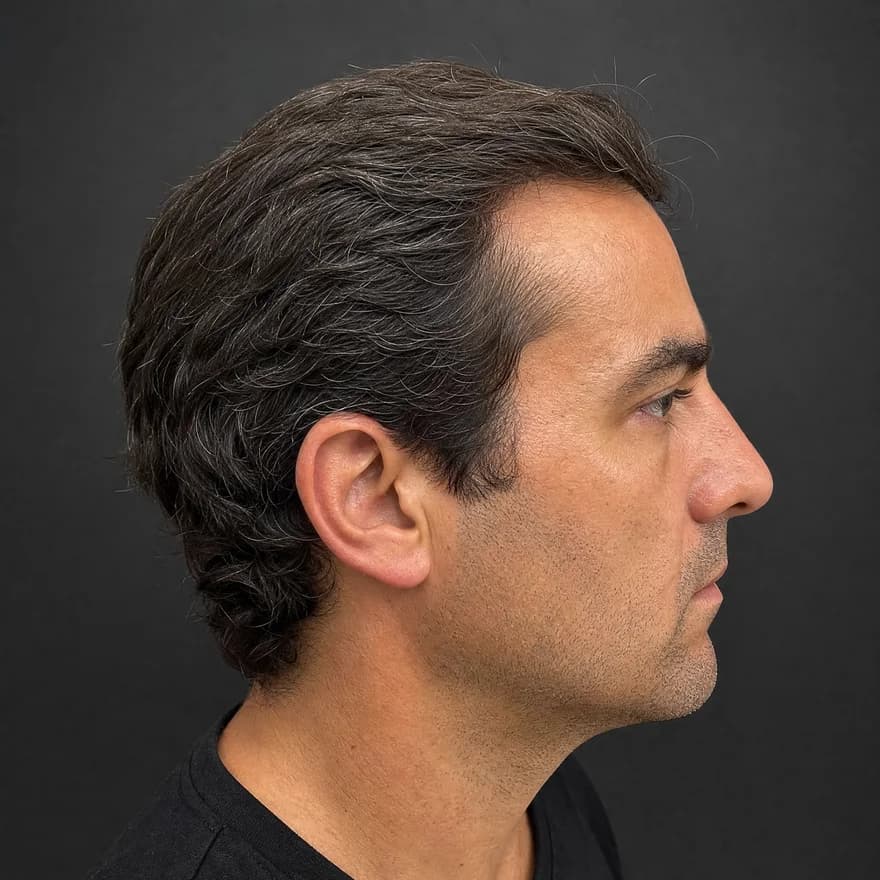
Side · Temple
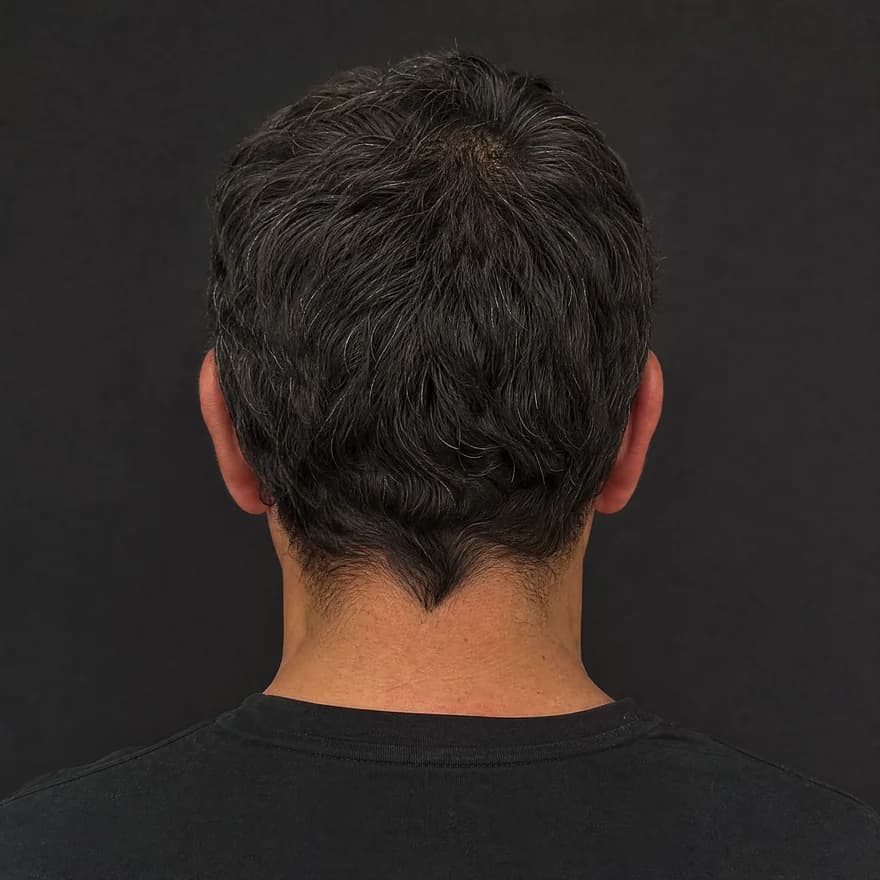
Back
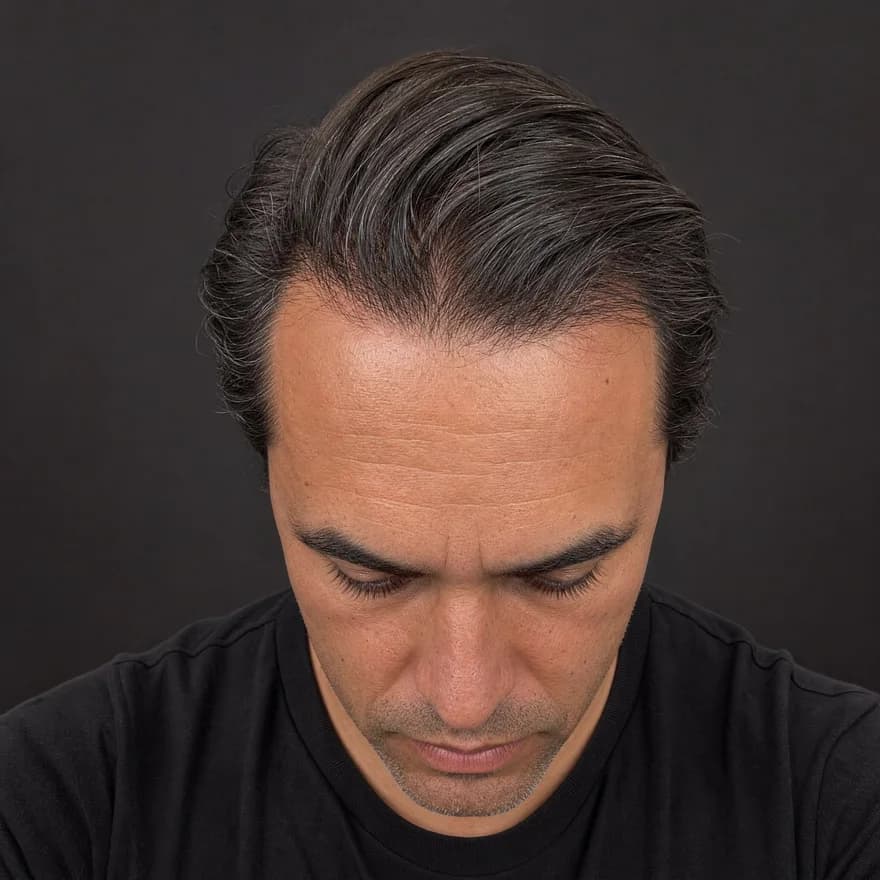
Front · Hairline
Same four angles, every time — illustrative example
Front · crown · temple · back
Four guided angles in about 30 seconds — the same views every time.
Hairline · density · scalp
AI reads each angle for hairline shape, crown density, and scalp surface.
Usable · limited · low-light
Every reading shows its confidence — limited views are flagged, not guessed.
Your baseline, revisited
Save it, rescan later, and see exactly what moved.
The route, visibly
Four points along the visible route — from false alarm to established pattern. Position isn't destiny; the route just tells you what to look for.
The earliest look: a touch more scalp visible around the swirl under overhead light. Also the most common false alarm, since every swirl reads sparse.
Coverage reads consistently lighter across an area wider than the swirl point — the stage where a tiered read starts moving between scans.
The patch no longer needs harsh light to show. By here the pattern is established — and much easier to track than to remember.
In later stages the crown area expands and can approach the receding front — the territory the appearance-based Norwood scale describes from stage 4 up.
Swirl vs. signal
Neither column is a verdict — they're visible patterns to check your own top-view photos against over months.
Appearance-based patterns for comparison — not a diagnosis either way.
Track the blind spot
You can't watch your crown, but you can measure it — which turns out to be better anyway.
Guided top and back views frame the whole crown identically every scan — no freehand overhead guesswork, no borrowed second mirror.
ScalpAnalysis AI's own analysis engine reports visible crown coverage as a stable tier with its confidence shown — comparable between scans, unlike impressions.
Crown change moves in seasons. Two dated scans months apart show direction; daily worry shows nothing you can use.
A holding tier is a real answer — enjoy it. A moving one caught early is exactly the dated evidence worth bringing to a qualified professional.
Questions
As a visible progression: first, extra scalp show-through around the swirl that only appears under harsh light; then a defined area where coverage reads thinner across scans; then a patch that reads sparse in any light; and in later stages the crown opening that maps to Norwood 5–7 territory. It's a route, not a schedule — many crowns sit at one point on it indefinitely.
Every crown has a swirl — a point where hair fans outward and scalp naturally peeks through, even on full heads. It's the single biggest source of crown false alarms. The swirl is anatomy and photographs the same year after year; a change reads wider than the swirl point and keeps spreading between dated photos. One photo can't separate them, but a baseline plus a rescan can.
Because nobody can see their own crown without engineering — two mirrors, an awkward selfie, or another person. Change there also tends to be gradual and light-dependent, so even the occasional glimpse is easy to explain away. That blind-spot quality is the whole argument for photographing it deliberately rather than waiting for accidental evidence.
No photo tool can honestly answer that, and this one doesn't try. Crown patterns vary a lot: some stay contained for decades, some progress, and the crown can change independently of the hairline. What a scan gives you is where your crown's visible coverage sits today and — through rescans — whether it's holding or moving. That direction, not a prediction, is the useful information.
Start by making it visible to yourself: a guided top-and-back baseline today, a rescan in 8–12 weeks, and an honest look at the direction. Style-wise, plenty of cuts work with a thinner crown rather than against it — the report includes suggestions. If the trend is moving or you're weighing anything medical, that conversation belongs with a qualified professional, and dated photos make it a much better one.
The practical problem is aim: freehand overhead selfies land differently every time, so every photo looks like a different crown. The scan's guided top and back angles frame the area consistently, read visible coverage as a tier with its confidence shown, and save the set as a dated baseline — the fair comparison a hand mirror never gives you.
Taking the four guided photos and previewing your report is free, no sign-up needed. Unlocking the full analysis — crown coverage tier, density and hairline reads, scalp signals, and style suggestions — is $2.99 for the scan.
A note on transparency
ScalpAnalysis AI reads appearance-based signals and tracks visible change over time. It does not diagnose, treat, cure, or prevent any condition.
If you have pain, sudden shedding, or signs of infection, a qualified professional is the right next step.
The report it produces
This is the exact report format a scan unlocks — qualitative tiers, your visible features, and a confidence level on every reading. Saved as a baseline you compare against on every rescan.
Your Hair Profile
Temples just starting to open — crown still covered
Density
Medium
Type
Wavy
Texture
Medium
Shine
Medium
Risk of Recession
Low
Hair Loss
Mild
Illustrative example · sample data
Related guides
From the blog
Photos and a blurred preview are free. The full analysis is $2.99, or invite 3 friends for one free analysis.
