Creatine & Hair Loss
Every gym has the conversation: someone swears creatine wrecked their hairline, someone else has taken it for a decade with a full head of hair, and the argument settles nothing. The actual evidence is thinner than either side admits — the worry traces largely back to a single small study from 2009, and the question hasn't been settled by replication since. That's not 'proven safe' and it's not 'proven harmful'; it's genuinely unresolved, and anyone talking in certainties is past the data. Here's the practical move: whatever you decide about creatine, you can stop arguing hypotheticals about your own head. A four-angle photo baseline records your hairline and density as they are today; rescans every couple of months show whether anything is actually moving. Your training decisions stay yours — ideally discussed with a professional — and your hairline stops being a guess.
Photos and a blurred preview are free. The full reading is $2.99 — your stage, whether it looks early, and what to do next.
How it works
Same four angles, every time — so each new scan compares fairly to your very first.
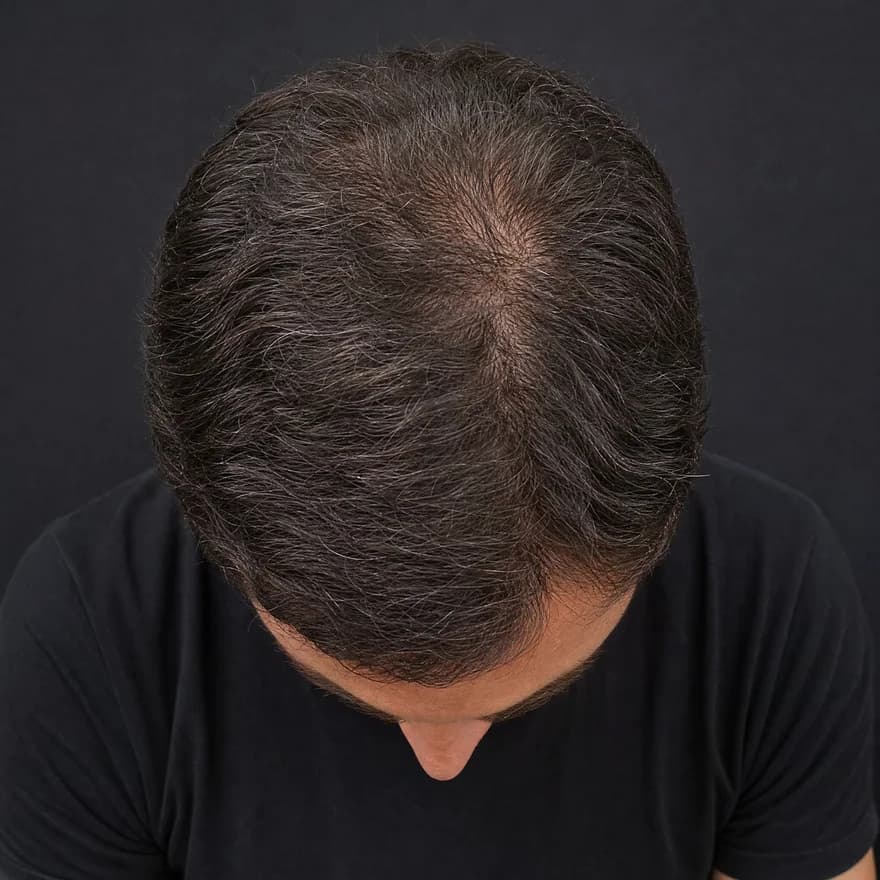
Top · Crown
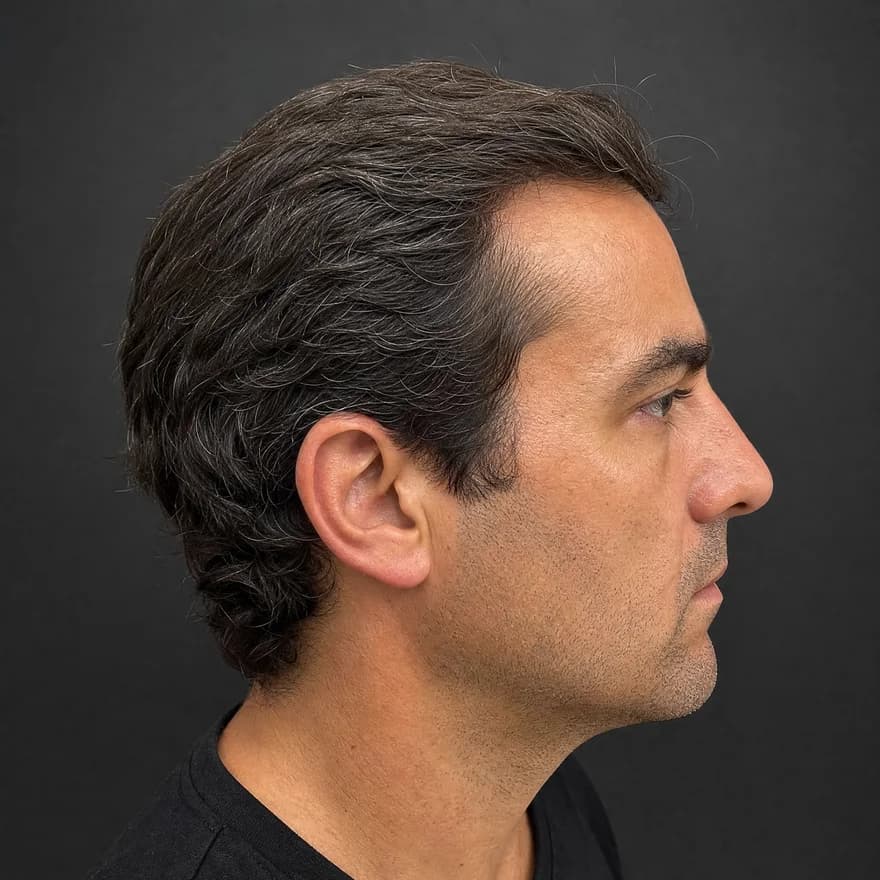
Side · Temple
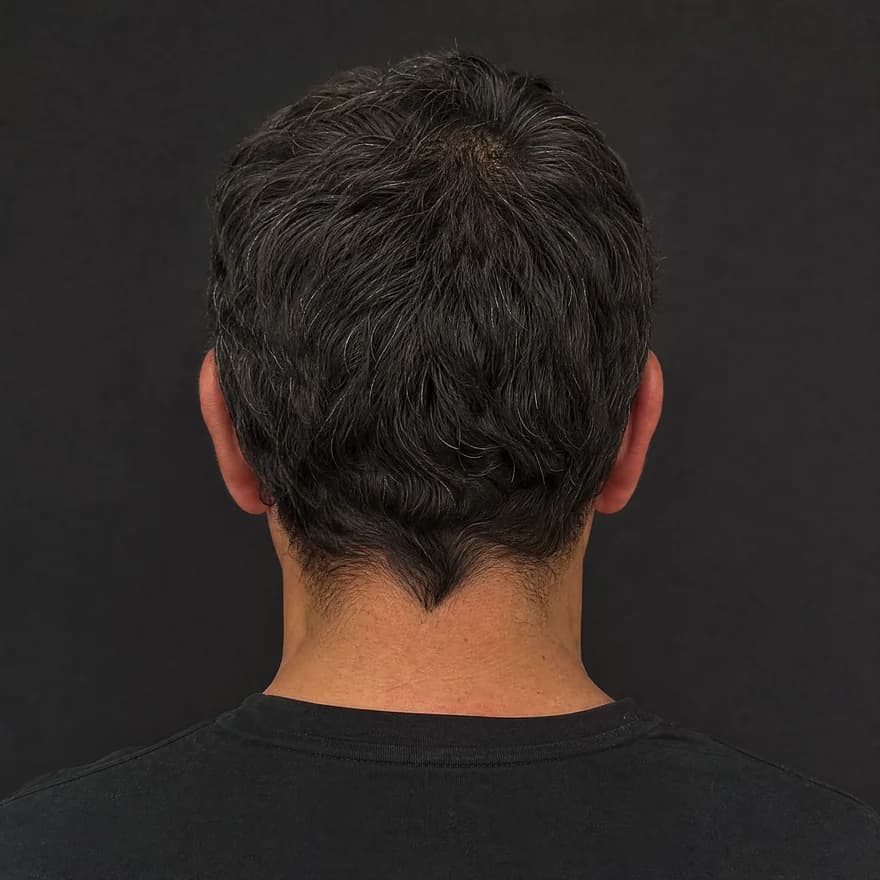
Back
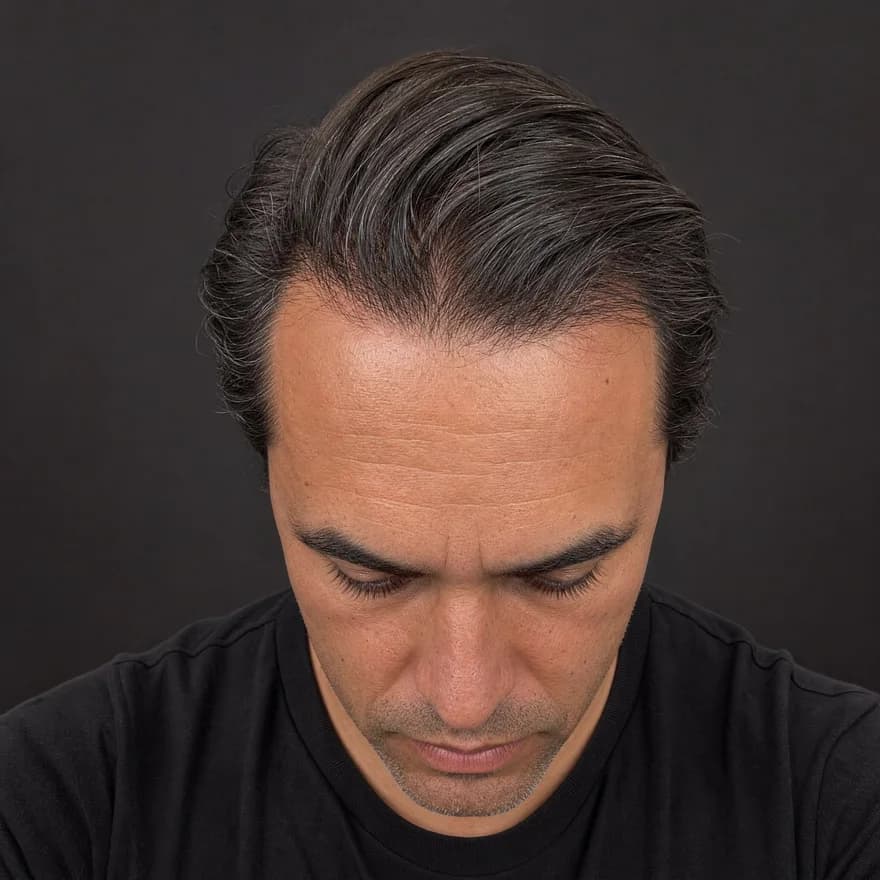
Front · Hairline
Same four angles, every time — illustrative example
Front · crown · temple · back
Four guided angles in about 30 seconds — the same views every time.
Hairline · density · scalp
AI reads each angle for hairline shape, crown density, and scalp surface.
Usable · limited · low-light
Every reading shows its confidence — limited views are flagged, not guessed.
Your baseline, revisited
Save it, rescan later, and see exactly what moved.
The state of the evidence
Four honest statements that survive contact with the research. Notice how little certainty there is on either side.
The worry traces largely to a 2009 study of rugby players that measured a hormone, not hair. It was small, and it hasn't been confirmed by replication since.
No solid evidence that creatine thins hair isn't the same as solid evidence that it doesn't. The grown-up position is 'unresolved' — uncomfortable, but accurate.
Plenty of lifters shed while taking creatine; plenty don't. Without a before-record, neither story tells you anything — hairlines change for many reasons on their own clock.
The population question may stay open for years. Whether your hairline moved between March and June is answerable with two dated scans.
Two ways to handle the worry
Same question — 'is my hair okay?' — handled two very different ways.
Tracking shows what changed, never what caused it. Attribution belongs to a professional.
The lifter's protocol
Thirty seconds of photos, four times a year — cheaper than the mental overhead of wondering.
Four guided angles — top, side, back, front — capture hairline shape, density, and crown coverage as tiers with confidence shown. That's your reference point, on record.
Day-to-day checks measure lighting and paranoia, not hair. Real change is a months-scale story, and your baseline isn't going anywhere.
Every 8–12 weeks, same angles, clean dry hair. Stable tiers mean the debate doesn't apply to you right now — a genuinely useful answer.
A trend that steps down across scans is worth a professional's eyes — with your dated photos, and honesty that no photo can name the cause.
Questions
The honest answer is that nobody knows for certain. The concern comes largely from one small 2009 study that measured a hormone associated with hair loss in rugby players — it didn't measure hair loss itself, and the finding hasn't been confirmed by replication since. That leaves the question genuinely open: not proven harmful, not proven irrelevant. Anyone who tells you it definitely does or definitely doesn't is speaking beyond the evidence.
That's a decision this tool deliberately won't make for you — supplement choices are between you and a qualified professional who knows your situation. What we can offer is better information about your own head: a dated baseline and rescans show whether your hairline and density are actually changing, which beats making decisions off gym anecdotes and forum threads.
Not from the mirror — lighting, haircuts, and a bad angle move the apparent picture daily, which is exactly why the creatine debate runs on anecdotes. A guided scan reads your hairline shape, density, and crown coverage as stable tiers from four fixed angles. Rescans months apart compare like with like, so 'is it moving?' gets an evidence-based answer.
A baseline is useful whenever you start it — before a change is ideal anywhere in life, but a dated record from today still beats no record. Scan now, rescan in 8–12 weeks, and you'll have same-angle comparisons instead of a memory of how your hairline 'used to look.' Just know the scan reads what changed, not why — attribution is a professional's question.
No — and this matters. A photo trend shows that something is changing, never what caused it. Hairlines move for many reasons, most of them unrelated to what's in your shaker. A drifting trend is a reason to talk to a qualified professional, with your dated photos in hand; it's not a verdict on any supplement.
Taking the four guided photos and previewing your report is free, no sign-up. The full analysis — hairline read, density tiers, and a saved baseline for tracking — is $2.99 per scan.
A note on transparency
ScalpAnalysis AI reads appearance-based signals and tracks visible change over time. It does not diagnose, treat, cure, or prevent any condition.
If you have pain, sudden shedding, or signs of infection, a qualified professional is the right next step.
The report it produces
This is the exact report format a scan unlocks — qualitative tiers, your visible features, and a confidence level on every reading. Saved as a baseline you compare against on every rescan.
Your Hair Profile
Temples just starting to open — crown still covered
Density
Medium
Type
Wavy
Texture
Medium
Shine
Medium
Risk of Recession
Low
Hair Loss
Mild
Illustrative example · sample data
Related guides
From the blog
Photos and a blurred preview are free. The full analysis is $2.99, or invite 3 friends for one free analysis.
