A Healthy Scalp
Most people only look at their scalp when something seems off — which means there's no sense of what "normal" looks like for them. The visible signs of a scalp that's doing fine are quietly unremarkable: a fairly even tone, no persistent flaking, a balance between matte and shine, and coverage that holds steady. Knowing your own baseline is the real point: it's what lets you notice a change early instead of guessing whether today looks different.
How it works
Same four angles, every time — so each new scan compares fairly to your very first.
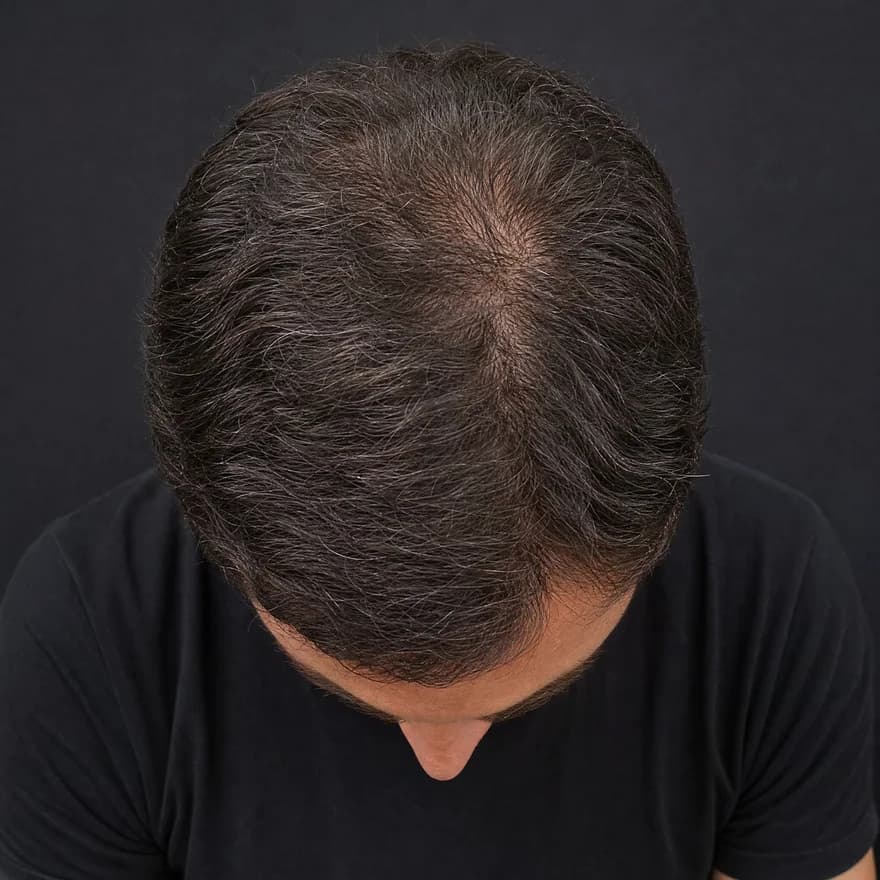
Top · Crown
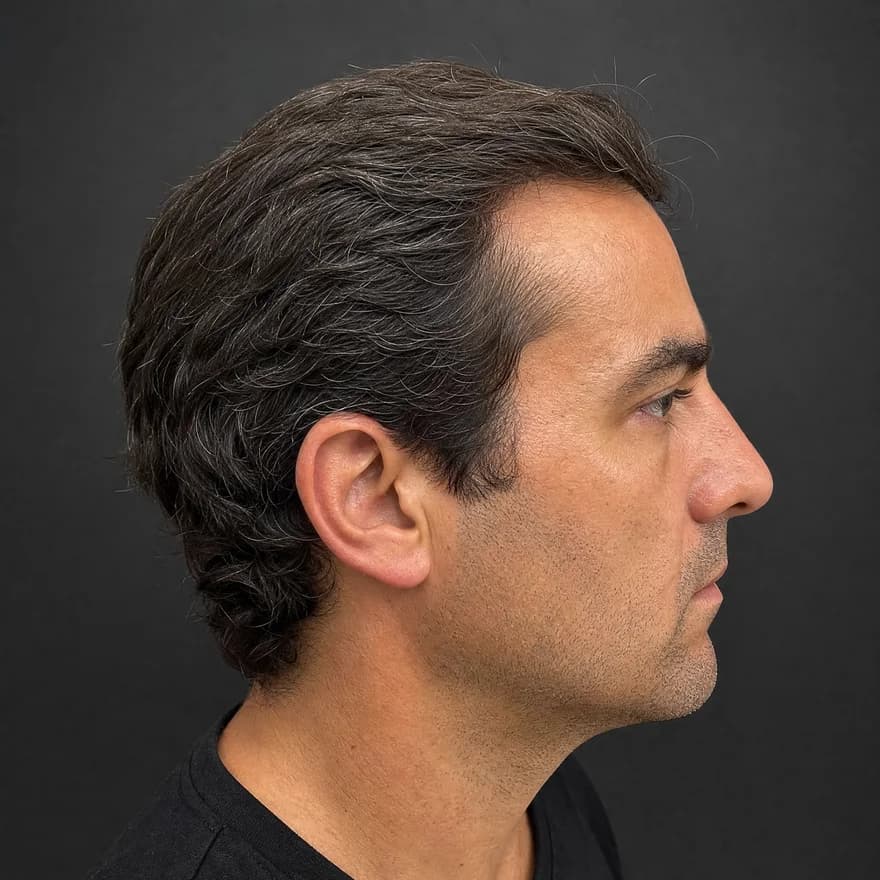
Side · Temple
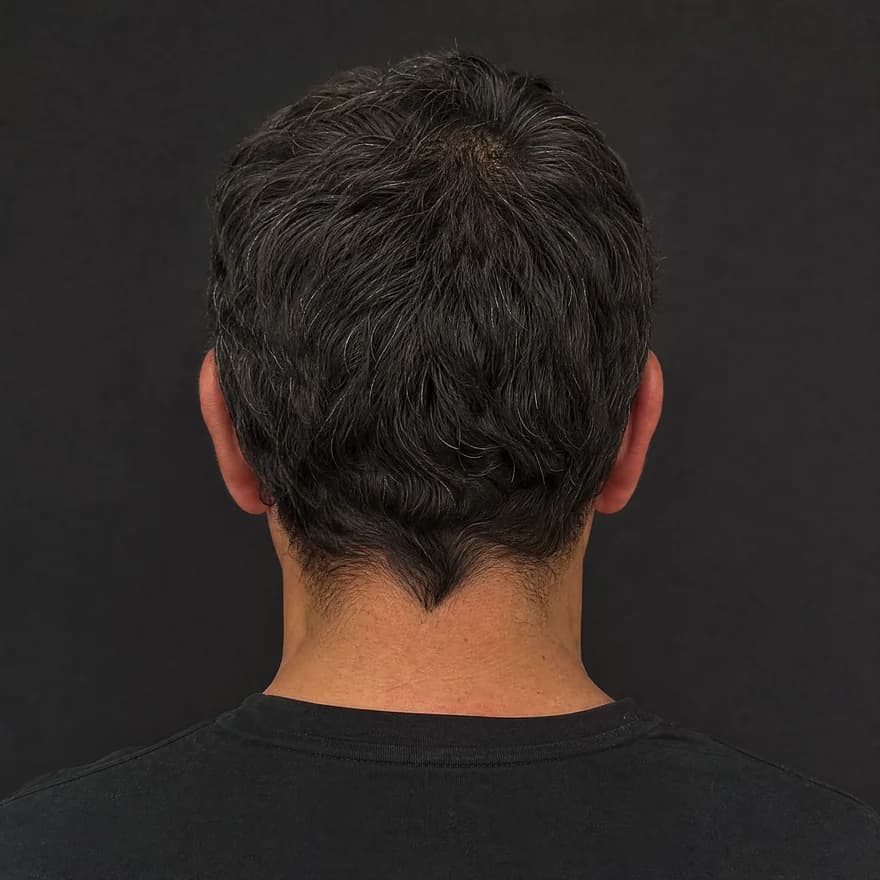
Back
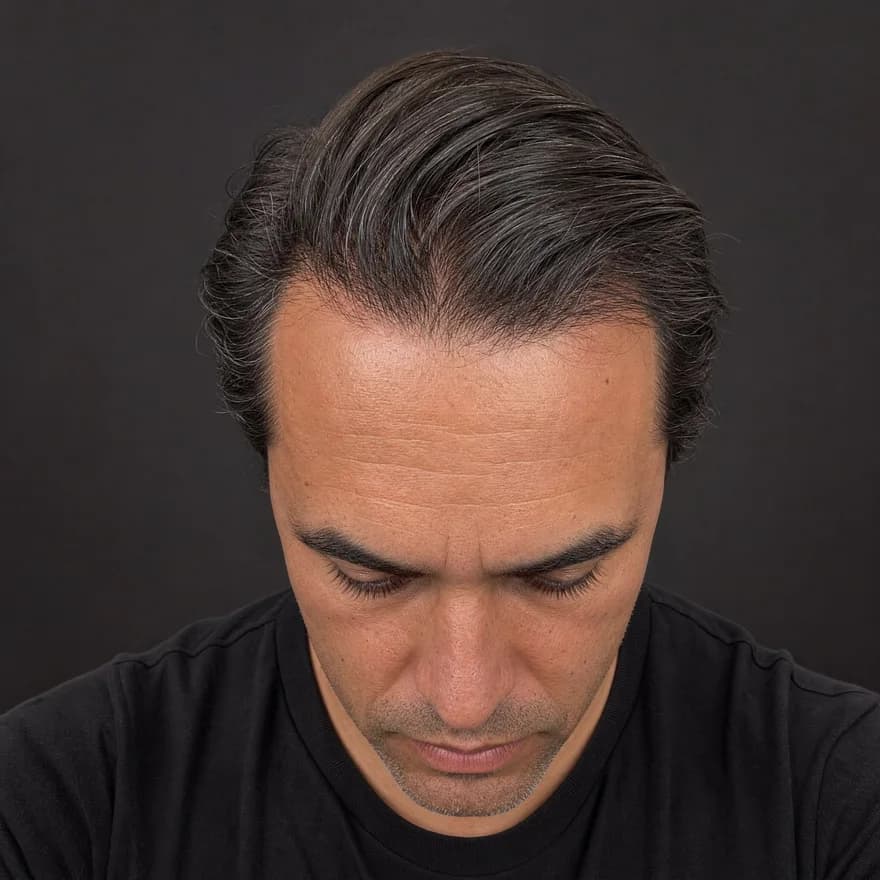
Front · Hairline
Same four angles, every time — illustrative example
Front · crown · temple · back
Four guided angles in about 30 seconds — the same views every time.
Hairline · density · scalp
AI reads each angle for hairline shape, crown density, and scalp surface.
Usable · limited · low-light
Every reading shows its confidence — limited views are flagged, not guessed.
Your baseline, revisited
Save it, rescan later, and see exactly what moved.
The visible signs
Four appearance signals that read as unremarkable on a scalp that's doing well — each one read only where the photos support it.
A fairly even skin tone with no persistent redness or irritated patches — a calm, unremarkable surface in the photos.
The odd flake is ordinary; ongoing flaking at partings and edges is the appearance signal that stands out from a steady baseline.
A little natural shine is normal — neither a uniformly oily sheen nor a matte, dull surface dominates the read.
Scalp show-through that looks consistent with your own past scans, rather than newly visible at the part or crown.
Know your own normal
The useful question isn't 'is this a healthy scalp?' — it's 'does mine still look like it did?'
Four guided angles read the visible surface signals — tone, flaking where shown, shine, and show-through — as tiers with confidence on each, under consistent framing.
The check describes what's visible and stops there. It doesn't score your scalp as healthy or name conditions — that's a professional's call, not a camera's.
Trying a new routine, or just want a reference? Rescanning every 8–12 weeks on identical angles tells you whether the picture is steady or shifting.
Itch, pain, or irritation don't photograph. If that's what brought you here, a qualified professional beats any camera — dated photos just make the visit more useful.
Questions
Generally unremarkable: a fairly even skin tone with no persistent redness, no ongoing flaking, a balance between matte and a little natural shine, and coverage that looks steady rather than newly show-through. These are appearance signals, not a checklist for health — the most useful version of 'normal' is your own, captured as a baseline.
Comparison beats a single look. Reading the visible signals — tone, flaking, shine, show-through — the same way over time tells you whether your scalp looks steady or different from your own baseline. This describes appearance and tracks change; it doesn't grade health or name conditions, which is a professional's job.
A little natural shine is ordinary, and an occasional flake isn't the same as persistent flaking. The appearance picture also shifts with washing, weather, and products. That's exactly why a one-off look misleads — and why a baseline plus a rescan is the honest way to tell ordinary variation from a real change.
Take a four-angle scan to capture today's visible surface signals — shine, flaking where shown, and coverage — as tiers with a confidence level on each. That dated baseline is what 'normal for me' becomes, so any future scan answers 'has this changed?' rather than 'does this look bad?'
If you have persistent itch, pain, redness, sores, or flaking that won't settle, that's beyond what any camera can read — a qualified professional is the right next step. This is an informational, appearance-based check; it doesn't diagnose conditions or confirm that a scalp is healthy.
A note on transparency
ScalpAnalysis AI reads appearance-based signals and tracks visible change over time. It does not diagnose, treat, cure, or prevent any condition.
If you have pain, sudden shedding, or signs of infection, a qualified professional is the right next step.
The report it produces
This is the exact report format a scan unlocks — qualitative tiers, your visible features, and a confidence level on every reading. Saved as a baseline you compare against on every rescan.
Your Hair Profile
Even crown coverage with a soft cowlick
Density
High
Type
Wavy
Texture
Medium
Shine
Medium
Risk of Recession
Low
Hair Loss
Minimal
Illustrative example · sample data
Related guides
Photos and a blurred preview are free. The full analysis is $2.99, or invite 3 friends for one free analysis.
