
AI Scalp Analysis vs. Dermatologist Visit: Which Do You Need?
Comparing the benefits of at-home AI technology with professional medical consultations to help you navigate your hair health journey.
What Each Option Offers
In the modern age of 'beauty tech,' we have more tools than ever to monitor our health. AI scalp analysis typically involves using a smartphone camera or a high-definition lens to take macro photos of your scalp. Algorithms then analyze these images for hair density, sebum levels, redness, and follicle health. It's fast, convenient, and provides immediate data you can track over time. It's best for 'maintenance'—understanding if your new shampoo is working or if your scalp is getting oilier with the seasons.
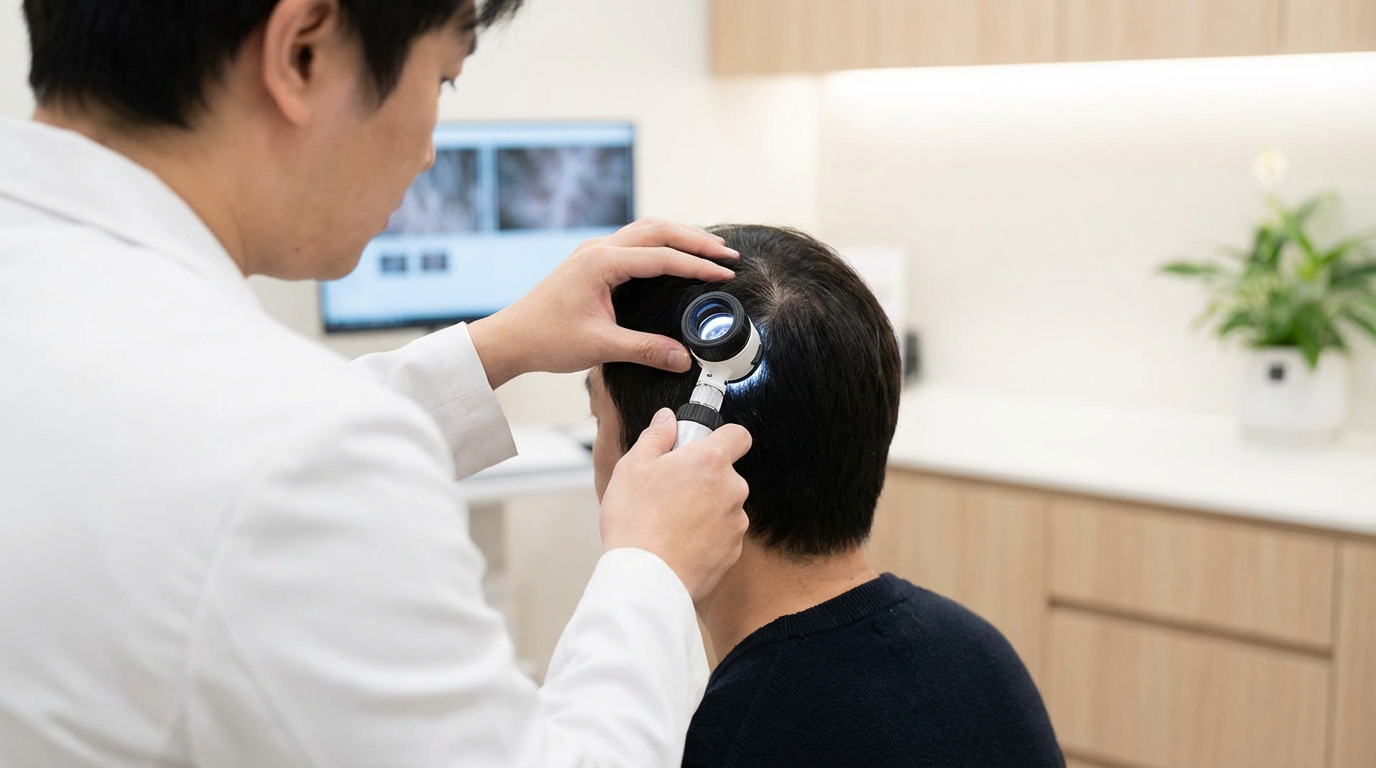
A dermatologist, on the other hand, is a medical doctor who looks beyond just the surface. They can perform physical exams, take biopsies, and order blood tests to check for internal issues like iron deficiency or thyroid problems that might be causing hair loss. They don't just see 'redness'; they can distinguish between an allergic reaction, an autoimmune condition like lichen planopilaris, or a common infection. While AI is a data-cruncher, a dermatologist is a diagnostician.
Cost and Convenience Comparison
The most obvious difference is the barrier to entry. AI scalp analysis, like the tools provided by ScalpAnalysis, is often free or available for a low monthly subscription. You can do it in your pajamas at 11 PM on a Sunday. There's no waiting room, no insurance paperwork, and no 3-month lead time for an appointment. It's the 'low-stakes' way to start paying attention to your hair.
A dermatologist visit can be expensive, ranging from $150 to $500 per session depending on your location and insurance coverage. In many major cities, the wait time for a specialized hair dermatologist can be months. However, that cost buys you years of medical training and a personalized treatment plan that can include prescription-strength medications (like Minoxidil or Finasteride) that AI simply cannot provide. For someone on a budget, AI tools are a great first step to determine if a professional visit is actually necessary.
When AI Analysis is Enough
For 80% of scalp concerns, AI analysis is a perfectly adequate starting point. If you're dealing with standard 'lifestyle' issues—like mild dandruff, seasonal oiliness, or slight thinning related to aging—AI can give you the insights you need to adjust your routine. It's particularly useful for 'A/B testing' your products. For example, if you switch to a sulfate-free shampoo, the AI can objectively tell you if your scalp redness has decreased over the last 30 days.
AI is also excellent for consistency. It doesn't have 'off days' and it records every metric in a dashboard. If your goal is to optimize your current hair growth or just keep your scalp healthy and clean, the data provided by an AI scan is often all the 'consultation' you need to make informed decisions about your daily routine.
When You NEED to See a Doctor (Red Flags)
There are certain situations where you should skip the app and go straight to the clinic. If you experience 'scarring' hair loss (where the skin looks smooth, shiny, and the pores are gone), this is a medical emergency for your hair. Similarly, if your scalp issues are accompanied by physical pain, pus-filled blisters, or significant bleeding, you need a doctor.
Another major red flag is sudden, patchy hair loss (alopecia areata), which is often an immune system response that requires steroid injections or other medical interventions. If you notice any pigmented spots that are changing shape or color, a dermatologist needs to rule out skin cancer. AI is a tool for wellness and cosmetic monitoring; it is not a replacement for a doctor's ability to treat pathological diseases. If the AI tool flags an 'abnormal' result consistently, it's a sign to book that appointment.
The Hybrid Approach: How to Use Both
The smartest way to manage your health is to use AI and dermatologists as a team. Use AI analysis monthly to track your 'baseline' health. If you do end up seeing a doctor, you can bring your ScalpAnalysis history with you. Imagine how much more helpful it is to show a doctor six months of photos and data showing the progression of your thinning, rather than just saying, 'I think my hair is falling out.'
Your dermatologist can provide the diagnosis and the prescription, and then you can use the AI tool to monitor how well that treatment is working. It bridges the gap between the doctor's office and your bathroom mirror. This hybrid model ensures you aren't overspending on unnecessary appointments, but you're also never ignoring a serious issue that needs professional intervention.
Frequently Asked Questions
Can AI detect scalp skin cancer?
No, AI scalp analysis tools are for wellness monitoring and cannot provide a medical diagnosis for skin cancer.
How accurate is AI compared to a doctor's eye?
AI is very accurate at measuring quantifiable metrics like oil levels and hair diameter, but less capable of identifying complex medical conditions.
Will my insurance pay for a professional scalp analysis?
Most insurance plans cover dermatologist visits for medical issues like psoriasis or hair loss, but rarely for 'cosmetic' analysis.
Ready to try it yourself?
Get a free AI scalp analysis in under 5 seconds. No signup required.
Start with a free AI analysis